EVEN WHEN NO ONE IS WATCHING…..
CHOOSING
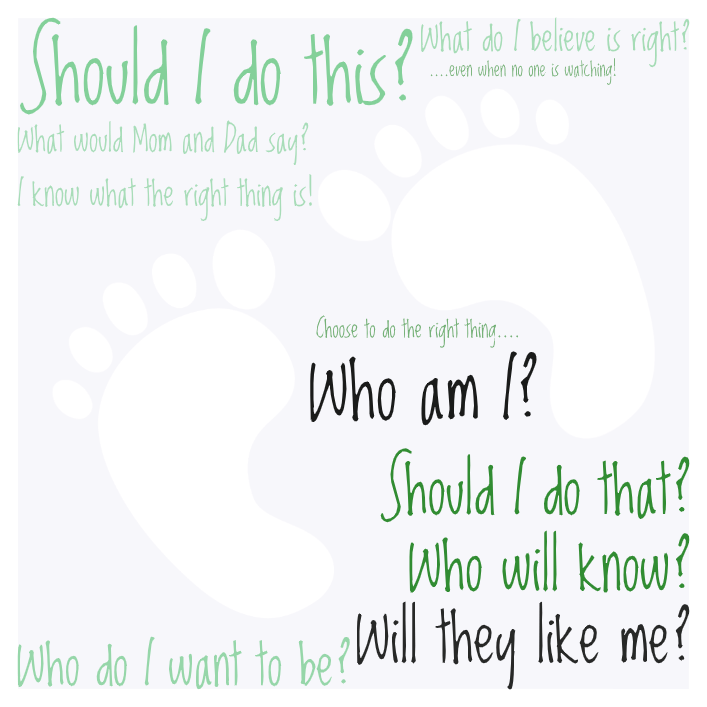
When I was teaching, yes, I had to focus on content. Reading and writing strategies and patterns in ancient history were carefully planned as daily goals. But what I didn’t “plan” was equally as important. There were endless opportunities to teach my students about integrity. What I had posted on my classroom walls (in more than one location) and on the front of door entering my classroom read, “Choose to do the right thing, even when no one is watching.”
In this world of social media overload and our “look at me” culture, many children are focused on what others see and think of them. It’s challenging and unusual for our kids to “be still.” Reading can provide that opportunity. With reading comes the opportunity to learn, to be still, and to just ponder some of the more meaningful things in life.
My hope is to focus on books that encourage our kids to do the right things, even when mom or dad or coach or teacher or friends are NOT LOOKING. When the world around us focuses on pics and posts, we can nudge them to do the right thing simply because….. it is the right thing.
Blame it on Me
Cheating has been an issue, well, since always. As a middle school teacher, we dealt with all kinds of creative cheating strategies. Then, when Covid hit suddenly and we were thrust into instant remote schooling, cheating became something that teachers simply couldn’t get under control. For students, it became much too easy to “share” information through their email accounts or phones. Much too easy!
I would talk about choosing to do the right things, about not sharing answers, and I would say things like, “A real friend won’t ask you to share answers.” Well, sometimes that’s just not true and that won’t work. So I started saying to my students, “Blame it on me“. If your friend asks you for an answer or information, just say, “Man, Mrs. Wheeling is watching us a like a hawk. I’m going to be careful right now- sorry, dude!” Or, “She just gave us some kind of lecture….she said she can request our computer history any time she wants, and that she suspects us of cheating. Not risking it, man!” Or, “She’s actually comparing our responses word by word; she’s crazy!”
You get the picture.
My thoughts were this: if we can help them START to say no that it will get easier and easier. As parents and teachers, we can be the scape-goats sometimes. We can help them say no to things that deserve that response. They can blame it on us.
Then one day, hopefully, they will have the courage to simply say no because… it is the right thing.
More than a Friend
As a mother of two happily married adults and a public middle school school teacher for over 25 years, I am confident in stating this: it is not our job to be our children’s “friends”. We have roles. We have friends. We have families. Each relationship dicatates a specific role in life. We are the same people, but our interactions are unique to the role that we play.
As a veteran teacher, I had no problem with this concept. Yes, I’m old school in much of my approach to classroom management. I do believe that children have to know how much you care before they care how much you know. I hope that my students knew I cared; I tried to exhibit that daily. But they also knew that in my classroom, there were definite boundaries of what would and would not be tolerated. They knew when Mrs. Wheeling was going to have a classroom “talk” about choices!
Kids need boundaries. Let me rephrase that: Kids LIKE boundaries. Boundaries can make them feel safe and can actually steer them away from wrong choices. Our job as parents and teachers is to provide boundaries; not to be a buddy or to be cool. They have friends for that. We shouldn’t be afraid to be the bad guy or to discipline or that our kids will be mad at us. They will. That’s okay; it’s part of growing up and figuring out what’s right and wrong. The rewards can come in the long run.
I’m getting to embrace my role as a parent of grown ups now. The roles are slowly evolving; there are friend-moments that are naturally occurring with my kids, now that they are 31 and 32! I love it. But when someone needs me, you can be certain that I will jump back into mommy mode!
I hope that’s the right thing to do~
More Hallmark
When I said it to my students, I needed to hear it myself, “Choose to do the right thing, even when no one is watching.” Let’s be honest, we struggle with choices as adults as well.
We’re going to make mistakes, just like our kids. There are times when we’re going to make mistakes in PARENTING our kids! Then, (gulp), we’re going to have to apologize. My mother is from Cuba and my dad is from New Jersey- that story is for another time. With the Cuban heritage comes this gene that can only be described as STUBBORN (or strong?). It was not easy for me to say I’m sorry to my kids, but I had to learn.
Because of our faith, we raised our children in a Christian home. We decided from the start that worshipping together as a family and modeling the Sabbath as a holy day was important to us; we knew we would need help in this process of parenting. “Church” was/is a part of our lives.
That doesn’t mean it was easy! That just means that GRACE had a place in our home. I believed I was forgiven, I had to forgive, and I had to ask for forgiveness.
There were times when I lost my temper and my volume was intense! There were times when I spoke inappropriately about others. There were times when the very words I was telling my kids not to use were spewing out of my own mouth! Let’s just say that I am still working on this problem, and that Netflix binging is not helping.
I had to say, “Mommy was wrong and I should not have said those words. I am sorry……. (gulp again)…..can you forgive me?” I had to swallow my pride and model the thing that I was asking them to do.
During some very challenging situations, we actually had to seek Christian counseling. There were tough teenage years, where we just needed council on how to parent. This was invaluable in modeling for our kids, as hard and humbling as it was. We had to seek help and accept it.
We’re all “working on it”, right? I am still saying words that I shouldn’t. I need to choose differently in many areas of life, in order to do the right thing.
I believe more Hallmark may be required.
The Village Thing is Real

Maybe you’ve heard the African proverb, “It takes a village to raise a child”. It is often shortened to simply “It takes a village” and the rest is implied. If you are a parent, grandparent or teacher, you’ve most likely experienced the truth within these words.
We were so fortunate to have a village in place when our children were born. Both children were miracles; one through adoption and one through infertility. Both of these journeys took time, and by the time these two babies blessed our homes, the village elders (grandparents) had been waiting too long and with much enthusiasm! We had to actually ask the village elders to back off a bit; a pretty wonderful problem to have.
Those grandparents, along with aunts and uncles and good friends became our village of support. As the kids grew, so did our village. Sunday school teachers began to make their imprints upon small hearts and minds. Then, youth group leaders, Wild-Life leaders (so appropriately named for middle schoolers!), Young Life leaders, and teachers and coaches, helped guide decisions. Thank goodness, because, during the teenage years, Mom and Dad just didn’t have the right words or enough patience or enough of the “cool” factor. Whichever it was, we just didn’t have enough!
If you haven’t experienced this yet, hold on. It is coming. We are relational and need support from others; it’s how we are created.
Even though our children are now married adults, I still ask my tribe to pray for their needs. And I pray for the other villagers and the needs in their families. It’s an honor to have friends entrust you with the prayers of those they love most. How comforting it is to know they are doing the same for your loved ones.
There are a lot of things we didn’t do right. One of the best things we did do was to grow a beautiful village, full of others who were on similar paths or who had already traveled this parenting path. The right thing was knowing that we didn’t know it all.
*BTW, I’ll be claiming the cool factor again when grandchildren arrive.
The Legacy We Leave
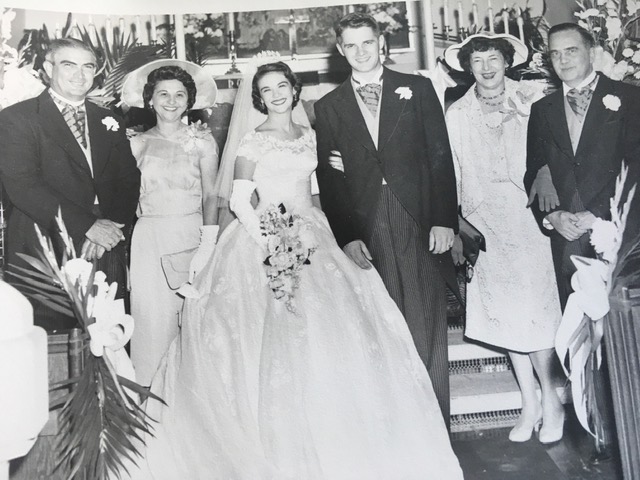
My mother, grandparents, and that side of the family are from Cuba. They experienced the loss of everything they had when they left Cuba on the last Red Cross boat allowed to bring refugees in 1963. They could leave, but were not allowed to bring a thing. My grandparents left their home, their family, all money and goods, and came with only the clothes on their backs in their mid-forties. They left all material goods for freedom. They (Mima and Papi) left a beautiful home in warm Havana, Cuba and moved to Indianapolis.
The courage to start over for freedom: legacy
My dad’s parents (Nana and Poppop) were originally from New Jersey- be nice- but ended up in Indiana, which we called “home”. They had the grace to welcome two apprehensive Cuban adults, who spoke no English, into the family with open arms. My dad’s father actually got my mom’s father his first job here in this country, with RCA.
The heart to help others: legacy
Growing up, I witnessed the love between my two sets of grandparents impact the relationship of my parents. Mom and Dad built a unique culture for our family of four, drawing from their own, full of cooking and good food, family gatherings, and lots of music and wine! There were regular games nights. There was limited time on the TV (the only device)- imagine that! There was always music in our home, and the older I get, the more I am grateful for that. My dad would debate that my choice of music genre could be improved upon; his being jazz and mine being country.
Creating family traditions: legacy.
We were always part of a church; setting aside time to worship and to intentionally grow in faith. On Christmas Eves, we were at Bethlehem Lutheran, honoring the birth of Christ. I recall all of us piling into my Uncle Karl’s van to go to midnight service, on frigid Indiana nights, priceless memories.
Honoring the Grace of God: legacy
If you are a young parent, you’ve got time to intentionally start creating a legacy for your kids. Think upon all of those who came before you, your relatives, our Biblical brothers and sisters, those we’ve admired through history, and those we admire in our every day lives. Think about all of the things they’ve done right. Model them; one legacy fuels the next.
I treasure my memories with my grandparents. I see the legacy they were building for us by the lives they led. I wish I could tell them how much I appreciate their love and sacrifices and acts of courage and grace. I know how fortunate I am to have Mom and Dad close by; at 83 and 84, they are still my role models of how to really live.
Perhaps the right thing to do now is to honor their lives by the way we try to live ours.
The Book Goes On (The Book Keeps a Poundin’ Rhythm to the Brain)
One of our kids liked to read more than the other. Curt would sit and read book after book, and then he would reenact scenes from the story. He would imagine he was part of the story. Gina liked to read, but was ready to move on to a play activity after reading one or two stories. Stories would provide ideas for her barbies or for dance routines!
We tried to come up with fun ideas to make story time even more fun and meaningful. Some of these we tried, some I tried later in the classroom, and some I WISH I had tried!
- Read with an accent. My kids will tell you that I am not good at this; they will say it’s actually painful to hear me try to do this, but I did. We would read stories with an accent of choice, and sometimes spend an entire day pretending we were from “London” and would talk with an accent. BTW, Curt is SO GOOD with accents now.
- Leave out key words. When you’re reading the story to your children (again), leave out key words or phrases and let them say (or yell 😊) that part out loud. Change the words that you omit each time so that the kids really have to listen.
- Create an alternate ending. Ask your kids: If you could change the ending of the story, how would you do it? What could you do to make the story funny or mysterious? Tell them how you would do this as well! Let them “read” the story with their new ending!
- Draw your favorite character and favorite part of the story. Use colored pencils or crayons to create what you think is the best event within the story. In the summer, use driveway chalk.
- Retell the story using cartoon figures. Recreate the story using cartoon stick figures. You can fold a piece of paper into 6-8 framed boxes and use each of the boxes for images and voice bubbles.
- Paint the theme. What lesson can be learned from this story? Using water colors, paint the theme or moral of the story. Observe how the blending of some colors creates new ones.
- Let the story continue. If you’ve just read a story like “The Giving Tree”, look for things all day long that TREES GIVE US. Continue using the story throughout the day to learn and observe the world around us. You can come up with a “day idea” for almost any story.
Doing some of the right things with our kids may just mean doing things that are simple and quiet and reflective, away from technology and screens. Maybe reading a book is just the START of some meaningful and memorable time with our children, grandchildren, or students.
TIME and WRINKLES

travel through time by “wrinkling”, A Wrinkle in Time.
A few months ago, I joined a writing group called Hope*Writers. I can’t even explain what a blessing this group and its teachings have been to me. One of the many benefits of this (large and professional) writing group are small group sessions called Guided Hope Circles. Members sign up for sessions, starting in February. Each meets virtually with folks from all over the country and lasts about 8 weeks. The session that I signed up for and will start next week is called Exploring Faith and Art with Madeleine L’Engle’s Walking on Water — hosted by Kimberly Coyle. I cannot wait.
As I was ordering the session book, I realized that I don’t remember ever reading Madeleine L’Engle’s award winning book, A Wrinkle in Time, so I ordered that too! Oh my gosh. It’s incredible. What a plot line, what a message, what a creative use of historical quotes, science, fantasy, and faith all bundled into one story line. It’s written for young adults (grades 5-9) but a fabulous read for adults and families as well. I want to say it’s where Harry Potter meets Jesus….if you can even imagine that.
There are so many “Day Ideas” for a family that can come from this story- using nature, fantasy, math, quirkiness, and faith. Here I am at 60 years old reading A Wrinkle in Time for the first time, and I cannot put it down. I WILL be reading the four books that follow this one! It just confirms for me the power of words and the impact that a well-written story with a beautiful theme can have on us. Even this old gal WITH WRINKLES can get carried away in a beautiful children’s story.
In one part of the adventure, Meg Murray, her brother Charles Wallace, and Calvin O’Keefe are “tessering” through time. They are afraid, but the qualities they possess on earth and that make them awkward are the very characteristics that will enable them to persevere. Meg does not “fit in” at school but it’s because she thinks on another level, deeper. She has other talents. She’s told, “But of course we can’t take any credit for our talents. It’s how we use them that counts.” Lots of ideas here, right?
Psalm 90:12 reads: Teach us to number our days aright, so that we may gain a heart of wisdom. I love this verse; it reminds me of how precious time every day is. This hits home more and more as I get older.
We can’t time travel in reality (until time won’t matter) but we can use our time in the right ways. We can model for our children how to use time. We can purposely carve out time to just be with them, to listen, and to read. We can hope that some of the stories we read open up conversations. Whatever our kids are dealing with or struggling with, there’s a book about it. There’s a character that they can connect with and glean some hope from.
And those of us with wrinkles can be ready to listen and help them through these times.
THINK UPON THESE THINGS

Finally, brothers, whatever is true, whatever is noble, whatever is right, whatever is pure, whatever is lovely, whatever is admirable–if anything is excellent or praiseworthy–think about such things. Philippians 4:8
Let’s just face it. There is a battle for our minds. There is a spiritual battle taking place all day long in the mind of each follower of Christ.
How many times as an adult have you said or thought, “I’m so glad that I grew up in simpler times” or “I’m so glad social media wasn’t around when I was growing up”?
What does this say about the battle for our kids’ minds? This is a bit frightening! Our kids are battling even more than we had to. Our simpler lives may have naturally been a bit more innocent. We just weren’t exposed to the “world” with devices at our fingertips, all day, every day.
As parent, grandparents, and teachers today, we have to be intentional about creating boundaries and about exposing our kids to things that are NOBLE and PURE. That is just not going to happen naturally in today’s culture.
It’s okay to limit screen time and to monitor it. It’s okay to take phones and devices away at dinnertime and at bedtime. Even as adults, we should probably be better at monitoring our own screentime. Guilty here, for sure. Why do we feel like we have to be available 24/7 and what is that modeling for our kids? I put my phone aside now at several times throughout the day and just do not respond; while I’m exercising, writing, and during meals … while I am just LIVING.
And, since I’m focusing on “Booking time with our Kids”, dare I say that some of that time can be filled with reading; reading about things that are good and pure and worthy and admirable. There’s a lot of good stuff out there! We all probably have much of it in our homes and on our shelves. It’s just so easy to get out of the habit.
I believe we have to equip our kids; there is a battle for their minds. I also believe that the ONE who can best equip them is the ONE who created them. Read to them. Read them stories of God’s creation, of Biblical heroes, of people in history who have fought for good, and of stories of people who exhibit kindness and generosity. Read them stories about how much they are loved and how they are purposefully created.
How do we help them win the battle for their minds? A special friend recently prayed “The ARMOR of God” (Ephesians 6: 10-20) over me; what a powerful and needed gift it was. And I keep going back to it… as an adult. Our children need to be protected by the Armor of God as much, if not more than we do.
- Belt of truth: protects against lies from the enemy
- Breastplate of righteousness: protecting our hearts
- Shoes of the gospel of grace: protecting us as we go forward and share
- Shield of Faith: quenches the fiery darts of the wicked
- Helmet of Salvation: protects our minds
- Sword of the Spirit: the Word of God, allowing us to take offensive against the enemy
- Prayer: drawing spiritual strength from God
I found an ARMOR PRAYER FOR CHILDREN written by Pastor Paul Anderson at SubstanceChurch.com. If we want to wisely BOOK TIME WITH OUR KIDS and fill their hearts and minds with pure and good thoughts, why not use God’s very Word? We can remind our children of their identity in Christ and pray over them. We can train them in basic spiritual warfare and send them into the world powerfully protected, and thus focusing on “these things” that are noble and true.
THANKS FOR READING! Please subscribe and share for a weekly idea of how we can BOOK TIME WITH OUR KIDS!
God as MASTER SCIENTIST
Here it is, the reason I am feeling called to enter into this uncomfortable and foreign process. I am trying to be obedient to the “call to create” in order to honor the Creator.
The guided Hope*Circle I am currently in is studying Madeleine L’Engle’s book, “Walking on Water”. A quote at the front of the book reads, “We have been created by the master artist, and in return we must create art that directs others to Him.” Yes.
In my years of teaching in the public-school forum, I had a front row seat to the disconnect between God and science. Science is taught as if many complicated processes and designs just occurred. Evolution is referred to as the scientific way that humans came into existence.
When the right teaching moment presented itself in discussing various world cultures, I would throw out phrases like, “There are other theories of creation.” “There is scientific evidence that promotes creation.” “There’s something called intelligent design”. “There’s the second law of thermodynamics”- left alone, all systems tend from order to disorder. They don’t become more complex! And, “There’s something called irreducible complexity.” (Irreducible complexity is a term used to describe a characteristic of certain complex systems whereby they need all of their individual component parts in place in order to function. In other words, it is impossible to reduce the complexity of (or to simplify) an irreducibly complex system by removing any of its component parts and still maintain its functionality (gotquestions.org)). I made sure not to promote my faith, but to present the idea that there were alternate theories of creation.
I would pray and think carefully about what I would say. There were always students who knew what I was talking about. They had been exposed to other ideas or theories through their families or through their faiths. For others, it was a surprising idea and the first time they’d heard about anything other than evolution.
Even many believers are not exposed to the true science of creation. We have to seek it out! Many of us just believe in God and that somehow the fairy tales of creation fit into evolution. I believe that the God who gives us life and purpose designed every part of the human body in a magnificent and specific way. The design of every creature on earth is intentional and unique. Look at the process of human life itself; how a tiny egg grows into an entire human being, a human being created in the image of the Creator Himself.
There is a misconception that religion and science are at odds. But scripture tells us, “The heavens declare the glory of the Lord; the skies proclaim the work of His Hands”, Psalm 19:1. Evidence of creation simply surrounds us.
There are incredible resources out there for parents who want to teach their children, from an early age, about creation. A beautiful book that I just got is called “When God Made the World” by Matthew Paul Turner. There is an incredible ministry and website called Answers in Genesis (answersingenesis.org) with an entire museum dedicated to the science behind creation. Ken Ham and his team have even built a life-sized Noah’s Ark in northern Kentucky, on my bucket list for a trip!
I’m writing some stories for young children about how God purposefully created them, this world, and put the entire universe in motion (just have to find someone to publish them). If we equip our kids from the start, they can grow up grounded in their faith and ready to combat the lies that they will later encounter.
We can equip our kids with truth. We can teach them both the miracles of the Bible and the science of creation. He’s a God of miracles for sure, but He’s also the Master Scientist. There’s even a book about this 😊.
What The Giving Tree Gives

The Giving Tree by Shel Silverstein moved me the first time I read it and then it spoke to me every single time thereafter. Shel Silverstein was a brilliant author and poet, but he also understood children. His gift, his art, was one of words and also of understanding people. Our young kids listened to this book countless times, but I would even read it to middle school students for various reasons. As a teacher, there were so many elements of literature and examples of symbolism to use. As a parent or grandparent, there’s just so much beauty in the story. It’s a story for our kids, but it’s really a story of sacrificial love that only parents “get”.
Once there was a tree……and she loved a little boy: perfect personification
And every day the boy would come and he would gather her leaves and make them into crowns and play king of the forest: memories of BEING outside and imagining
He would climb up her trunk and swing from her branches and eat apples. And they would play hide and seek: symbolism
And when he was tired, he would sleep in her shade. And the boy loved the tree….. very much. And the tree was happy: friendship, personification, love, peace
But time went by. And the boy grew older. And the tree was often alone: foreshadowing
“Then one day the boy came to the tree and the tree said, “Come, Boy, come and climb up on my trunk and swing from my branches…”: the climax is being set up…..
Now, don’t you want to read the the book again, even though you KNOW the rest? I think it’s a timeless story of friendship and sacrificial love. It takes us back to our own childhoods and at the same time, it speaks to us as parents, of how we would give up anything for our children.
There are some precious DAY IDEAS that work with this story:
- Look for things all afternoon that trees give us! Talk about the things that trees provide while they are still planted and growing, as well as what they give us when they are harvested or used for a purpose.
- “Let’s notice things that people do for us today, while getting nothing in return.”
- “Let’s see if we can be the tree today! What can we do for others without any gain for ourselves?”
- Let’s plant a tree this spring or fall and observe the things the tree gives us at different seasons. Maybe talk about the seasons of life.
- Talk about why the tree was still happy at the end. I’m not going to answer this for you (Moms know 😊). What lesson does this teach us about real happiness?
Okay, I’m getting choked up just thinking about it! One good book can have so much to say. This book had me at “Once there was a tree, and she loved a little boy.” Let’s “BOOK” some sweet time with our kids this week.
What’s Hiding in a Problem?

Problems and worries can be too much to bear alone. It seems as if this is affecting our kids as much as us.
There’s an author of children’s books that I only discovered as a middle school teacher, Kobi Yamada. I wasn’t exposed to his books through searching for text to share with my students. I heard one of his stories for the first time as our principal read it to us as a STAFF, a room full of adults!
It’s titled, WHAT DO YOU DO WITH A PROBLEM? One afternoon, he read the entire book aloud to all of us. We were a bit surprised and doubtful as he started because this seemed a bit elementary. As he was reading, I realized it was quite appropriate; we were always dealing with problems and challenges at multiple levels. And as he continued reading, I got all choked up. Yes, it’s a problem. When I got home that evening, I ordered the book for myself! That’s how much the story inspired me and spoke to me.
I don’t want to tell you too much about the story, but this is what is written on the back cover: “What are problems for? They challenge us, shape us, push us, and help us discover just how strong and brave and capable we really are. Even though we don’t always want them, problems have a way of changing us in unexpected ways. So, what will you do with YOUR problem? Now that’s up to you,” (Kobi Yamada).
The illustrations by Mae Besom are powerful and soft at the same time. She created such strong emotions within clever images, using lovely symbolism and many elements of literature. ELA teachers, there’s a lot of good stuff in here.
Here are some other titles by Kobi Yamada: What Do You Do With an Idea?, What You Do Matters, What Do You Do With a Chance?, Trying and Maybe. We can see a bit of a pattern. Books like these can help our kids deal with issues and help them persevere. They are “starters” to conversations where just maybe our kids will open up to us. We can listen, and we can offer words of encouragement, and we can just love on them.
I did read the story to some of my classes. Boy, it was a good writing prompt. It’s an insightful story to read to the children and grandchildren in our lives. Problems will always challenge us, and we can help our little ones discover the hidden opportunities waiting within.
Thanks, Mr. Leake!
Romans 8:28 states: And we know that in all things God works for the good of those who love him, who have been called according to his purpose. – Romans 8:28 (NIV). God does not create our problems, but He can help us find good and purpose in the midst of them.
What Book Takes You Back?
What Book Takes You Back?
You could answer this question in so many ways.
What book takes you back to your own childhood?
What book takes you back to elementary school or middle school or high school?
What book takes you back to when your own children were young?
What book takes you back to a difficult or especially challenging time in your life?
What story takes you back to Christmas Eve or Christmas morning?
Books are like songs, at least for me. Like Eric Church sings, “Funny how a melody sounds like a memory”. Songs can take us back in time and for many of us, stories do too.
NIGHT by Elie Wiesel made such an impact on me in junior high. That book opened my eyes to the horrors of the Nazis and what the Jewish people endured. Images were painted in my mind that are still very clear. I will remember that book forever.
DEADLINE by Randy Alcorn really made an impact on me as a young adult. Three best friends are traveling together after college and are involved in a horrible car accident. One dies and goes to heaven, one dies and doesn’t go to heaven (get the picture?), and the third is hanging on. The two that have passed on are trying to communicate with the one whose is fighting for his life; trying to help him choose the right path. It is powerful.
The children’s book that I will claim as my favorite book to read to my children when they were little is LOVE YOU FOREVER by Robert Munsch. The cover shows a little guy making a mess in the bathroom with toilet paper, so you may think it’s just a silly book:
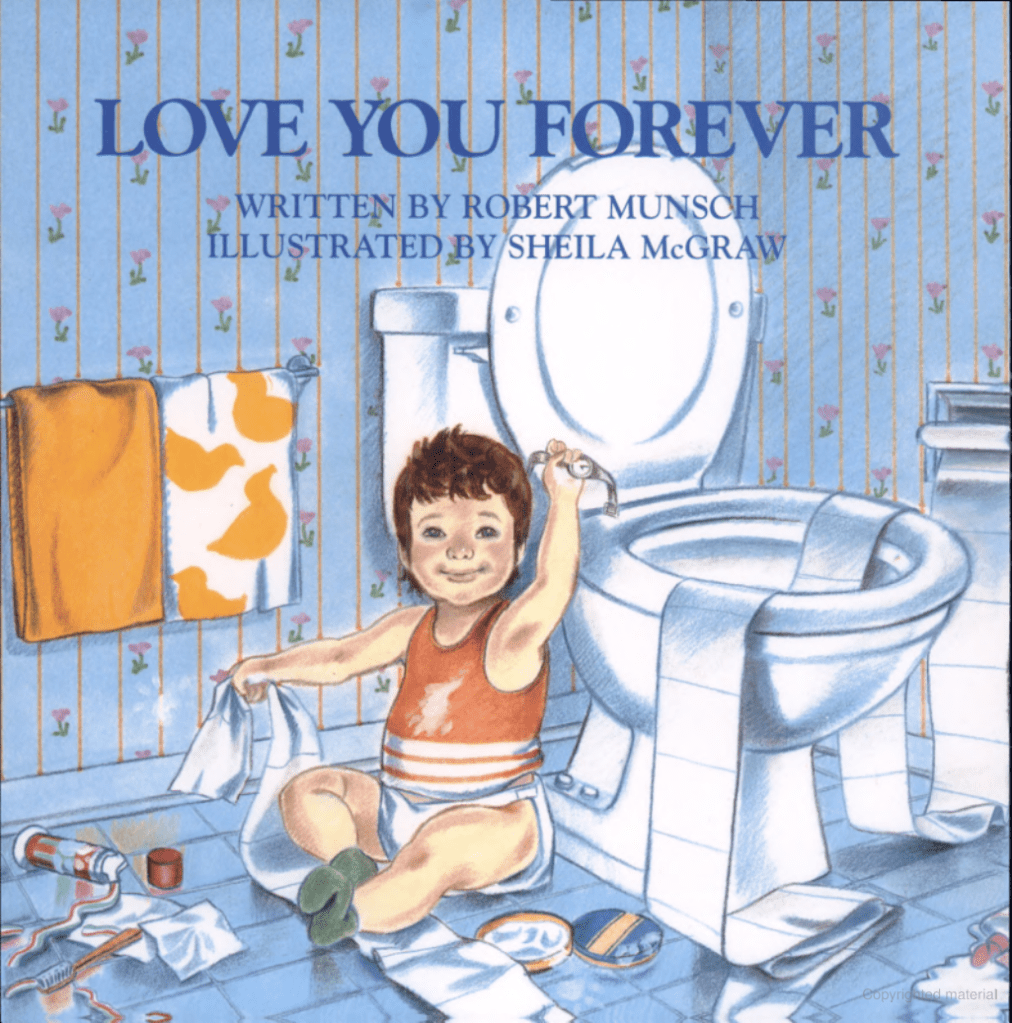
But, I can guarantee, Mom or Dad, Grandma or Grandpa, that you’re going to get all choked up when you read this book to your little one. Even the 21st time, you’re going to get emotional. Robert Munsch walks us through the entire cycle of life in this sweet story of how we love our kids forever- and how they love us back.
There’s a little tune we made up for the song part, remember kids?!
It’s good to build these kinds of memories for and with our kids. I hope that when the little ones of today look back, that they have memories of stories that impacted them, not just a blur of technology and screens. I think, for our generation, it takes intentional effort. Now back to that question: What book takes you back? Would it be a sweet story to share with the littles ones in your life as you book some time with them?
Sleepover vs Sleep
If you have a young child who is starting to create their first friendships, sleepovers may become a challenge. They can become an issue for so many different reasons.
One of our kids (I won’t say which!) really had trouble falling asleep; they would read lots of books in bed and that really helped. When this child would sleep at someone else’s house though, he was always that kid who was the last to fall asleep. FYI, that is not convenient for the parents hosting the sleepover! The other didn’t like to read to themselves at bedtime, and they didn’t like to be away from “Mommy”. There were tears and sometimes screams. Just to reassure you young parents, they are both completely independent now- things have changed!
Some kids have health issues that present challenges, some have dietary restrictions, and some just have separation anxiety.
There is a cute, sweet story about this topic. We can read it to our kids just to enjoy a funny story, but it can also help that child who is a bit nervous about spending the night AWAY from Mom and Dad: Ira Sleeps Over by Bernard Waber.

Here’s how it starts:
“I was invited to sleep
at Reggie’s house.
Was I happy!
I had never slept at a
friend’s house before.
But I had a problem.
It began when my sister said:
“Are you taking your teddy bear along?”
…..Because you never slept without
your teddy bear before.
How will you feel sleeping without
your teddy bear for the very
first time? Hmmmmmmmmm?”
You can see where this is going with the sibling as the antagonist. Does that sound familiar? 😊 The humor in this story is clever, with just the right amount of sweet and sassy.
Ira has to figure out how to solve his problem. So much of what we teach our kids is about decision making. Having a story with an example of how to work things out can be useful to us as we parent and to our kids as they relate to and connect with characters.
Ira’s sister does not let up, but Ira figures out what do to. I won’t tell you what he decides, but there is a sleepful ending!
Thank goodness, as our kids got older, large sleepovers became less enticing. One or two close friends staying over became more of the norm. “Llego” forts were built and dance routines were carefully choreographed. Going to sleep actually became a possibility. I wish someone would write a children’s book about how sleepovers aren’t all that great- something like, “Perfect Parties End at 8:00(PM)!” Hmmmmmmmmm…….?
Day Idea: Budding Authors
I’ve had a hard time coming up with a blog idea this week. Ideas typically spiral through my mind and I have to hone in on one, but today it has been a struggle to select a book to write about. Then a thought occurred to me: maybe our kids need to be the author occasionally.
Even little ones have ideas, magical ideas, that can teach us about who they are and how they think. Maybe one afternoon, after reading a book or two, we can ask our little ones if they want to write a story and be the author themselves. They don’t have to be able to write; that can be our job! Can you imagine how important they will feel, being the author?
All we have to do is this:
- Get some paper, whatever is available, and fold in into some sort of book form.
- Characters: ask them who or what they want their story to be about; suggest pets, family or friends, outings, silly family traditions, their favorite characters from other books or shows, or if they want to be the main character themselves!
- Setting: ask them where the story will take place.
- Conflict: explain that most stories have some sort of problem or situation that needs to be handled. What is their character’s problem?
- Start writing; do your best to write down the story as they tell it.
- At some point, suggest a “resolution”. “How is your character going to fix his or her problem?” Continue writing (condensing if necessary 😊) and finish the story.
- Praise your little one for creating their own story! Read it back to them so that they can see the wonder of what they created! Ask them what they want the title to be (this can be easier at the end rather than the beginning) and write it at the top, and then add their name as the author. How cool will that be?
Now the extra fun part can be giving them the “book” and asking them to illustrate what they have just explained in words. Not only are we spending some creative time with our little ones, but we are getting a little glimpse into their hearts and minds. We may get a little peek into what is bothering them, what they are thinking about, and how they solve problems. This time together may open the door for some helpful conversations.
They will most likely want to “read” and share their story with other family members as well. Be prepared for the story to evolve and become a bit more exaggerated each time. That’s okay! Maybe they’ll want to write about this character on another adventure next week. You never know what kinds of seeds you are planting as you talk, create, and illustrate together. All I can say is, future teachers will thank you, and you’re creating special memories at the same time!
Why Read to Them?
The answer to this question became too long to write about using paragraphs in a blog! I’m confident that there are many other reasons that didn’t even make the list. Here are SOME of the convincing arguments for us as adults to make time to read with our little ones:
READING:
*helps us understand language; improves literacy
*stimulates the imagination
*stimulates/expands vocabulary
*expands understanding of the world
*helps develop problem solving strategies
*helps develop listening skills (read aloud)
*helps interpret meanings of specific text later in life
*stimulates curiosity
*helps develop the brain and the ability to focus
*helps develop the ability to concentrate
*helps develop social skills and communication by modeling correct/incorrect behaviors
*helps with discerning the difference between real and make-believe
*can reduce stress
*can improve memory
*can help with decision making as knowledge grows
*expands the mind!
*can improve sleep
*provides a safe way of exploring strong emotions
*can be motivational or inspiring
Reading to and with our kids at an early age can literally prepare them for academic success. Academic success can prepare them for real- life success as adults!
Reading strengthens cognition. The principal at our elementary school always promoted this saying: Knowledge is Power! I believe this and the fact that reading provides knowledge of the world around us.
But maybe the most important reason isn’t even on the list. Sitting down and reading a book with your child provides TIME, time away from the many distractions of our busy, exhausting world. It provides meaningful time to just be together and block out everything else.
There’s another relevant reason that we as adults should still be following this advice: studies show that reading can even help prevent Alzheimer’s disease later in life! Let’s keep that brain muscle active for as long as possible, for our kids and for ourselves.
Be Careful Little Eyes, Be Careful Little Ears
Most of us “adults” understand how important reading with and to our young children is. We can imagine and explore worlds beyond our little neighborhoods, and we can help lay a foundation that will cultivate successes in the classroom.
But, does it matter WHAT we read to them? I believe the answer is yes.
Remember the song, Be Careful Little Eyes What You See?
O be careful little eyes what you see
O be careful little eyes what you see
For the Father up above
Is looking down in love
So, be careful little eyes what you see
O be careful little ears what you hear
O be careful little ears what you hear
For the Father up above
Is looking down in love
So, be careful little ears what you hear
O be careful little tongue what you say…..
O be careful little hands what you do…..
O be careful little feet where you go…..
O be careful little heart whom you trust…..
O be careful little mind what you think
O be careful little mind what you think
For the Father up above
Is looking down in love
So, be careful little mind what you think
So, be careful little mind what you think
Source: Musixmatch; Songwriters: Traditional / David Norman Anfield
I believe that especially in the young, foundational years we should be selective and protective of what we read to our children. The world today will challenge many of our values and will expose our children to ideas that may conflict with our own beliefs.
I remember having a conversation with some of my peers. We were debating whether or not watching violence on TV can have a violent effect on kids and teens. I believe that it can and that it can desensitize us to situations that should bother us! Others think that this can just be categorized into “entertainment”. All I know is that after every time we watched Beauty and the Beast (47 times?), my son would “become” Gaston and march around the house with a fake sword. I also know that after watching too much scandal on a certain network, my mouth becomes more of a potty mouth! Am I the only one? I’m 60 years old and I’m still impressionable.
We just watched a powerful, positive movie on Netflix called Greater, a true story. We both felt moved to be better, to be more intentional in sharing our faith.
I don’t need studies to prove or disprove that shows, movies, and books have an effect on us. I have seen it in my children and I experience it personally. They make imprints. They give us ideas. They make us think about and question what is right and what isn’t.
What we expose our eyes and ears to finds its way into our minds. What we allow into our minds leads our mouths and guides our hands. Philippians 4:8 tells us to “THINK upon things that are true, noble, right, pure, lovely, admirable, excellent and praiseworthy.” We have to seek out information and text that will steer our children in the way of things that are noble and admirable. I believe this has to be intentional; let’s choose.
And that, Gina, is why I wouldn’t buy the Brittany Spears CD when you were only 8 years old. 😊
CHOOSE JOY
There’s this little time period in the lives of our little ones when we get to mold their entire worlds. It’s this tiny piece of time where parents or caregivers have complete control, control over what our kids eat, their schedules, who they interact with, and what they are exposed to. When our two children were born, one year apart, until the youngest started kindergarten, was probably my favorite time of life. I was fortunate to be able to determine the quality of our days together.
The outside world did not yet have much of an influence on their hearts and minds. It was a fleeting speck of time and I treasured every second of it. Yes, there were doctor appointments and medical issues we had to figure out. But overall, our time was filled with playing, family, exploring, reading, play dates, games, pets, and church activities.
One difference of that time period for parents of today is that we did not have technology vying for our children’s attention. We had TV and VHS tapes 😊, but I didn’t even have a cell phone as a parent yet! We only communicated with people through landline telephones at chosen times. We were not constantly available. Life really was simpler and slower.
I cannot wait to become a grandmother. I know, though, that I will have to intentionally block out the world when I get time with little ones again. I believe that parents today are under more stress and tension to constantly “be available” through all of our many devices. There is a need to quickly respond, to check text messages, and to check emails.
Isn’t okay to NOT be available sometimes, to put the phones aside? Isn’t it okay to choose a simpler, slower, healthy pace at some point in the day? Isn’t it okay to determine that from dinner for an hour or so, we are going to try to spend time together eating, talking, and possibly reading with our kids?
I hope that I choose “slow and simple” in the formative years. Heck, I need to choose more “slow and simple” time even with my husband now! James 1:2 reads “Today, I choose JOY”. Maybe, when we choose time to just BE with our children and to read them sweet stories and shut out the world, we are doing just that. We are choosing simple moments of joy.
Fiction vs Non-fiction
When we think back upon the first stories that we start reading to our little ones, many of them are fiction. Clifford, the adorable, big red dog isn’t real, Barney the purple dinosaur doesn’t exist, and the cat in the hat didn’t really come over to babysit! We can still learn so much from these characters and their stories. Others are more realistic, but still fiction: The Giving Tree didn’t really “love” a little boy, and Mom didn’t sneak into her adult son’s house and rock him to sleep every night (Love you Forever), I hope!
These stories are FUN. We should be reading these stories to our kids. But, we can also expose them to nonfiction.
Our two children were both miracles, products of much prayer. After years of surgeries and infertility, God brought us our son through the beautiful gift of adoption. Then, low and behold, after one last surgery for endometriosis, when he was just two months old, I became pregnant. The kids were less than a year apart, and we were overjoyed!
We wanted them to KNOW their stories from the start. We didn’t want to make a big announcement one day, revealing the adoption story and the birth story. So, we ordered some books and read them to the kids from the very start. Curt’s book told his adoption story, and Gina’s book told her birth story. Both understood from the moment they could, that God brought them to us in different, purposeful ways. It was a gradual and natural understanding of our family dynamics.
Biblical stories and those about historical folks who help others can help lay foundations and inspire our kids, even at young ages. When I taught middle school, we taught fiction (false- remember F=F) and non-fiction (not false) as well as primary vs secondary sources. I loved using The Diary of Ann Frank as an example of a non-fiction, primary source. Since the diary is hers, written in her firsthand perspective, this is a primary source. I typically got choked up telling my class about her life, and many of them were inspired to go check out her book in the library and read her words for themselves. Reading this diary changes us; you’ll never forget what she, her family, and the Jewish people endured.
There’s a place for both; fantasy and fun and imagining, as well as understanding the history of our world, the wonders of creation, and our little roles within it. As we plant these seeds, fruit will grow! It’s our job to start watering and tending to these precious young minds.
And again, future teachers will thank you!
THE VALUE OF “STORY”
When Jesus wanted to teach us about God, His love, and His purpose, He used stories! When He wanted to teach us about how to treat others, He used stories. When He wanted to show us how to live, He used stories.
If you’re someone who can disappear into a book, then you know the impact of “story”. Even if you’re someone who loves to watch movies or a good series on TV, you realize and appreciate the impact of a good story. We like to tune out the fears and worries of the world in the evening and tune into a story that takes us to another place and time.
With realizing how impactful stories can be, whether through books or movies, it is important for us to choose carefully what our children read, hear, and process. We don’t have complete control over what our kids hear at school or preschool, on the bus, at sporting events and practices. They will see and hear things that they don’t understand or things that confuse them. Conversations will be needed- when we are lucky enough for them to bring these topics to our attention.
Young children are being presented with choices at very young ages today; choices that they may not yet be ready to make. Reading them stories from the Bible, stories of people who struggled and persevered, stories of people who walked in great faith, and stories of folks who helped others, can have influence. Maybe your own story, Mom or Dad, Grandma or Papi, can have a beautiful influence on the little ones in your life. Share it 😊.
This influence can come in the form of encouragement, healing, or inspiration. Notice, watch and listen, to what our little ones are saying and what they may be worried about. Notice what brings anxiety or fear into their lives. Then, seek out stories with characters that they can connect with. Help them turn their own stories into ones of healing and hope by providing examples of grace or triumph.
The Little Engine That Could, is so much more than a story of an engine climbing up a hill. Why do we like it so much? Because it’s our story. It’s the story we each live as we struggle through “whatever”! Let’s help our little ones write their own stories, girded in faith and confidence in whatever comes their way. Choosing stories that reinforce that they are loved and that they have purpose helps them write their own beautiful stories. Since Jesus used stories to teach, we can’t go wrong following His lead.
Read the Book First
If there is both a book and a movie, read the book first. Why? Because that’s where the story came from! The thought, the characters, the plot, and the desire to create a story for either entertainment or for a message, started with somebody who wrote a book.
Someone had an idea and nurtured it until they finally put it into print. Over time and for various reasons, others started enjoying the book. They read it to their children, their grandchildren or their classes. They shared it in book clubs and with friends. Word spread, and eventually a producer or someone in the movie industry thought that the story would make a great movie (an author’s dream, much of the time).
For some folks, the first time ever hearing about it may be the form of the movie itself. But for the fortunate ones, it started with a book.
This takes us back to the title of this Blog, Read the Book First. I will stand by this statement as it applies to children’s stories and to adult novels as well.
Think about one of your favorite novels that was later made into a movie. Before the movie was ever created, you were drawn into the plot. As you read, you created an image for every character. As you read, you imagined the setting that your own mind created. You were reading, learning, thinking, creating, comparing, and evaluating all at the same time (Bloom’s taxonomy, teachers?)! You took the printed words and created a personal movie in your very own mind. The author was the creator, but you were the director and the producer.
When you later went to watch the movie, how did it compare to the book?
Sometimes, we are pleasantly surprised: Harry Potter, How the Grinch Stole Christmas, Shrek, and Beauty and the Beast. But this can be so tough to pull off! Often, we are disappointed because what we watched on the screen just can’t compare to what we created in our minds.
A fun family idea might be to routinely read a book before going to see the movie! This builds up excitement and anticipation and creates a fun family event. It also honors the author and the fact that the book is actually the true form of the story. It’s even more worthy of our time.
Here are some great children’s books that were later made into movies; there are hundreds more. These were just some of my favorites….and they all started with someone who sat down to write a book!
Beauty and the Beast, Gabrielle-Suzanne de Villeneuve
Because of Winn-Dixie, Kate DiCamillo
Charlie and the Chocolate Factory, Roald Dahl
Charlotte’s Webb, E.B. White
Cloudy with a Chance of Meatballs, Judi Barrett
Curious George, Margret and H. A. Rey
Harry Potter series, J.K. Rowling
How the Grinch Stole Christmas, Dr. Seuss
Jumanji, Chris Van Allsburg
Madeleine, Ludwig Bemelmans
Mary Poppins, P.L. Travers
Mr. Popper’s Penguins, Florence and Richard Atwater
Shrek, William Steig
The Cat in the Hat, Dr. Seuss
The Jungle Book, Rudyard Kipling
The Lorax, Dr. Seuss
The Polar Express, Chris Van Allsburg
Where the Wild Things Are, Maurice Sendak
Just Five Minutes

In this modern era of life, WE ARE BUSY. Life has become much too complicated. This world of technology and passwords and endless steps to do every single thing can literally drive us crazy.
Our brains have had to adapt to this lifestyle and we are forced to multi-task constantly. We may even find it difficult to just STOP and REST and BE. We’re adapting and many of us are tired….and so are our kids.
Maybe that’s why it is especially important for us to make the effort to get our kids outside to play and also to just be still and read (you know, those old fashioned things). Just as our brains and bodies need rest, so do those of our little ones. And watching TV is not the only way to do this. As a matter of fact, many studies show that screen time really isn’t resting at all.
Let’s just be honest, we do find time to watch a certain series on TV so that we can relax and just shut down for a while, right? I do! But think back to when you were little. Didn’t you also love story time with your mom or dad or grandparent? Have we lost that completely?
Five minutes. Not a 30-minute news report or an hour Netflix show; just five minutes. I’m speaking to myself as well here. That’s all that is needed. Those sweet little stories like, “Is Your Mama a Llama?” and “Baby Beluga” don’t take much time at all. You can read, cuddle, and laugh for five minutes before prayers and bedtime. You will decompress, your little one will feel safe, and precious conversations will evolve.
Honestly, just five minutes. You may actually find it’s your favorite five minutes of the day.
A Picture Really is Worth a Thousand Words
This title may sound contradictory to what I’m trying to do with this post! But it’s very connected.
Twenty years ago, we took our kids to the canyon lands. It was one of our favorite family trips. We rented an RV for 8 days and started in Sedona. From there, we traveled to and camped in the Grand Canyon, Lake Powell, Zion Canyon, and Bryce Canyon. These canyon lands are God’s Glory in full display. It was the trip of a life-time.
With the Biblical foundation we tried to establish in our family, it was a spiritual experience for me. Mike and the kids got me a Ziggy postcard from the Grand Canyon with Ziggy looking over the beauty of the canyon, proclaiming, “Go God!” I still have it. That’s all the words that were needed, as the image said it all.
Having read the kids stories from the Bible, the greatest Book of all time, made our experience more than just a fun vacation. I felt like we were witnesses to His creation and even to evidence of a great flood having covered the earth. It was much more than just a vacation.
What we read and share with our children impacts the way they will look at life.
This past week, we were fortunate enough to experience Yellowstone National Park and The Grand Tetons with our son, Curt, and his wife, Ashley. It was the same type of experience within another world of beauty and splendor. This was yet another trip of a lifetime with two of our grown-up kids.
When you look upon these lands, you feel as if you are getting a glimpse of heaven itself. The beauty of nature and creation reveals the work of the Master Artist. Psalm 19:1 reads: The heavens declare the glory of the God; the skies proclaim the work of His hands.
Here’s a picture from the trip that speaks a thousand words:

All that is really needed is, “Go God!”
Shut Out the World…..for a Moment
Summer vacation is starting for school aged children and even for some who are preschool aged. If you “home-school” your children, you are most likely adjusting your schedule to be more flexible, with outdoor adventures and group outings. For many children, summer allows for more play and more rest, a break from the normal school and extracurricular routines.
We can try to teach our children to be empathetic. We can lead them in prayer for those who are in need right now. We can guide them: we can model “giving” by sending donations, by serving in our local pantries, and by volunteering at church activities that help others.
I do think that it’s important for their mental health too, that we allow them moments or days of relief from the pressures of the world. Let’s allow them to be kids and feel free and just play. Let’s insist that for a portion of each day, we turn OFF ALL DEVICES and ask them to read and reflect or draw. Shut out the world for a moment. Take them to the library (remember that?) every couple of weeks and let them pick out books of interest. Share some of your favorites from “way back when”.
Not only are we creating readers and critical thinkers, but we are steering them towards a more positive mindset. We are giving them permission to shut out the world and escape into someone else’s – maybe it’s Mike Mulligan’s, Harry Potter’s or Meg Murray’s world. It’s another world of adventures and these often offer hope.
It’s a balance that’s healthy for all of us, adults included. I want to be aware of the overwhelming needs of my brothers and sisters around the world. I want to help, honestly more than I am. But I also know that I need to still be able to function daily, to be able to meet the needs of those in my everyday life. So I allow myself moments of escape. A devotion, a fun movie, or a good book (and yes, a glass of wine) can provide relaxation. Minus the wine 😊, reading a good book can do just the trick for our young ones when they too need to shut out the world and just be kids.

A Day Idea with a Cultural Connection!

Most of us took a foreign language in high school and probably even college. Many of us need practice and reminders in that foreign language now. My father is from New Jersey and my mother is Cuban, as is her entire side of the family. They met here in the states when my mother was sent here for school. I grew up speaking both Spanish and English around my family, but when we moved away from family for a job transfer, we spoke less and less Spanish at home. I took four years in high school, and continued into college. You’d think I’d be fluent, right?
Well, I have forgotten so much. At family reunions, it comes rushing back into my mind, but those are few and far between now, as we are spread out all over the country. I am ashamed to say that I need a serious refresher in the Spanish language. I can put together very few sentences now.
I’ll come back to that in a moment.
I have too many books. I have books for toddlers and young children, elementary school aged children, and middle schoolers, as well as many adult classics. Having taught English-Language Arts and Ancient World History, I have collected a variety of books on writing and history as well. As a potential “Nona” I am already planning and preparing books to read to a grandbaby during the early and formative years.
But still, when I’m in (a LONG) line at Marshalls, I find myself picking up MORE BOOKS. When I’m shopping on Amazon (too often), I peek at the children’s books and my finger just clicks “add to cart”. Es un problema.
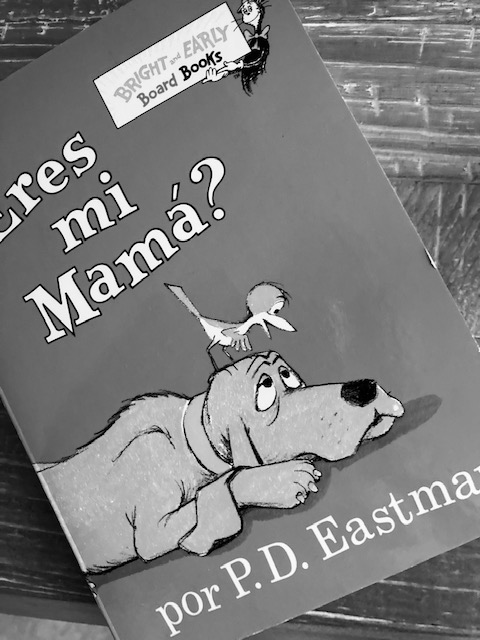
Then I had an idea. Maybe I can use my problem to teach a grandbaby and reteach myself! There are so many of our favorite little stories in other languages. I started looking on Amazon, and there they were! I found Are You My Mother (?Eres mi Mama?), Head, Shoulders, Knees and Toes (Cabeza, Hombros, Rodillas y Deditas de los Pies), and Love You Forever (Siempre Te Querre).
If I start reading these stories to a little one from the start, they will start to think and process in both languages. This can open up all kinds of conversations and opportunities to learn, for both of us! All kinds of day ideas can come from these stories, focusing on one at a time.
Maybe some of yours or your children’s favorite stories are already translated and printed in Spanish or French or whatever language you’d like to expose your kids to. What a fun way to refresh your own memory and to help develop young minds; reading but reading the same story in two different languages. Connections will be made and new cultures will come to life.
And thus my book addiction has a new purpose, uh oh……
My Hope and Challenge
At my age and in this time of life, social media just does NOT hold much of an appeal to me. I got off of FB quite a while back and never established any other kind of social media presence.
Then I retired. And then, I really wanted to start writing children’s books. THEN, I joined a writing group called Hope*Writers, one of the best decisions of my adult/retired life. But, one of the constant suggestions that was a part of teachings from experienced authors, agents, and publishers was TO ESTABLISH A SOCIAL MEDIA PRESENCE and DEVELOP A TARGET AUDIENCE.
OMG. Me whining, “All I want to do is write some children’s books”.
THAT is the purpose of this blog and why I am sharing it with you.
My daughter helped me design the website and that was no easy task. There is a “BOOKS- Coming Soon” section with the children’s books that I’ve created. There are three stories in the “God Made” section where a dad shares Biblical stories with his little girl. There are also three stories in the “Paul Peters” section, and these are about a boy and his dog, teaching values and responsibility. Writing the stories was creative and wonderful. The difficult challenge now is finding an agent or a publisher who shares my vision and is willing to take a chance; finding someone who also believes that “booking time with our kids” can truly enrich their lives, and might be willing to work with a new, unknown writer.
I hope the books can provide a time to shut out the world and sit down with our little ones, teaching them about God’s creation and perfect design.
I have NOT done a very good job of promoting myself or this platform, and I’m asking you to help me. I’m asking you to share this weekly blog (https://ninawheeling.com/) to any young mothers, fathers, teachers, grandparents, caregivers, young parents, or churches who may be interested in reading ideas for their kiddoes. They can subscribe for a short, weekly book idea at the bottom of each page, an idea about how to make reading with our youngsters fun and engaging.
I am back on FB now, as Nina Maria, for various writing workshops and teachings, and it has been very useful for that purpose. Instagram has been a huge leap for me. I literally started an account LAST NIGHT and am watching YouTube videos about how to use it! I need some honest advice on how to promote these ideas and simple children’s books with biblical, traditional themes. If you’re willing, help an old girl learn new tricks 😊. Help an old teacher, wanna-be-author learn how to share traditional ideas that can help us “book some time with our kids!”
Comment/advise/subscribe/share on the website:
“Booking” Time with Kids; How Books Can Help Us Help Our Kids!: https://ninawheeling.com/blog/
Or comment/advise on (a very new 😊) Instagram:
https://www.instagram.com/ninawheeling/
I’m learning that I’m just going to have to keep pushing myself out of my comfort zone, and that writing/promoting children’s books requires so much more than just writing!
The Bookshelf

We’ve just moved after 31 years in one home. We built that home when we were 29 years old. We raised both of our children in that home, and honestly, we feel like we grew up there as well. We remodeled and updated on a regular basis and we thought it was cozy and inviting. One of my favorite things about it was the built-in shelves and bookcases where we kept and displayed books and photos. Certain family members insisted I had too many photos and books there, but I won’t name names! 😊
We’ve decided to sell and build one more time, so we have just moved into a rental home. It’s cute and clean and will be just fine for a year (we hope) or so. One thing that’s missing, though, are shelves! There are none.
So, I’ve been on a mission. And I’m thrilled about my discovery. Some of you know how much fun it is when you find the very thing you’ve been looking for at Marshalls or Homegoods. I found the PERFECT book shelf.
Why is this important to me?
We display the things that are meaningful to us. We put up pictures of those we love. We use our grandmother’s vases for flowers. We hang our father’s oil painting. We cook in our mother’s aprons and use her mixing bowls. We keep and display our children’s booties or baptismal gowns. These things have special meaning to us.
When we have a designated place for BOOKS, it demonstrates to our children that they are meaningful, that they are important. And when we create a place for them to explore books, they will.
We can put the books on the shelves in many kinds of categories: books we’ve read, books we want to read, books that rhyme, our favorites, or books we want to share or pass on. We can use a simple bookshelf, or we can purchase cute little baskets from Target, Walmart, Hobby Lobby, Homegoods or Amazon. Whatever organizational system works is just fine!
If we want to “book time with our kids” we have to have some books. A cute little organizational system will demonstrate that these books and these moments have value. Hopefully, our little ones can spend time on the floor, next to the shelf or the baskets, and just BE.
This also gives us a very specific reason to hit Homegoods or Hobby Lobby.
You’re welcome 😊.
Incorporate (your idea of) Good Music

Good music can be good for the soul. We may have varying opinions about what is “good”, but most of us listen to music because it brings us pleasure or helps us relax.
Thanks to my dad, music was a constant part of life in our family growing up. We were exposed and listened to all kinds of music, but his favorite genres were/are jazz and opera. Music played during dinners, parties, and when the family was just reading and hanging out. My brother and I learned to appreciate all kinds of music and took lessons in guitar and piano. Much to my father’s surprise and chagrin now, my brother and I both adore and regularly listen to country music, not his favorite genre 😊.
I still love listening to music and dancing to music as well! We played a lot of music in our home as the kids grew up too. When I was teaching Ancient World History to 6th graders, I would incorporate music into daily lessons. When we studied Ancient Egypt, I would play Egyptian music, when we studied Ancient China, I would play instrumental Chinese music, and so on. Music set a tone in the classroom and made us feel a bit enveloped by the specific culture we were studying. It created a calmness in the classroom, and I think it even helped the kids relate to the culture they were learning about.
We can set the same tones in our homes. If we want our little ones to have daily time away from devices where they spend some time reading, music can help set a calm, peaceful tone. In the classroom, I typically selected instrumental music so that the lyrics would not distract from what we were reading or writing about, but we can select whatever works best for our families. Anything can be found on YouTube: instrumental Hebrew music, instrumental Greek music, sounds of nature, screenplays like The Lion King, or one that never disappoints, The Piano Guys! Maybe our kids can choose the genre of music and we can just type in “instrumental” at the beginning of the search.
We’re exposing our kids to culture through music, as well as encouraging reading. They may look forward to both the music and the reading time. In the craziness of this world right now, simple moments with good music and a book may be just what is needed. Now your family just has to agree on what type of music qualifies as “good”!
Which Reading Response?

We may need to make effort to make reading time with our kids FUN.
Instead of “Okay, turn off devices, it’s time to read.”
Response, “Ugh, just one more minute on my game, Mom….”
We have to figure out how to make this happen:
Us, “Okay, it’s finally READING TIME!”
With a response of, “Okay, be right there, Mom!”
HOW DO WE DO THIS? Well, you may have some original tricks up your sleeve, based on what your kids enjoy. If you’ve been reading my blog, I’ve already suggested some ideas, and I’m throwing in a few new ones too. These are just some simple ways to possibly turn the response around:
- Make regular trips to the library and let the kids pick out high-interest books. The more they read, the more they will figure out what types of books hold their attention.
- Create a comfortable and cozy reading area– maybe some bean bag chairs or pillows and fluffy blankets.
- Have some sort of organizational system- book baskets or cute shelving that the kids themselves organized and had some input into.
- Incorporate instrumental music of their choice, making the ambiance calming and peaceful.
- If you’re open to this, provide an easy snack like popcorn or fruit; just to entice them a bit more.
- Ask them to think of “day ideas”, ways to extend what they’ve learned or read about. The kids may come up with some field trip ideas, based on what they’re learning!
- Provide the opportunity and means for the kids to write their own stories, if ideas start popping into their minds while reading.
- Be a role model; you read while they are reading. You may be reading to them, or if they’re old enough, read your own book. This reinforces that this is a worthy way to spend our time.
- Definitely let the pets hang out with them during this time (maybe this should be #1!)
- Read the book first, and if this is appropriate and possible, THEN go watch the movie; reward time!
- Create some artwork based on their favorite stories…..there are so many possibilities here.
- Talk about it. At dinner, ask them to tell you about what they’re reading or what you read together. Encourage them and tell them that you’re proud of them. Those words of support and love may have the greatest impact of all.
YOU may have more creative and more fun ideas of your own. Please share, we’d love to hear them (below). Let’s help each other make reading time something our kids look forward to. I’d really like to hear this, “Is it time to read yet, Nona?!” 😊
WHATEVER WORKS!
How long should our reading time be?
Whatever works for your family.
How many books should we read?
Whatever works for your family.
When should we try to fit this into our schedule?
Whenever works!
If you’re trying to establish a reading routine with your kiddoes, take baby steps and make it simple. Literally, start with ONE BOOK. You may decide that this works best after dinner or at bedtime, or another time. Hopefully, once a simple routine is established, both you and your kids will look forward to it, and it will naturally grow into two or three stories…. and eventually into chapter books where the kids are reading independently.
Five minutes may be all you have and all you need some days. That’s realistic and that’s fine! Have you heard the saying “Quality not quantity is what counts”? Those five minutes of reading/talking time with our little ones may overshadow endless hours of screen time. I also think we don’t need to feel guilty if we miss a day or days – life can get crazy. We need to give ourselves some grace and work our way back into healthy routines.
I know I’m old-school, but I spent enough time in the classroom to know that our kids NEED time away from technology and that they NEED to read/process/imagine in their own minds. Before I retired, and this is the honest truth, when I asked my students to close their laptops and told them that I was going to read to them, they were GLAD. When I told them that we were going to write on real paper and draw about what we read, they were EXCITED.
Build a little reading time in your daily routine. Individualize it, make it fun, peaceful and mandatory. You and your kids can decide how and when. Let them have input too, and make whatever works, WORK! 😊
The Significance of Content
It matters what we read to our “littles”.
At the very beginning, when we first start reading to babies, controlling content is not as crucial. We focus on books that teach basics like colors, senses, numbers, letters, animals and animal sounds, parts of our bodies (heads, shoulders, knees and toes 😊) and books about our kids themselves. We like to read stories to them about how special and unique they are and how much we love them. We choose books with cute rhymes and colorful pictures.
As our babies grow into toddlers, what we read to them has influence. It matters; we are helping them establish a world view.
The “world” will start teaching them from the first moments of understanding, so we need to be intentional with this as well. We tend towards tolerance today, and this is good as we teach kindness and understanding. But it does not mean that we have to compromise on what we think of as right and wrong, truth and lies.
Yes, read sweet little rhyming stories and stories that personify animals where they talk and make silly decisions. But also read stories to them that teach them about faith, grace, forgiveness, and most of all, God.
The single motivator that has propelled me to begin this entire writing process is what I believe to be TRUE in God’s Word: that we are CREATED in the image of God, that we are fearfully and wonderfully made, Psalm 139: 14. There’s actually SCIENCE (AnswersinGenesis.com) behind our design; our cells, our DNA, our unique designs. The complex designs of all life on earth cry out in defense of creation.
Our kids are going to hear all about how life just “happened” accidentally over millions of years, in complete conflict with a God who created in His image. Yes, we’ve adapted, but I do not believe we evolved. Each plant and animal has its own design and function within this world. There’s something called irreducible complexity that speaks to this- and so much more good science. There is not a conflict between science and faith, but the world will not teach this to our little ones.
Let’s give our kids answers to questions they are going to have as they grow. Let’s have an answer for the faith we have (1st Peter 3:15) . Let’s have fun, and let’s also be intentional with the content we put into these sweet young minds because, yes, it matters.
Follow the Breadcrumbs

Reading time with our kids can lead to something even more special.
Talking.
We just have to follow the breadcrumbs.
Personally, I can be a take-charge kind of person. But, as I’ve gotten (much) older, I’ve realized the value of LISTENING over talking. I’ve gotten better at it but I’m still not good. I’m working on it, intentionally. And I wish I had been better at this when our kids were young.
I am aware that I would often steer the conversation with our kids. If I could do it all again, I would be willing to “sit in silence” or just “sit and see” what conversations my kids themselves would start.
Books can help us initiate conversations that we want and need to have with our little ones. Reading a book about sadness or fear can even make our kids more aware of their own suppressed feelings. They might identify with a character and understand their own emotions a bit better.
Reading a book like “Ira Sleeps Over” may open up dialogue about being afraid to spend the night at someone’s house. After reading together, let your kiddo steer the conversation. It’s challenging, I know! We can offer some prompts and some personal experiences of our own if needed, but I think the challenge is to let THEM dominate the conversation.
Hansel and Gretel followed the breadcrumbs they had intentionally dropped in the woods so that they could find their way back home.
Sometimes, trying to “follow” the conversation of a two, three or four year old can be like trying to spot hidden breadcrumbs on a thick forest floor. But if we intentionally and patiently listen, we may uncover little conflicts or buried emotions that are rolling around in their minds. We may be able to help them find their way safely home, just by sitting and listening.
Reading time can lead to talking time, and talking time can create trust and openness. We don’t have to solve all of their problems, but we can be the person who will listen in love.
And, if you figure out how to not dominate the conversation, let me know 😊. I want to do a better job of this as “Nana” than I did as “Mom”.
Thanks for joining me! Sign up for ideas each week about how books can encourage faith and integrity within our children.
What is it About RHYMES?
Hands down, I gravitate towards a children’s book that contains rhyme. It’s fun to read a creative story with rhyme with our little ones. Why do we enjoy this so much and why do our little ones “know” what is coming…? Because there is science behind why our brains like and recognize words that rhyme.
Songwriter Pat Pattison writes, “Songs are made for ears, not eyes… (rhyming words) tell your ear where to go next, what’s connected to what, and when to stop,” he says. Rhyming plays a big part in the way storytelling has evolved in songwriting (Why Our Brains Love Songs that Rhyme). He goes on to say, “Often a section (of a song) will close with a rhyme, saying, ‘I’m finished’.
And we tend to like closure, a finish, to a song, story or movie. Our brains like patterns and enjoy resolution (personification but true!).
Laurie L. Dove, in Why Do Rhymes Help People Remember Things? writes, “Like song lyrics, rhymes are so easily recalled that they stick with us. In fact, rhyming can be an important technique to help us remember things. It all has to do with mnemonics, tools that can be used to improve and assist human memory. The term “mnemonic” is derived from the Greek word for memory.”
Rhymes can help us remember things and they help us draw conclusions or make inferences too. As a teacher, I recognize that these two reading skills help with comprehension. Last year, I volunteered with some Hispanic children at our sister church. These kids are bilingual and “process” in both English and Spanish. We worked on reading skills, and I often selected books with rhymes to use with our small groups. I found that I could read two rhyming lines of a story, completely leave off the last word and just PAUSE ….. and the kids could predict what that next rhyming word would be!
And when I say “predict” what I’m actually meaning is that they would excitedly YELL the word that I omitted. What I planned as a reading strategy, they thought was just a loud game. Check! 😊
Here’s an example from Dr. Seuss’s Cat in the Hat:
‘Put me down!’ said the fish.
‘This is no fun at all!
Put me down!’ said the fish.
‘I do NOT wish to ____________!’
Kids are going to yell the word, FALL! And they’re going to be very proud of themselves for figuring it out too.
Win, win, right? What we think of as just being “fun” truly has some cognitive merit behind it, some real understanding. So, have some fun with rhyming stories with your kiddoes because:
Rhymes help us remember.
Rhyming is more than just fun!
Rhymes help us finish our thoughts, so
Use rhyme with your daughter or son!
WHERE THE SIDEWALK ENDS Has a Place on Our Bookshelves

Ten years after his children’s book The Giving Tree was published, Shel Silverstein’s editor Ursula Nordstrom (Harper & Row) convinced him to write a book of poetry. In 1974, Silverstein released Where the Sidewalk Ends, and dedicated it, “For Ursula.” I am one of the millions of people who are thankful that Ursula asked and that Silverstein accepted.
Caitlin White, Bustle.com, writes, “He (Silverstein) was never a poetry man, he says himself. But that was why he was so good at it. His quirky, conversational style, coupled with his line-drawing cartoons, became beloved among both children and parents.
…While The Giving Tree still consistently ranks above it on lists of the top children’s books of all time, Where the Sidewalk Ends will always hold a place in the hearts of kids, and grownups. Why? Silverstein never talked down to us as children. He addressed real childhood concerns, and he took them seriously — albeit in a completely fanciful manner”.
This book of poetry holds 123 poems, stories with sweetness, humor, sarcasm and life lessons. The title poem isn’t at the beginning of the book; it has a special place on p. 64. If you and your kiddoes don’t know Silverstein’s poetry, here’s a little taste that I hope will invoke your creativity. Breathe, pause, and remember:
Where the Sidewalk Ends
There is a place where the sidewalk ends
And before the street begins,
And there the grass grows soft and white,
And there the sun burns crimson bright,
And there the moon-bird rests from his flight
To cool in the peppermint wind.
Let us leave this place where the smoke blows black
And the dark street winds and bends.
Past the pits where the asphalt flowers grow
We shall walk with a walk that is measured and slow,
And watch where the chalk-white arrows go
To the place where the sidewalk ends.
Yes, we’ll walk with a walk that is measured and slow,
And we’ll go where the chalk-white arrows go,
For the children, they mark, and the children, they know
The place where the sidewalk ends.
Sheldon Allan Silverstein (September 25, 1930 – May 10, 1999)
One of the beautiful things about poetry is that it speaks in tongues; it speaks to each of us in our own language. What this poem says to us as adults deals with remembering our childhood. What it says to children will be something entirely different. And every child will have various interpretations still!
Recognizing symbolism, visualizing, decoding, inferring, and identifying theme are just some of the reading strategies we can teach our kids when we use poetry- and they don’t even have to recognize that. They will simply become better readers and interpreters. With younger children, we can identify emotions and encourage creativity with the free message of a poem.
If you’d like to add a book that can be read and enjoyed by your entire family through the years, Where the Sidewalk Ends is one for the bookshelf. Just when you think you’re going to “book some time” with your little one, you may just find that the message within is for YOU instead.
Building Your “Little’s” Library; Priceless

Mike and I were fortunate to just have spent a wonderful weekend in Charleston with two other couples, dear friends for close to 40 years. Yes, those kind of special friends. As the three gals were having wine and talking about becoming grandmothers, I was sharing that I’ve “hit a wall” with my writing and moving forward. Well, these two started rolling out ideas faster than I could write!
So, this blog idea comes from friends who listen and care and filled me with new inspiration. Thank you, Lori and Sandra!
For some new and young mothers, starting your child’s first “library” might seem a bit daunting, financially and practically speaking. So, let’s talk about HOW to start your library and WHAT should be a part of it. There are a lot of opinions on what books are the “best” to read to your little ones, so I’m not going to go entirely down that rabbit hole- just touch on it a bit.
Your LIBRARY does not need to involve shelves lined with books from baby to young adult, categorized and alphabetized- (we can still go to the library for that, and we should)! Here are some simple ideas of how to start a simple home library:
- Start with a basket. Honestly, you can buy the cutest baskets at Target, Walmart, or the Dollar Tree. Pick a color scheme and something cute that makes you happy. One or two baskets is a great start. You can add baskets as your child grows and you add more books.
- Shop at Goodwill, Marshalls, Homegoods, Walmart, and yard sales. We don’t have to order brand new books for everything we want to share and read to our “littles”. So many of us are cleaning out and down-sizing, and we just don’t have room for all of our STUFF! You can find treasures at Goodwill and, as we know, in the line at Marshalls.
- Focus on the senses. Easy-to-handle hard cover board books are wonderful for that first year. Often these stories focus on the five senses- what our kids SEE, HEAR, FEEL, TASTE and SMELL.
- Focus on what matters to you. Picture books often focus on how much our little ones are loved or how their story started. One of our children is adopted, and we started reading his story to him FROM THE START. He always knew, and that was intentional. Read to them what matters to you.
- Focus on the world around us. This also ties into what’s important to us. As a family following the Christian faith, we often choose books about God’s beautiful creation, planting seeds of wonder and awe for the Creator. Gather books about trees and animals and the beautiful things of the world.
- Focus on Fun. This can connect back to rhyme but it can also just be about choosing funny, silly stories that make us laugh together. Dr. Seuss can sure help us out here! Eventually, reading time will become more informative, but we can show them from the start that reading can just be FUN.
- Remember. Think back on when you were young and the books that you remember reading with your parents or grandparents. Maybe you can find (or dig up) some of those same stories to share with your little ones and create multi-generational memories.
- Shower the Baby. Instead of (expensive) cards for a baby shower, ask guests to bring a book for the mother to be!
I was just given the most beautiful book from another friend, Sara, who is a grandmother of five: WHAT A WONDERFUL WORLD, based on the song by Bob Thiele and George David Weiss and sung by Louis Armstrong. It has been illustrated by Tim Hopgood and it might just be my #1 baby book recommendation. It will probably get its own blog.
Building your little’s library can be simple and it doesn’t have to cost you much at all. Booking time with our kids really is one of those things we can claim as “priceless.”
…But, if you don’t have the energy for all of that, here is a (very biased 😊) list of some sweet books to start creating your library and to “book” some time with your child:
All the World by Liz Garton Seanlon
Animal Sounds by Battaglia (or similar picture book)
Are You My Mother? by P. D Eastman
Baby Beluga by Raffi
Brown Bear, Brown Bear, What Do You See? by Bill Martin Jr. & Eric Carle
Counting Kisses by Karen Katz
God Gave us You by Lisa Tawn Bergren & Laura J. Bryant
Goodnight Moon by Margaret Wise Brown
Guess How Much I Love You by Sam McBratney
Happy Birthday Moon by Frank Asch
I Love You as Big as the World by David Van Buren
Is Your Mama a Llama? by Deborah Guarino
Just In Case You Ever Wonder by Max Lucado
Love You Forever by Robert Munsch
Pat the Zoo by LV Studio
The Cat in the Hat and One Fish, Two Fish, Red Fish, Blue Fish by Dr. Seuss
The Christmas Story by Ruth J Morehead
The Counting Book by Cyndy Szekeres (or any cute counting book)
This I Know: Seeing God in the World He Made (based on Jesus Loves Me) by Clay Anderson
Time for Bed by Mem Fox
When God Made the World by Matthew Paul Turner
When God Made You by Matthew Paul Turner
(Thanks Lori, Sandra, and Sara! 😊)
What a Wonderful Search Bar (Sometimes)
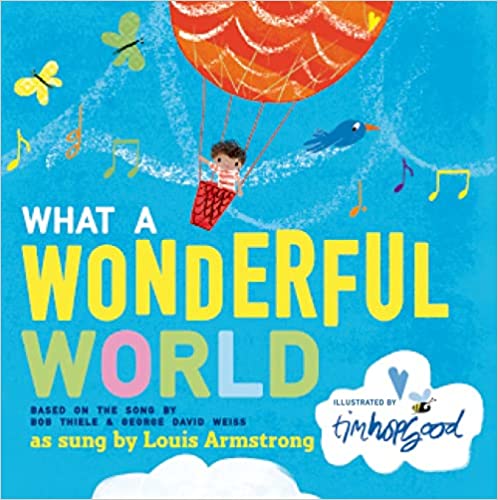
Not only can you research almost any topic, find any kind of image, and order endless products, but did you know that you can also find almost ANY BOOK ONLINE? You can find books that you didn’t even know existed as books. That’s what happened to my friend Sara. She found a special song that has been turned into a book.
Sara knows that I love the song, What a Wonderful World, by Bob Thiele and George David Weiss. She does too, and she’s been singing it to her five grandchildren. It’s one of my dad’s favorites too, as sung by Louis Armstrong, who’s also one of his favorite jazz artists. When I was young, we actually named our family dog Satcha after Louis Armstrong, whose nickname was Satchmo (we had to change to “mo” to an “a” because she was female and my mom is Cuban; you get it).
Well, Sara was wondering if anyone had ever taken the lyrics to the song and created a picture book. She explored online with just a Google search, and there it was, a beautiful picture book with the exact lyrics to What a Wonderful World. A gentleman named Tim Hopgood compiled and illustrated the book; it is simply vibrant with color and creative with display.
I adore this beautifully created book. It may be one of my standard gift books for new mothers from now on. It contains that emotional link between music and words too. Here’s a little information from the back cover:
“What a Wonderful World was first recorded in 1967 by Louis Armstrong. Today, with sales of over one million copies, this timeless song has become a poignant message of hope for people everywhere.
TIM HOPGOOD was six years old when he first heard Louis Armstrong’s recording of What a Wonderful World. Years later, his daughter found a recording of the song in a flea market and gave it to him as a present. As soon as he heard Louis Armstrong’s gravelly voice sing the first few lines again, he knew he wanted to capture the joy of the song in a picture book (timhopgood.org)”.
When I checked out timhopgood.org, I found that he has an entire section of songbooks that he has created, https://timhopgood.org/songbooks-1. You may be familiar with some of the titles: Moon River, Singing in the Rain, and Winter Wonderland. Wow,I feel like this is hidden treasure.
How cool is it that a children’s book was created out of jazz music? Sara pointed out that reading this book will inspire those that are not familiar with it to listen to the song! They will be exposed to Louis Armstrong’s authentic, raspy voice and may become yet another fan.
So, if there’s a special song or poem or scripture that holds meaning to you, try searching for it online. You never know, you may find it somewhere out there in the cloud, for yourself or for a gift. You may be surprised like my friend Sara, who gifted me, “Bee Bee to Nana”. What a wonderful World was just a wonderful gift.
Oldies ARE Goodies!
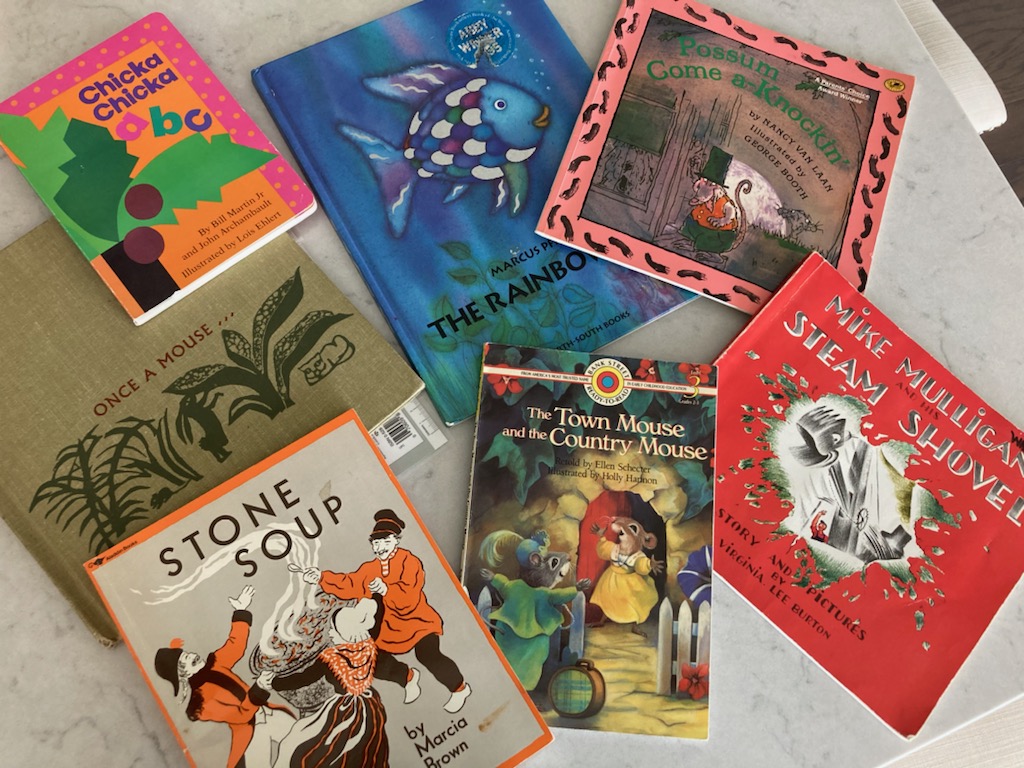
We’re about to have our first grandbaby- thank you, Jesus. And what have I been gathering and searching for everywhere I go? Books. Never mind that we have BOXES of them packed and labeled, “baby books”, “toddler books”, “children’s books”, “middle school and YA,” as well as various adult categories! I started opening the boxes, just to see what we should keep and what I could give away. Well, the KEEP pile is not sharing with the give-away pile.
And, it has been so much fun reading through the oldies. Some of these are from my own childhood, books that my parents read to me, and that I now hope to read to my grandchildren. The pages are worn and some are torn. But the memories are truly priceless. The idea of creating new memories with a 4th generation within these same pages is very special to me.
Do you remember THE BIGGEST BEAR by Lynd Ward? The copyright date is 1952! It starts off with, “Johnny Orchard lived on the farm farthest up the valley and closest to the woods.” The illustrations are only in black and gray and they are beautifully detailed. It’s the story of a boy, a bear, and farm life and it literally TAKES YOU BACK in time. Isn’t it good for us to teach our kids a bit of history, even our own more recent history? Even simple things like phones with cords and potato chips that were delivered to your house in a can?

So, I’m thinking that as we “book time with our kids”, we can just REMEMBER. Remember and seek out those books that were read to us by parents or grandparents. Dig them out, find at your local book store or on Amazon, or call your mom to see if she knows where “that box” is. You may be de-cluttering and taking a walk down memory lane at the same time! Certainly, you’ll be spending some cherished time together, generation to generation, with the oldies but goodies from your own childhood.
HOW DOES MY LITTLE ONE LEARN?

As a parent, you’ll hear and learn about different types of learning styles. You will slowly observe how your child learns best and what methods seem to present more of a challenge. Traditionally, as educators, we focused on four different types of learners: visual, auditory, kinesthetic, and through reading and writing. Since we are all uniquely created and “knit together”, it’s natural that we should learn in different ways!
VISUAL LEARNERS understand and retain information best when it is presented to them in visual ways: pictures, graphs, illustrations, models, charts, videos, and flow charts, etc. Visual images help these learners comprehend and remember. I liked to use and had my student create a lot of graphic organizers when I was teaching ancient history, as these images especially helped visual learners.
AUDITORY LEARNERS comprehend and remember information best when they HEAR it presented out loud. This may involve someone reading aloud to them, them reading aloud themselves, debate, conversation, audio from a video or repeating/restating information out loud. I incorporated a “turn and talk” strategy after teaching a mini lesson, asking students to re-teach a specific concept to their partner in their own words, to benefit auditory learners.
KINESTHETIC LEARNERS learn best by being physically active, by “doing”. They are hands-on learners and thrive when engaging their five senses. These learners learn well in experiments and lab settings as well as with drawing, painting, making and creating. When teaching ancient history, these learners enjoyed activities like creating a cartoon retelling of an event in history, using creativity and art!
READING AND WRITING LEARNERS learn best when focusing on the written word. These learners enjoy written information such as worksheets, presentations, and text-heavy resources. They may like to take notes, fill in outlines, and have very organized notebooks! They learn best when they can reference written information, in books, online, or even in in their own (usually very neat) notebooks.
Not every child is ONLY ONE of these types of learners; most students will benefit from all four types of information presentation. But many of us lean one way, we have a strength. Teachers should be presenting information in all four modes, especially in the elementary and middle school years. It’s important for us as parents to be aware of different learning styles and to be observant of how our own children appear to process information. On the flip side, it’s also important for us to be cognizant of what types of teaching presents a challenge to our kids.
In my weekly blog, I’m going to focus on these four learning styles over the next four weeks, offering some fun and simple ideas for us as we “BOOK TIME WITH OUR KIDS”. If our “littles” are just two years old or seven years old, we can certainly help prepare them for success in learning. Let’s build on the unique design within each of our little ones’ minds.
VISUAL LITTLE LEARNERS

God’s Word tells us that each of us is uniquely and wonderfully made. In the book of Psalms, Chapter 139: 13-14, David writes, “For it was You who created my inward parts; you knit me together in my mother’s womb. I will praise You because I have been fearfully and wonderfully made”.
With almost 8 billion of us on the planet, that’s a lot of uniqueness! Within that individuality come various tastes, preferences, opinions, personalities, beliefs, and the list goes on! One of the key functions within our unique minds is the way we process information and LEARN.
There are different “categories of leaners” but a common model is one using these four types of learning styles: visual, auditory, kinesthetic, and through reading and writing (see last week’s blog for a brief definition of all four, ninawheeling.com).
EducationPlanner.org states, “If you are a visual learner, you learn by reading or seeing pictures. You understand and remember things by sight. You can picture what you are learning in your head, and you learn best by using methods that are primarily visual. You like to see what you are learning. As a visual learner, you are usually neat and clean. You often close your eyes to visualize or remember something, and you will find something to watch if you become bored. You may have difficulty with spoken directions and may be easily distracted by sounds.”
In practical terms, if your child is a visual learner, he or she learns best by SEEING. These kids are attracted to color, to images, to design, probably nature and to things of beauty. They may like for things to look “nice”, to be neat and orderly. I am speaking from personal experience here! Their notebooks may be well-planned and organized, and probably even color-coded. They may want their bedrooms to have a unified theme (and they may grow up to be adults who enjoy decorating 😊). Their brains are wired this way, and they learn and remember by looking at the world around them.
Where these kids excel will be in using methods like creating charts, making diagrams or cartoon pictures, drawing, painting, building, just some type of creating! These kids may struggle a bit more with auditory learning and directions. But here’s the thing; as parents and educators, we should use these techniques with ALL OF OUR KIDS. These strategies will increase self-confidence and awareness in children who are visual, but they will also strengthen deficits in kids who are NOT.
Here are some strategies and ideas to enrich our visual learners and to stretch those kids who may be challenged in this mode of learning:
- Read a book together (of course!) and then go back to read a second time. This time, ask your child to “read” the book to you in their own words, using the pictures as their guide. Tell them that it doesn’t have to be the same; they can rewrite the story using the images and their own creativity.
- After reading a book together, have your child “draw the story” on paper. In the classroom, we would take a piece of paper and fold it into six or eight squares. Then we’d ask the kids to retell the story using images. Confident drawers would use elaborate detail; others would use stick figures- it didn’t matter. What mattered was that they were processing the events in their minds and then creating those same events in image form. They were learning!
- For older readers, have them organize their books in a way that is visually pleasing to them; Bible stories in this section, rhyming books here, funny/silly stories here, non-fiction/historical stories here, fantasy in yet another area, and possibly a “favorites” section. Categorizing and analyzing text is yet another reading skill you’ve just incorporated! Perk!
- Incorporate ARTWORK into story time or reading time. Kids can obviously draw events or themes from a story, they can paint predictions, or they can “mold” characters using clay!
- For older “visual” children in school, it may be helpful to color-code their notebooks and folders. For example, the blue folder and the blue spiral notebook are both for math, and the green folder and the green spiral are for history, etc. You get it; organize by color.
- For school aged visual learners, it is probably helpful for them to sit near the FRONT of the classroom, with a clear view of the board and information. Teachers, these kids will be checking out your posters and charts.
- Along those lines, MAKE POSTERS of important information such as: daily events, homework schedules, chores, scripture, words of encouragement, and special events. By SEEING these things repeatedly, visual learners will better remember them. Even better, have the kids make the posters or charts themselves.
- These are the kids who can look at an image of an ancient tree and create a whole story from its twisted branches and dropping leaves. Feed that creativity. Provide opportunities to sit in nature, explore beauty, and give them time and space to CREATE.
- Don’t be afraid to remove devices each day for a bit of time. Insist that your child spend time with a book, with written words and images, and just “soak in” a story, apart from their own (isn’t this good for all of us?).
- Ask them. Ask your little one, “What helps you remember?” “Do you like it when Daddy draws with you or when Mom puts a list on your mirror?” “What helps you?” Then, just listen to the ideas that those wonderfully and fearfully little brains come up with.
We will learn about how THEY learn when we “book some time with our kids”.
AUDITORY LEARNERS

Yes, God’s Word tells us that each of us is uniquely and wonderfully made. In the book of Psalms, Chapter 139: 13-14, David writes, “For it was You who created my inward parts; you knit me together in my mother’s womb. I will praise You because I have been fearfully and wonderfully made”.
There are about eight billion of us on the planet, and that translates into a lot of uniqueness. As I mentioned in last week’s blog about visual learners, this also means we all learn in different ways. One of the key functions within our unique minds is the way we process information and LEARN; some of us are AUDITORY LEARNERS.
Shero.com tells us this about auditory learners:“Sometimes referred to as “aural” learners, auditory learners prefer listening to information that is presented to them vocally. These learners work well in group settings where vocal collaboration is present and may enjoy reading aloud to themselves, too.”
Vark-learn.com shares a model of learning styles and states: “This perceptual mode describes a preference for information that is “heard or spoken.” Learners who have this as their main preference report that they learn best from lectures, group discussion, radio, email, using mobile phones, speaking, web-chat and talking things through”.
Auditory learners learn and remember best by HEARING information. I remember learning in one of our educator trainings, that most people need to hear a fact nine times before locking it into memory. When teaching, I tried to repeat important information several times (sometimes annoying my students!). But this is important, both when the information is initially being presented and then again repeatedly on subsequent days. Another classroom strategy we used was to ask students to repeat the concept or fact out loud, hearing it in their own voices and minds, better locking it into long term memory. These are methods we can use as parents too.
We often practiced a “turn and talk”- asking the kids to repeat/explain a concept or event to their partners in their own words. By paraphrasing information, our students were processing it and analyzing it. The best way to learn information is to actually teach it! Auditory learners understand this, but even visual and kinesthetic learners will benefit from it.
Here are some ideas to help our young auditory learners process and understand information:
- During reading time, even when your child gets a bit older, read out loud to him or her. I taught 6th grade for many years, and kids even this age loved it when I would read out loud to them, adding inflection and tone to the printed words. Sometimes my 61 year young hubby still likes it when I read out loud to him! How many of us enjoy an audio book as adults? That’s another idea- incorporate audio books with kids who process this way.
- Use MUSIC. We listen to music, right? Putting information to music can certainly help lock it into memory. I learned the books of the Bible to a tune…..and it is still in my memory, when many other facts have fled. Why? Because this information is attached to a melody, to music.
- Ask kids to repeat/re-teach information to you, instead of the other way around. When they are studying for a check, you (the parent) be the student and have them take the role of the teacher. The one analyzing the information enough to create the question is examining the information much more deeply than the one supplying a quick answer.
- Many websites have “read aloud” features. If not, there are easy apps to add to your child’s computer that can function in this way (Speechify chrome extension is an example). Your child can highlight specific text and have it read to them. There are usually different voices and accents that you can choose from as well. We used various historical links from Ducksters.com when teaching the ancient world because they have embedded a read aloud feature. Using this feature helps students/kids read slowly, seeing with their eyes and hearing with their ears. Win, win.
- These students may benefit from debate and group discussion. Talking about ideas with their peers and listening to different perspectives benefits these learners. Provide opportunity for conversation and debate.
- They may have or need minimal information written in their notebooks, much to the dismay of mom or dad. But key information is embedded in their minds, and they can speak it to you instead! Don’t “push” perfect note-taking; allow key ideas and bullet points, maybe even highlighted notes in place of detailed information.
- These kids may actually enjoy lectures in higher grades and college. In the early years, they liked reading circles, where students gathered on the carpet and listened to the teacher read a story. When they are a bit older, studying with a friend where they take turns reading information out loud to each other may benefit these learners.
- Again, ask your learner to give you feedback. Ask, “Do you like it when Dad (or Mom) reads to you, or do you want to read it out loud to yourself?” “What helps you remember?” “Want to put this information to a tune?”
As we BOOK TIME WITH OUR KIDS, we’re going to learn so much about them and how they learn, and we may get a peek into ourselves as well!
KINESTHETIC KIDS!
In the book of Psalms, Chapter 139: 13-14, David tells us that we are knit together in our mothers’ wombs, wonderfully made by the Creator Himself. Last week, I suggested some strategies for auditory learners and the week before, strategies for visual learners. Please visit me at NinaWheeling.com, if you are interested in those ideas! This week, we’re going to talk about children who learn best by DOING, by using their hands, bodies, and senses: kinesthetic learners.
As described by Shero.com in an article regarding learning styles, “Kinesthetic learners like taking a physically active role. Kinesthetic learners are hands-on and thrive when engaging all of their senses during course work. These learners tend to work well in scientific studies due to the hands-on lab component of the course”.
Kids who “learn best by doing” are kids who enjoy using their hands and making things. They make sense of the world by seeing how things work and literally by putting things together. These children are often creative and artistic.
At home, these kids enjoy things like building with Legos, building blocks, puzzles, puppets, molding with clay, painting with water colors, and coloring with crayons. They may like physical games like sports and getting active with games involving balls, hiking, riding bikes, and being a part of a physical team sport.
How does this translate into the classroom? Their notes/notebooks may have more images and action than words and sentences. These kids benefit from creative choice; creating a flowchart rather than an outline and using color rather than just using blue pen on a white piece of paper.
While some of our visual and auditory learners may shy away at opportunities to “act out” an event in history, our kinesthetic learners may thrive in a more theatrical setting. Using their bodies actually helps them process and understand events or theories. In the classroom, we incorporated music and dance in the classroom as much as possible. Some of my auditory learners wanted to crawl under the desk when I made the class stand up and do the “Geography Dance”, but my kinesthetic learners couldn’t get enough!
These kids enjoy experiments and watching/hearing/smelling/feeling a process occur. In the good old days, we could incorporate taste too, but that has become a bit tricky today. But at home, that’s a definite option!
Here are some ideas for our kinesthetic learners as we read with them at home:
- Before reading a book with your little one, review the five senses. As you read together, identify when in the story the characters use touch, taste, smell or hearing as a part of the story line (sight may be too easy, but it’s possible).
- Provide opportunities for your child to act out a favorite story for other family members. Your little one will pay extra attention to the PLOT, knowing that he or she will be performing it later.
- Make up a dance! When trying to understand rhyme, the five senses, nouns and verbs, addition or subtraction, the planets, etc., be creative. Take a tune you all know and make up some fun words and a dance. Read books on these specific topics for word ideas, and then let your kinesthetic learner CREATE.
- Put together an inexpensive art basket. Have crayons, paints, paper, scissors, glue, play-dough, felt, googley eyes, and pipe cleaners (sorry, I can’t do glitter, ha!). The Dollar Store has all kinds of cute art supplies. Let your little create some art work based on plots or themes within their story books.
- Get outside! When reading about the beauty of the world, allow your little to play in that dirt, find acorns, decorate with fall leaves, collect water from the river, and hike through that path looking for wildlife.
- Allow experimenting. Provide vinegar, baking soda, and easy ingredients to physically observe how elements interact and processes occur. Be prepared for a needed clean up but for a lot of fun.
- Garden with your little one. Plant seeds and explain (if you can) DNA, design, even intelligent design, as they sprout into living plants. The Giving Tree is a wonderful book to use here and just talk about all of the gifts that trees literally give us.
- Play Pharrell’s “HAPPY” when it’s time to clean up! It worked in my classroom; kinesthetic learners will think it’s a dance party!
As we “BOOK TIME WITH OUR KIDS” we can allow our kinesthetic learners to be creative and to even teach us how to have a little bit of FUN!
Our Kids Who Learn Best from Reading and Writing

During the last three weeks, I’ve talked a bit about learning styles (Booking Time with Our Kids). There are four core learning styles in the VARK model. They include visual learners, auditory learners, kinesthetic learners and those who learn best through reading and writing. Since we are all uniquely created, our brains will process information in various ways. This week we will focus on the last of these learning styles: the very traditional model of learning through reading and writing.
In its article titled “4 Types of Learning Styles”, Sphero.com shares, “Reading & Writing Learners focus on the written word. Reading and writing learners succeed with written information on worksheets, presentations, and other text-heavy resources. These learners are note-takers and perform strongly when they can reference written text.”
There may be a misconception that this type of learner succeeds most in the classroom, and that the typical classroom setting is more comfortable for them than others. While this may have been more accurate in the past, the classroom today is full of movement, activity, technology and choices. The classroom today is very different from the classroom of my generation or even that of my grown children.
Here I am writing a weekly blog about how we can use books to help our kids. But, in the classroom teaching ancient history, I didn’t use many books (what?). We didn’t even have a textbook to access! I used selected books as supplemental materials, but the majority of our information came from historical websites and online resources. We followed a specific curriculum but did not use traditional resources. We also used a lot of charts and graphs, music, analyzing of documents and artifacts; sources that these “readers and writers” may not be as comfortable with.
These are the learners who can sit with a book for long periods of time and just get lost in the story. They just enjoy reading! They may like taking notes and putting information together in an organized fashion. They like handouts from the teacher that they can put into their notebooks to review information. Looking at text and reading it is an easy way for them to understand information, it’s just the way their brains remember!
At home, how can we prepare these learners for success in the classroom?
- Take regular “field trips” to the local library. Expose them to all the various genres of books from an early age (fiction, non-fiction, historical, fantasy, auto-biographical, etc).
- Definitely allot time for them to sit and read each day. You’ll be amazed at how much these kids will learn and retain on their own.
- Create a space for these kids to organize and store their books. These are the kids who will want to read a book more than once and refer to it over and over again.
- Consider getting a notebook or journal for these kids so that they can take notes and write their thoughts; this may be a very special time of reflection for them. A diary may be meaningful to this child.
- These kids will like to have organized, color-coded notebooks for different subjects in school, like visual learners. Neatness and organization may matter to these kids.
- These kids may enjoy reading time with Mom or Dad more than anyone else. Use that time to your advantage. “They grow up too fast” is such a true sentiment.
- Encourage your kiddo to write their own ending to a story they know, changing it up! Or, ask them to create an entire new story for a familiar character, involving a brand new adventure!
- Talk about the “PLOT” of a story after reading it together. The five parts of plot are exposition, rising action, climax (where the conflict is at its greatest), falling action, and resolution. These kids may be very good at creating a NEW RESOLUTION (Plot Lesson for Kids, Study.com).
- Discuss PLOT (the events that actually occur in the story) vs THEME (the moral of the story or the lesson learned). These kids are typically great with understanding PLOT but may need encouragement to infer the THEME, the message within the story.
- Again, ask your little one what helps them learn and remember. They may want to use high-lighters to mark information or make note-cards or flash-cards to highlight certain information, ideas, or characters.
All kinds of learners benefit from learning in different ways. The visual learner can benefit from an audio book, and the kinesthetic learner may like creating a chart in his notebook. These modalities are not rigid, quite the opposite. It’s good for us to be AWARE of how our kids learn best, but to EXPOSE them to all modes of learning. When we can provide opportunities in all areas in the developmental years, it can only benefit our kiddoes in the school years. As you “book time with your kids” you will be preparing them for success AND building memories together.
Manners Matter and Books Can Help!

Manners matter. They matter for both children and adults. And I don’t believe I’m the only one who feels this way. Maybe those of us who have “lived a bit more life” feel strongly about this, but I do have younger peers who agree with this sentiment as well. The idea for this blog came from my dear friend, Lori, with whom I share many values. She is a role model for me as a woman of faith and also as a new grandmother. As we were talking about our new roles, we shared that teaching our grandchildren “manners” is very important to us.
How can we do this in a natural way that doesn’t feel like we are teaching or preaching? We want to teach manners to our children or grandchildren in a natural way that just flows from a normal day. Well, maybe BOOKS can help us do this!
Sitting down to read a book with your “little” can lead to conversations and lessons that last throughout the day and week and beyond. Should you read a book like The Berenstain Bears Forget Their Manners by Stan Berenstain and Jan Berenstain, you will have lots of laughs together. Then, you can have some follow-up conversations about what the characters did that was rude and what was polite. When those situations arise in real life, you can reflect back on the story and apply the correct behavior. Hopefully, this won’t seem disciplinary, but will be a natural conversation that flows from earlier story time.
There are so many areas of teaching manners or etiquette: manners for the table, manners for conversations, manners about what’s appropriate in public or not, manners for talking on the phone, manners about proper “dress” for specific events, manners for the classroom, manners during church, about being punctual and on time, and the list goes on! There are some books out there that cover general manners in a teaching format, like A Kids’ Guide to Manners: 50 Fun Etiquette Lessons for Kids (and Their Families) by Katherine Flannery and Teach Your Dragon Manners: Train Your Dragon To Be Respectful. A Cute Children Story to Teach Kids About Manners, Respect and How to Behave by Steve Herman.
There also children’s books that teach manners for specific occasions and situations, such as this series by Carrie Lynn Flinn:
Manners in Public by Carrie Lynn Finn (Author), Chris Lensch (Illustrator)
Manners at the Table by Carrie Lynn Finn (Author), Chris Lensch (Illustrator)
Manners at School by Carrie Lynn Finn (Author), Chris Lensch (Illustrator)
Manners on the Playground by Carrie Lynn Finn (Author), Chris Lensch (Illustrator)
Manners in the Lunchroom by Carrie Lynn Finn (Author), Chris Lensch (Illustrator)
I have to admit, I was encouraged when I started investigating and found so many children’s books on manners! This can really help us as caregivers; these books can give validity to the fact that these good behaviors matter, that treating people with respect and kindness is always a good thing. Teachers will thank you, grandparents will appreciate you, and even strangers in the store will admire your efforts. You know what I’m talking about! As a former teacher, I have to literally hold my tongue when I’m in public and a four year old is controlling Mom with rude words and demands.
BOOKING TIME WITH OUR KIDS can reap so many benefits. Reading about manners, having follow up conversations with our kiddoes, and naturally applying what is learned is just good stuff. I guarantee, many of us wandering the aisles at Target WILL TAKE NOTICE and applaud your parental efforts.
INTRODUCING JESUS (I think there’s a book about this)

It’s the most important thing we can do for our kids- introduce them to the Savior. It’s our greatest assignment on earth. And maybe we can use some precious little books to help with this.
Of course, there is this best-selling book called the Bible! Do we have to wait until they are old enough to read and understand the Bible to read stories about Jesus to them? Of course not; there are many treasures available to us to introduce our kids to Jesus.
Since we are “in the process of moving” many of our books are packed up. I did keep a few boxes out for us to use this year, and found some of the books we read to our children (now grown and married) as we started to share our Christian faith with them when they were young.
One is just the simple, world changing story of Jesus’ birth, “The Christmas Story”. There are many versions of this story and hundreds of children’s books that share the story of Christ’s birth 2000 years ago in Bethlehem.
Another series that we found was the WALDO, TELL ME ABOUT series by Hans Wilhelm: Waldo, Tell Me About God; Waldo, Tell Me About Guardian Angels; Waldo, Tell Me About Christ; and Waldo, Tell Me About Me. We also have the Gold & Honey Bible by Melody Carson (God’s Word is more precious than gold….and sweeter than honey). This is written for children aged 3-8, children just old enough to start understanding the world and creation.
There are countless others; we just have to be intentional about using them with our little loved ones.
I don’t know about you, but I feel like the battle for these young minds is intense and gaining ground. We need to combat the evil influences of the world with the truth and goodness of God’s Word.
We are told to put on the armor of God:
Ephesians 6:10-18 (NIV)
10 Finally, be strong in the Lord and in his mighty power. 11 Put on the full armor of God, so that you can take your stand against the devil’s schemes. 12 For our struggle is not against flesh and blood, but against the rulers, against the authorities, against the powers of this dark world and against the spiritual forces of evil in the heavenly realms. 13 Therefore put on the full armor of God, so that when the day of evil comes, you may be able to stand your ground, and after you have done everything, to stand. 14 Stand firm then, with the belt of truth buckled around your waist, with the breastplate of righteousness in place, 15 and with your feet fitted with the readiness that comes from the gospel of peace. 16 In addition to all this, take up the shield of faith, with which you can extinguish all the flaming arrows of the evil one. 17 Take the helmet of salvation and the sword of the Spirit, which is the word of God.
As we “book time with our kids”, we can prepare them for the battle ahead by planting the Word of God in their hearts and minds, equipping them with the armor of God. It’s never too early to start singing about, talking about, and reading about the greatest story ever told.
BEST SELLERS CHILDREN’S BOOKS ABOUT JESUS
“You are the AUTHOR Today!”

Our little ones may have lots of ideas and thoughts spiraling through their minds, thoughts that we may not even be aware of. Reading together is important and impactful, but sometimes taking the role of the author can be revealing as the words come from your child instead of a published author!
Here’s something we can do if we just want to switch it up a bit during our reading time. We can talk about a familiar character, such as Winnie-the-Pooh or the Very Hungry Caterpillar. If we want to promote some vocabulary, we can point out that this character is our “protagonist”. Talk about the character’s personality traits and how they deal with conflict. Present the idea that TODAY, the two of us are going to be authors and create a story!
Depending on age of our kiddoes, we can write for them or they can actually write or draw themselves. A cool hybrid would be where we both write and draw together as a joint creation. We can just start talking and writing:
- Talk first- develop a plot idea as you share ideas and then at some point, get out some fun paper and start writing!
- Create a typical (but new) setting for the main character
- Create a likely conflict that the character will face. Talk about issues that may be likely in this setting, but one that you have not yet read about.
- Ask, “Who or what is creating this problem/conflict?” and see what they say. Point out that this is often called the “antagonist”. But even better, be observant of what they say; it may reveal a bit about their own worries.
- Start talking about the resolution; ask, how is your character going to solve his or her problem? Listen.
- This may sound out of order, but when the story is done, this may be the best point at which to give your story a title! Think about a clever title that will reveal just enough, not too much, about your story.
- Create images! Take time to draw, sketch, or paint images into your new “book”. Again, both of you can have fun with this!
- As you are drawing, you can actually use this time to talk about theme. “What can we learn from this story?” “What kind of lessons are hidden inside our story?”
- This is the best part: invite your kiddoes to read their stories to others, to family members, to friends, to the dog, or to their favorite dolls. They can read over Facetime to Nana – there are lots of ways to share.
10.Encourage: SAY, “You just wrote a book; you are an author!” Nothing will encourage reading more than self-esteem and feeling like they are GOOD at this reading-writing thing.
Simple supplies needed:
- Paper and colored pencils or crayons
- Child and Care-giver
- Patience, creativity, and a willingness to LISTEN and LEARN about the heart of your little one as you “BOOK TIME TOGETHER!!”
Jeremiah 29:11 For I know the plans I have for you, declares the Lord, plans for welfare and not for evil, to give you a future and a hope.
PRAYING OVER OUR KIDS (and BOOKS that can help)
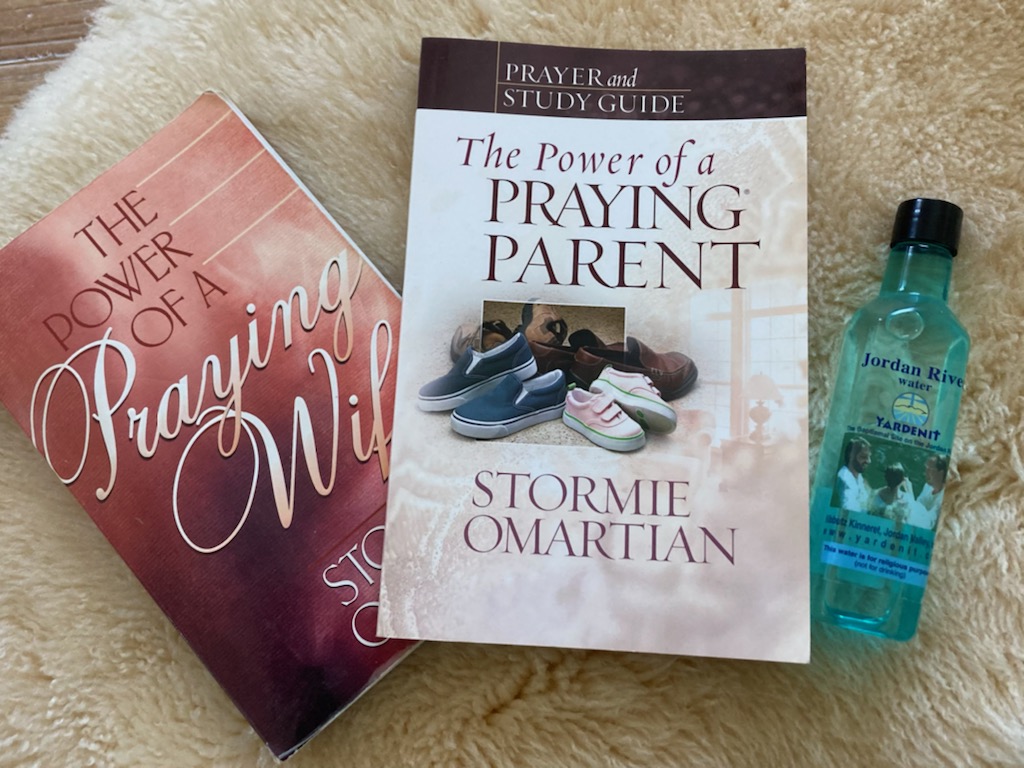
POUR OUT YOUR HEART LIKE WATER BEORE THE FACE OF THE LORD. LIFT YOUR HANDS TOWARD HIM FOR THE LIFE OF YOUR YOUNG CHILRDEN~ Lamentations 2:19
I don’t even recall how I found out about her (it may have been through Moms-in-Touch), but MANY years ago I came across Stormie Omartian’s books. The first one I purchased was The Power of a Praying Wife. The prayers she has compiled are beautiful, heart-felt, and powerful.
The impact was real. So, a couple of years later, I felt led to read The Power of a Praying Parent, also by Stormie Omartian. And when I say “read” I mean, read, read again, pray the prayers, and then go back to those same prayers again and again. The pleading words that only a mother can understand poured from her writing into my heart and up to our heavenly Father.
Ms. Omartian writes about the enormous responsibility of parenthood, but that we can have comfort in the fact that we don’t have to assume this role alone. Thank goodness. Here’s an example of what she shares in her introduction, in the section called God’s Word as Your Weapon: “The battle for our children’s lives is waged on our knees. When we don’t pray, it’s like sitting on the sidelines watching our children in a war zone getting shot at….When we DO pray, we’re in the battle alongside them, appropriating God’s power on their behalf. If we also declare the Word of God in our prayers, then we wield a powerful weapon against which no enemy can prevail” (The Power of a Praying Parent, chapter 1).
To give you an idea of the chapters and topics she covers, here are some of the chapter titles: Releasing My Child into God’s Hands, Securing Protection from Harm, Attracting Godly Friends and Relationships, Developing a Hunger for the Things of God, Staying Attracted to Holiness and Purity, Enjoying Freedom from Fear, Receiving a Sound Mind, and Seeking Wisdom and Discernment.
Chapter Eighteen is titled, Praying Through a Child’s Room. This was a new idea for me, something I had not been exposed to. My dear friend Sara and I did this together, going to each other’s homes and praying over our kids’ rooms. Okay, yes, we used olive oil to anoint their doorways, but God knew our purpose and…. He created the olives, right?
Stormie Omartian writes, “This is not a superstitious little ritual. This is a powerful claiming of your home, your child, and all aspects of his life for God. It is standing up and proclaiming, “As for me and my house, we will serve the Lord” (Joshua 24:15). It’s saying, ‘My home is sanctified and set apart for God’s glory’ ” (The Power of a Praying Parent, Chapter 18).
We faced some real challenges in our parenting during later years, and I believe with all of my heart that the Lord honored prayers offered throughout the years- and showed great grace upon our family.
When Gina and I went to Israel, I brought back some holy water from the Jordan River. I WILL be using that holy water to pray over our new grandbaby and to anoint the room. I’ve already started praying for this little one and the life they will lead. I feel it’s an honor and a duty to pray for and over our children, and to teach them how to pray as well.
What brought all of this to mind again was that I started following Stormie Omartian on Instagram! And yes, I just ordered The Power of Praying for Your Adult Children. My adult children and their spouses still need and deserve my prayers. In her audio introduction, Ms. Omartian says, “Even Jesus himself had to pray for his own disciplines and their faith.” She shares that Jesus didn’t say, “I taught you the best I could but you’re on your own now, so good luck”. No, even He, the Son of God, prayed, “Keep them from the evil one!”
Ms. Omartian has compiled fervent prayers that reference the greatest book ever written. Maybe we can “book some time” with ourselves as we battle for our children and fulfill our duty to pray for them.
Scripture to pray over your children:
Lord, I want my kids to live a pure and good life:
Finally, brothers, whatever is true, whatever is noble, whatever is right, whatever is pure, whatever is lovely, whatever is admirable–if anything is excellent or praiseworthy–think about such things. ~ Philippians 4:8
Lord, I want my kids to live in your will not “of this world”:
Do not be conformed to this world, but be transformed by the renewing of your mind, that you may prove what is the good and acceptable and perfect will of God. ~ Romans 12:2
SIMPLE PRAYER:
Lord, bless _______________(my baby boy/girl),
Keep them safe and healthy and protected by your angels,
Lead them and guide them in all they say and do,
And fill them with your Holy Spirit.
~Amen~
NMW
Tuning-in to Tone

An author creates a TONE within his or her story, based on the purpose of the book. Some authors write mysteries of intrigue to keep us guessing, other write to inspire and give hope, and other write simply to entertain and bring joy. In literature, tone is the attitude that a narrator or author takes towards a given subject. Some examples of literary tone are: comic, encouraging, funny, inspirational, informative, ironic, light, playful, sad or solemn, scary, or serious. An author’s tone affects our moods.
While tone is all about the author, mood is all about the reader. Mood is how a book makes the reader feel, the overall feeling the reader has after reading the story (yourdictionary.com). The tone of a book (or a movie) can put us, the readers (or watchers) in a certain mood.
You get it, it’s just like picking a series to watch on TV. There are certain “dark” shows that I simply don’t want to watch because they will put me in a bad mood; that is tone affecting mood. I think this can be a key concept for us as parents or grandparents to be cognizant of as we select books for our children to read.
There are some days where our littles loves may just seem “down”. These are the days when a silly Dr. Zeus story may be just the ticket, something that can get them out of their own minds and into the creative, rhyming world of magical creatures.
On other days, our children may be curious and energetic with questions about how things work. These may be the opportunities for books with information and processes, stories about machines, the planets, the oceans or animals of the earth.
After church on a Sunday afternoon, there may be an opportunity for Biblical stories of faith, stories with inspirational tones. If the tone has been set, use the opportunity wisely.
On those days when our little ones come home from pre-school or school feeling frustrated or over-whelmed, we can choose stories with characters who overcome problems and persevere, with tones of hope. The Little Engine That Could is an example of this.
If there’s an issue with self-esteem or relationships, there are books about being a good friend, a good listener, or how to deal with bullies. These are informational but at the same time can offer encouragement and problem solving strategies.
There’s a book that can help our kids deal with almost any issue!
I think we need to be observant and flexible… and to “tune-in” to what our children are dealing with on a daily basis. When we do that, we can make reading time more meaningful and impactful. We can choose text that will not only “check off” reading time in the Daily Logue, but will actually help change their moods in a positive way. Teaching and healing can occur without them even being aware of it! As we “book time with our kids” we can tune-in to the tone of the story, and help them heal, learn, discover, solve…..or maybe just have a needed, good laugh.
The Main Thing

Christmas is upon us! It’s time to celebrate the birth of our Savior. All of the “other stuff” really doesn’t matter. I decided years ago to focus on Christ and gradually let the hustle and bustle go.
The main thing about Christmas is Christ, right? Our pastor always says, “Keep the main thing, the main thing”, and I so agree.
For about ten years, I didn’t even send Christmas cards, and I love Christmas cards. With family and friend celebrations and teaching full time, it was something I just had to let go of. I didn’t send them again until 2020, when both of our children got married. That was my favorite of all of our Christmas cards; I was so thankful for both of their spouses.
When Mike had knee replacement surgery one November and changed jobs at the same time after 36 years, we didn’t even put up a Christmas tree…..and it was okay. Some family members gave me a hard time (I won’t name names 😊) but we were fine with it; we kept the main thing the main thing.
I’ve slowly been getting rid of excess décor as well. All I decorate with now are my nativities (again, the main thing), greenery, wreaths, candles and stockings. These are my favorite things to use for celebrating my favorite holiday with my favorite people. That’s all we need.
As long as I can be with my family and sing “Silent Night” as we worship together, Christmas is complete for me. That’s my favorite moment of the entire year.
What does this have to do with books? Books can help us keep the main thing the main thing too. I love reading How the Grinch Stole Christmas and The Night Before Christmas. But, we need to be quite intentional to read the REAL Christmas story to our children. Years ago, we found a book called Santa at Bethlehem, a story where Santa came to worship the Christ child- and then decided he needed to continue the tradition of gift giving- it’s beautiful. I can’t find it online anywhere but there are many others (below), including The First Christmas Night by Keith Christopher, that focus on the birth of Christ.
Okay, I have to admit that this year the temptations are great as this is my first Christmas as a Nana. I am going to have to use self-control when it comes to buying things for Leo….or not. He has certainly become one of my main (adorable, precious) things!
We can lead our children in the way of keeping the main thing the main thing by teaching them the real, history-changing story of Christ’s birth. We can still do all of the other “fun” things, the ones that we choose to do because they have meaning to us. We shouldn’t be afraid to let some of the other things go. Celebrating the miracle birth of a baby in a stable doesn’t require all of the hustle and bustle. As we “book time with our children” let’s teach them (and remind ourselves) that the main thing is about Christmas is CHRIST.
Christmas Stories about Jesus for Kids
YOU SAY, Mom or Dad

Yes, there is a song by this title by Lauren Daigle that I have listened to 100 times, https://www.youtube.com/watch?v=sIaT8Jl2zpI; it is simply beautiful. That song probably influenced this BLOG title, but there is a totally different intention behind it.
This idea came from hearing yet another frustrating news story about parents suing a gaming company due to the fact that this particular game was addictive to children. What the heck? Sorry, but I am so over this lack of responsibility on the part of parents.
I am going to show my age and my traditional values….and too bad, it needs to be said a thousand times over.
Parents, we are in charge of our families. Moms or Dads, we determine the values within our homes. We have been given this duty to care for and raise a precious human being. God designed the family unit, and He also gives us authority over them.
It is not the job of the gaming companies, book publishers, movie directors, teachers, community leaders or Sunday School teachers to determine how our children spend their time and develop their values. Yes, it can take a village to mold a child and guess what, we build the village!
If faith is important to you, take them to church and insist they become a part of youth group or Young Life.
If music is important to you, expose them to programs, plays, theatre, chorus or choir, or a musical instrument.
If you believe reading is important (as you should, haha), expose them to books from the very start and determine that reading WILL take place on a regular basis in your home.
YOU SAY when and if reading time happens at home.
YOU SAY how much time should be spent on playing video games or watching television.
YOU SAY that it’s time to go outside to get fresh air and move.
YOU SAY, “It’s Sunday morning and we are going to worship”.
YOU SAY, “In this family, we use manners and treat adults with respect”.
YOU SAY, “We’re going to eat healthy foods and cook together as a family.”
YOU SAY, “Christmas is about Christ. What can we do as a family to make sure we keep the main thing the main thing this year?”
You’ve been given a gift, Mom or Dad. Claim your role with gratitude and confidence and say the things/ insist on the things that are “good and pure”. And, booking time with your kids can help initiate conversations to help you as “you say” what is needed.
Is Reading Really That Important?

Why is reading to our little ones so important, and do we really need to start when they are babies?
You decide! Following are some of benefits of why we should promote reading. I’m going to focus on these benefits over the next few weeks; this will be an introduction as to why “booking time with our kids” is so valuable.
READING:
- Increases brain development; strengthens the brain
- Stimulates language development
- Stimulates cognitive reasoning
- Builds vocabulary
- Aids Sleep
- Aids mental health
- Alleviates Stress, anxiety and depression
- Encourages success in school and academics
- Increases empathy
- Increases knowledge of the world around us
- Prevents cognitive decline as we age
- Can even help us live longer!
According to Healthline.com, reading actually CHANGES YOUR BRAIN: “A growing body of research indicates that reading literally changes your mind. Using MRI scans, researchers have confirmed (Trusted Source) that reading involves a complex network of circuits and signals in the brain. As your reading ability matures, those networks also get stronger and more sophisticated.”
In one study (Trusted Source) conducted in 2013, researchers used functional MRI scans to measure the effect of reading a novel on the brain. Study participants read the novel “Pompeii” over a period of 9 days. As tension built in the story, more and more areas of the brain lit up with activity.
Brain scans showed that throughout the reading period and for days afterward, brain connectivity increased, especially in the somatosensory cortex, the part of the brain that responds to physical sensations like movement and pain.”
Wow. Brain connectivity increases. That alone should convince us.
I just love this quote by William Styron: A great book should leave you with many experiences, and slightly exhausted at the end. You live several lives while reading (Conversations with William Styron).
Don’t we want our kids to experience this? And, don’t we want them to imagine/create these experiences within their own minds, and not just watch as observers from a screen? Their imaginations will be challenged and will blossom when they have to cognitively create the images that match the words that they are reading.
Is it important to start this with our babies? One of the benefits of reading even with infants is that reading with young children can build and establish “warm and happy associations with books, increasing the likelihood that kids will find reading enjoyable in the future (Healthline.com).” If reading is an established habit from the start, they are more likely to find it enjoyable and continue reading as a part of their normal routines as they grow. Even an infant’s brain is stimulated as words and pictures are associated; connections will be made from the start. Bonding occurs too; this can be such precious time together. Honestly, there is no downside.
I’m guilty of replacing what used to be reading time with “watching” time. It’s just easy and relaxing. But, as parents and grandparents, it’s important that we are intentional with establishing reading time with our little ones. Healthline.com suggests that we “bypass the binge-watching from time to time. Binge watching should be an occasional treat rather than our main source of intellectual stimulation. They state that research shows that prolonged TV viewing, especially for children, may change the brain in unhealthy ways.” We certainly don’t want that for our kids- and we want to model right practices too (feeling guilty here!).
If you’re feeling the same, please join me over the next few weeks as we explore ways that reading can HELP US HELP OUR KIDS. Not only will we be establishing good practices that will benefit our kids, we will also be providing benefits to our own (aging) minds. Win, win!
HOW DOES Reading Change the Brain?

We know it’s important to read to our children and we know that it is also good for us as adults. “Good” may be an understatement though. Taking time to read can literally change brain function. Yes, it is one of the most important things we can do as parents: teach our kids to read and learn. But, let’s not underestimate the value that reading can have on our own, more mature minds.
I came upon an article titled How Does Reading Improve Brain Function? written by Allison Watkins. She referenced a (2012) study by a neuroscientist named Stanislas Dehaene. He performed his study with Brazilian adults who read from an early age, other adults who learned to read as adults, and another group of adults who never learned how to read at all.
The study was performed by using functional magnetic resonance imaging to measure the brain function of these adults while they responded to oral language, written language, and visual tasks.
Reading is considered a form of visual exercise, and Dr. Dehaene stated that the visual stimulation of reading “exercises the occipital lobe”. This occipital lobe is the part of the brain that processes visual information. With the literate readers, this area of the brain was enhanced, which means that they could process visual information more accurately. This can affect creativity and can even have an effect on decision making skills. This area was the least enhanced in the group of adults who never learned how to read.
The parietal lobe is the part of the brain that turns letters into words, and words into thoughts. When we read, the parietal lobe becomes active and works with the temporal lobe to store information. Among the group of long-time readers, this lobe was the most enhanced and stimulated. This lobe is recognized for its ability to increase writing skills and reading comprehension.
From this study, we understand that people who don’t read can struggle with processing verbal information. Slow readers may then struggle in all academics due to this. As adults, slow readers can even experience everyday life challenges due to poor communication skills. We can conclude that reading can affect every aspect of communication, which in turn can affect job performance and even relationships.
According to this study, mental stimulation (through reading) can even create new neurons in the brain, no matter how old the individual is! There was improvement in the brain activity for the group that learned how to read as adults. This is encouraging news for adults who have not spent many years reading.
Another (2016) article from Harvard Medical School (Scott Edwards), Reading and the Brain, explains how the regions of the lobe interact and create pathways through reading:
“A number of brain regions are involved in reading and comprehension. Among them are the temporal lobe, which is responsible for phonological awareness and for decoding and discriminating sounds; Broca’s area in the frontal lobe, which governs speech production and language comprehension….
…There are several important white-matter pathways involved in reading, says Dr. Nadine Gaab, PhD. White matter is a collection of nerve fibers in the brain….the fatty substance that insulates the fibers—that help the brain learn and function.
Dr. Gaab likens these tracts to a highway system that connects the back of the brain’s reading network to the front. In order to read and comprehend, this highway system must be wide enough for multiple pieces of information to travel simultaneously. The highway must also be smooth, so that information can flow at a high rate of speed. And, she says, “You don’t want the information to stop. You don’t want a lot of stop lights.”
In 2012, in the Proceedings of the National Academy of Sciences, neuroscientists at Stanford University reported that reading ability in young children is related to the growth of the brain’s white matter tracts……Strong readers, they discovered, start out with strong signals in both tracts that get stronger over a period of years. The opposite pattern occurs in weaker readers.”
These clear pathways in our brains affect the way we think, the way we communicate with others, the way we may decisions, and therefore, the quality of our lives. So, I guess the greater question is this: what quality of life do we desire for our children?
Do we want them to clearly be able to understand choices and moral decisions? Do we want them to clearly be able to discern what is right from what is wrong and to be able to recognize manipulation and to seek accurate information? Do we want them to be able to clearly communicate their own needs and expectations?
Yes.
Solutions may come from us “booking time with our kids” and helping create strong, clear pathways within their beautiful minds. While we are simply cuddling up and reading with them, so much more is happening inside of those precious brains. And we may enhance our older, mature minds (pathways) at the same time!
Music and Reading Comprehension

A few months back, I wrote a blog titled “Incorporate (your idea of) Good Music” and talked about music and reading both being good for the soul. I also shared ideas about using music during reading time, often instrumental music. Let’s talk today about the effects of (background) music on neural responses during reading and how this affects comprehension. Let’s go a little deeper into why this subtle activity can actually improve comprehension.
Music can certainly invoke emotions and memories, and it can also “set a mood”. As I mentioned before, I would often play calm, instrumental music during reading and writing time when I was teaching. If we were learning about Ancient China, I would play instrumental Chinese music, if we were studying Ancient Egypt, I would play instrumental Egyptian music, and so on.
Instrumental (and not lyrical) music was chosen intentionally. I wanted the focus to be on the words the children were reading. When lyrical music is playing, there is a competition between words, a competition between the words on the page and the words within the music. It’s important to remember this when children are reading content that requires connections and inferencing; allow the focus to be on the printed words on the page.
Playing music from a specific culture set a mood in the classroom and added to the experience I was hoping to create. The kids would ask me to play cultural music if I happened to forget; they grew to expect and enjoy it!
(An example of an exception to this would be if we’re reading “The Itsy Bitsy Spider” and playing the song that goes along with it at the same time. This can actually enrich the reading experience.)
Why did music set the mood in my classroom? Can it set the mood and help reading focus and reading comprehension at home too? What happens in the brain?
In a Scientific Reports Study, The Effects of Background Music on Neural Responses and Reading Comprehension, findings revealed that “When music and cognitive tasks are presented successively, music listening can induce a positive mood, increase arousal levels, and improve subsequent cognitive processing.” The main finding of this study was that reading comprehension elicited a larger N400 effect with background music than without background music. The N400 wave is an event-related brain potential (ERP) measured using electroencephalography (EEG).
The brain is stimulated and more engaged when music is being played in the background. The type of music (classical vs pop) had somewhat of an effect, as well as music preferences and tastes. But the bottom line was that music can help our brains to engage and to actually understand the words we are reading.
Again, from personal experience in the classroom, I believe that the kind of music we select has an impact. When we were reflecting/writing on political points of view, I played The Piano Guys. When we needed to clean up the classroom, I played HAPPY by Pharrell! Both elicited the desired results!
So, we should certainly consider using music- happy and instrumental – when reading with our littles. They will enjoy the mood we’re setting, learn about various artists and music styles, and their sweet little brains will literally be more engaged!
Now, excuse me while I dance around the kitchen to Pharrell’s “Happy”.
Slow and Intentional

These two concepts have taken on an entirely new meaning for me in “retirement” which has been incredibly busy. Life really hasn’t slowed down, but I personally am learning to slow down. Learning being the key word here.
As a public school teacher for 25 years, we were always on a schedule- a daily time schedule, a curriculum schedule, a testing schedule, etc., and I worked at a fast pace to fit it all in. But I learned over time to emphasize what was truly important and to eliminate the rest. “Let it go”, as the song says!
In these new retirement years, many life events have taken over my time. The days are busy in completely new ways and I am soaking in every moment, from sleepless nights rocking a baby to learning how to use Instagram (SUCH a challenge for me) to being part of a writing group and learning so many challenging processes! I know as a daughter, wife, friend, and “Nana” that this time is fleeting; I want no regrets later about how this time was spent.
That’s the best advice us Nanas can give you young Mamas. Be slow and intentional when you can. You may have to eliminate some unneccary things to make this happen. You can figure out what it is in your life that you can let go of. Maybe let your nails go for a year or so, don’t decorate seasonally and just enjoy what’s already in place, grocery shop at just one place and make it work, or limit your screen time, whatever works for you.
I heard this quote from a mom this week, “I decided to slow down during bath time and just talk to my daughter as I poured the water over her head. I didn’t rush….I just let conversation happen. And you know what? It didn’t take any longer! Slowing down just made it calmer, but didn’t actually take more time!”
When we intentionally slow down and LIVE IN THE MOMENT, we may find that there is actually more time. One way to slow down with your kids each evening can be with a sweet little story at bedtime. Being intentional with creating this slow time, reading with our “littles”, is something we won’t regret. I’m learning that “booking time with our kids” can be intentional and help us slow down to enjoy our simple blessings.
Less is More….and Better
As I’m thinking about summer reading ideas for our young kiddoes, I keep going back to my own childhood summers. Daily life really was simpler and slower.
My brother and I literally had to choose ONE HOUR a day of TV to watch. The rest of the day was literally spent playing, creating, reading and “doing”. Thank you, Mom and Dad.
I’m seeing a movement toward SIMPLE. I have incorporated the idea of “less is more” into many areas of life and it’s made a healthy impact. I’m shopping at the store a lot less and going into my closet to discover clothes I had forgotten I even had! I’m streamlining my cooking to healthy, basic ingredients and modifying complicated recipes into dishes I will actually cook again and again. I’m more intentional with my time and running fewer errands, getting everything I need at one or two locations.
How does this fit into a reading blog? I hope I’m leading into the fact that if we spend less time and energy on errands and “stuff” that we can build in more time for meaningful things like reading, crafts, cooking, and just playing together.
Think back on your own childhood. Did you spend time reading in a playhouse or a tent in the backyard? What stories did you enjoy the most? Did you go to the library once a week with your mom to check out books and listen to story hour? Can’t we replicate some of those same activities now for kids? Can’t we stop the mad rush and determine that this summer we are going to slow down and take a step back towards “simple”?
That’s a lot of questions, sorry! But as we each answer them, reflecting our our own childhoods, I believe we can figure out how to make this summer one that is more peaceful, reflective, and memorable in the best of ways. Let’s “book” some sweet time with our kids each day.
THANKS FOR JOINING ME! Please subscribe for a WEEKLY IDEA about how we can “BOOK TIME WITH OUR KIDS!” PLEASE SHARE TOO!
Do as I Do?

I do believe that almost all of us can fit in a few minutes of reading with our kiddoes a day. We just have to believe it’s important and make it a priority. We all juggle a lot of things as parents, as stay-at-home moms, home-schooling moms, and working moms. ALL moms are busy! The definition of MOM should read: nuturer, provider, and never-ending care-giver of both body and heart.
Choosing to expose our kids to the world of books and reading is simply a choice. It’s a choice just like any other- what sports we allow our kids to engage in, what friends we want them to hang out with, what healthy foods we want to expose them to, worshipping together as a family, and what types of shows we allow them to watch. Choosing to expose them to books and learning is as important as all of these other choices.
We can also model reading for our kids. As parents we can allocate just a few minutes a day to reading; a blog, a devotional, a Bible Study, an actual book or magazine, the choices are many. We should let our kids see us reading, and this will set an example for them. We shouldn’t ask them to do something that we aren’t doing ourselves, right? Not only are we setting a good example, we will experience a personal benefit of knowledge and brain exercise.
Full disclosure here….. I don’t have kids at home anymore. The kids visit and we love that time when we are all together. But, because it’s just us at home most evenings at home, we have developed some BAD viewing habits! How many episodes of Bosch did we watch the last two nights?! I will not disclose the number. And we can’t wait until tonight to continue…. this may be developing into a problem.
So, my advice is this. Let the kids see you reading, read with them or to them for a few minutes every day, whenever works best for your schedule. Treat reading as a priority, a valuable time in the day. BOOK TIME with your kids. Then, when the kiddoes are fast asleep, you can sneak away and binge and not feel (too) guilty. At my age, this becomes almost too easy and almost guilt free!
Summer Reading Nook
We hope to make summer fun for our kiddoes, and we want to build special moments and memories with them. At the same time, we want to encourage reading fluency and help prepare them for the next educational year.
One way to make reading time feel special is to create a cozy reading nook somewhere in the house. Designating an area for story time will make reading feel special. This can be in a closet, in a corner, between the beds, or whatever unique locations your kids come up with! Letting them have some input will make it even more special to them.
We can use old sheets and blankets, pillows, bean-bag chairs, shower curtains, beach towels, table cloths, or even couch cushions….there is no need to buy anything; we can just use what we already have. Christmas lights or patio lights would add some sparkle too. Let’s just try to make it comfy, cute, and inviting. We can put a little box, basket, or shelf in there for books the kids want to read or have read to them.
As I’m writing this, my mind keeps pulling up images from “The Holiday” movie. Remember the scene where Cameron Diaz’s character shows up at Jude Law’s house and his daughters invite her into their “fort”? Its magical. Now, that’s a fort!

We can’t all replicate THAT, but our kids will come up with something that FITS THEM and is a product of their own imaginations. How much fun would it be to go in there together and read by flashlight? Maybe supply some fun summer snacks…..and make story time an adventure!
A tiny bit of effort, digging around the house and finding simple supplies, could provide summer reading adventures for the whole family. The pets (real or stuffed) can come in too……this may end up being one of their (the real ones) favorite places in the house! The point is, we can BOOK TIME WITH OUR KIDS this summer and create some pretty cool family experiences at the same time.
Reading Recipes- with Results!

Cookbooks are books too. An easy, fun, and interactive way to “read” with our kids this summer is to use cookbooks!
There are so many benefits to using cookbooks with our kiddoes. We’re asking them to read, think, evaluate, and create all at the same time! As an old-school teacher, I like that we’re covering a lot of Bloom’s Taxonomy with this family activity.
Here’s a simple step-by-step activity to follow if you’d like to integrate cooking into a summer routine:
- Look through your cookbooks and decide which one would be a nice selection for your child, based on their age and food tastes.
- Go through some recipe ideas with your child, reading ingredients. Let your child choose a recipe that they’d like to put together with you (comparing, evaluating).
- Plan a time to go to the grocery store or the farmer’s market together to select fresh ingredients (comparing, contrasting, evaluating).
- Assemble your ingredients and read through the recipe again together (organizing).
- CREATE the recipe together, following the directions and re-reading line by line (creating- the top level!). Let your child take the lead with measuring, pouring, mixing, etc.
- Set the table together. This is becoming a lost art…..teach them about where utensils go and how to properly set a nice, simple table.
- Eat and enjoy, as a family!…..and let them take pride in the decision making, the selection, and the delicious result of your reading/cooking project.
As a parent, you’ve just been READING with your child, CREATING with your child, and TEACHING THEM about healthy foods and choices. And the best part of all, you’ll have something fun and delicious to enjoy together as a result!
*sidenote: a simple garden with fresh vegetables can really add to the experience, even just some pots with tomatoes or herbs!
Brain Benefits of Early Reading

The University of Cambridge recently released findings (June 28, 2023) about the many cognitive and emotional benefits of reading for pleasure, starting at an early age: Reading for Pleasure Early in Childhood Linked to Better Cognitive Performance and Mental Wellbeing in Adolescence.
Researchers found that 12 hours a week of reading was optimal, leading to improved brain structure and eventually better learning ability. Researchers from the Universities of Cambridge and Warwick in the UK and Fudan University in China looked at data from the Adolescent Brain and Cognitive Development cohort in the US, and recruited over 10,000 young adolescents. Here are some of their findings:
“Of the 10,243 participants studied, just under a half (48%) had little experience of reading for pleasure or did not begin doing so until later in their childhood. The remaining half had spent between three and ten years reading for pleasure.
The team found a strong link between reading for pleasure at an early age and a positive performance in adolescence on cognitive tests that measured such factors as verbal learning, memory and speech development, and at school academic achievement.
These children also had better mental wellbeing, as assessed using a number of clinical scores and reports from parents and teachers, showing fewer signs of stress and depression, as well as improved attention and fewer behavioural problems such as aggression and rule-breaking.
Children who began reading for pleasure earlier also tended to spend less screen time – for example watching TV or using their smartphone or tablet – during the week and at weekends in their adolescence, and also tended to sleep longer,” (Univerisity of Cambridge study).
Let’s take information from the study and bullet some of the benefits:
- enhanced verbal learning
- improved speech development
- improved memory
- better academic achievement
- better mental health
- less stress, anxiety and depression
- less aggressive tendencies
- improved attention
- less screen time
- better sleep habits
Establishing a reading habit in the early years literally changes and molds the human brain. We learn about others, we learn about the world and other perspectives, and we learn about systems, how things work. As we are reading and thinking and processing, pathways are being established in our brains. There is cognitive and emotional change happening in our brains and our minds. These changes affect the way we learn and focus as adults.
All of the benefits are significant as to quality of life! In today’s culture the last two benefits listed can have quite an impact (less screen time and better sleep). Let’s teach our kids that there is more to life than screen time and help them establish habits that will lead to better sleep and mental health. As we BOOK VALUABLE TIME WITH THOSE WHO ARE MOST VALUABLE TO US, we’re establishing life-long learning!
Two for One

We recognize the benefits of reading to our kids when it comes to how it helps THEM. But, does this reading time, this slowing down of the hurried pace, also benefit us as parents?
I believe YES.
The Australian Parenting Website Raisingchildren.net.au states, “Reading stories with children has benefits for grown-ups too. The special time you spend reading together promotes bonding and helps to build your relationship with your child.“
Spending quiet time together builds bonds and can easily open up dialogue between parent and child. The conversation can be as simple as a reflection on daily events, or it can provide teaching opportunities, or even a time to listen and offer support.
But I’d like to suggest that this time is as beneficial to the parent as it is to the child. Those simple moments away from the world and the noise of technology can breathe peace and quiet into our souls as parents. There is no doubt in my mind that I enjoy my reading time with our grandson as much or even more than he does.
I pick out the books I know he already loves, and try to throw in a new one every so often. Some are silly with rhymes and animals, and others are love letters from authors who just KNOW. All I know is that this sing-silly rhyming time is one of my favorite parts of the day. I have him all to myself and we are shutting out chores, noise, and the clutter of the day.
I claim it’s good for him, but honestly, it’s a two for one deal. It’s even better for Nana.
THANKS FOR READING. Please share and subscribe for weekly ideas of how we can BOOK TIME WITH OUR KIDS!
Peace as we Prepare

School starts soon. Just that statement alone causes some anxiety, right?
The summer “reading list” can provide a challenge, especially for those in middle and high school. I remember trying to encourage (coaz, bribe) my kids to begin early in the summer and not cram all of the required reading in right before school starts. This is just one of the many things that can cause anxiety as families prepare for the upcoming school year.
Whether school aged or younger, I think it’s important for us as parents to model some calmness and confidence as we help our kids prepare for preschool or school. What we feel internally and project externally does affect our kiddoes. If I’m anxious and worried about the school year, it will show in my words and mood, and that can cause my kids to be anxious and worried about the school year too.
On the other hand, if I project confidence and intentionally choose positive words, I’m going to project confidence into my children. I can say things like, “I just have a feeling you’re going to rock it this year” or “I’ve heard great things about your teachers- you’re going to have such a fun year!” You can think of encouraging things to say to your child because you know them inside and out, and you love them more than anyone else.
As a mom and former teacher, here are some ideas (that I wish I had done myself) to project PEACEFULNESS as we prepare for the school year ahead:
- Consider letting the kids sleep late every day during that last week.
- Let the kids make a (reasonable) list of the last minute fun things they want to fit in before school starts.
- Try to complete the school shopping list as early as possible and TRY to make the shopping process as enjoyable as you can- deep breaths Mom :).
- Make reading time optional during that last week. If it’s relaxing and they want to read, great!- but we don’t want to force reading upon them during what can be a stressful time.
- Consider letting each child help you prepare their favorite meal during this last week. Make extra and freeze for a meal during the busy weeks after school starts.
- Read to them- find some humorous or inspiring stories that set a tone of accomplishment or confidence and cuddle up and read together. Even my 6th graders loved it when I read TO THEM.
- Pray for them, over them, and for yourself. Pray for the upcoming school year: pray for protection and safely, for friends who are good influences, for teachers who understand and are effective, and for personal wisdom as you parent and guide them this year.
As a mom and a middle school teacher, I felt anxiety within both roles. I wish I had done a better job of projecting calmness as the school year started. It’s so much clearer to me now from the “outside” and as a Nana. We can model calmness as parents, pray for the upcoming year, and project words of confidence into our children. The craziness will present itself and often will be out of our control. Let’s control what we can- our own mood and words, and let’s help our kids begin this next school year, covered in love and encouragement.
THANKS for reading! Please subscribe for a weekly idea of how we can “BOOK TIME WITH OUR KIDS”!
What Matters

As parents in this “modern age” of history, we have to be able to sift through the STUFF that doesn’t matter and focus on what does. Life, even for our little ones, has become much busier. There are multiple reasons for this, but I don’t want to focus on them. I want to focus on what matters.
The business can entrap you before you even realize it. As you build your family and start to plan life events, it may be wise to set boundaries and to discuss what REALLY MATTERS.
How do we want to spend time in the evenings or on the weekends? How many sports do we want to allow our kids to participate in each season or each year? What activities do we want to expose our kids to outside of sports…music and art? What special places or trips do we want to experience together this year? Will we build in reading time and prayer time before bed each evening? How are we going to teach them about faith? Will church and worship be a priority? Will we pray together as a family? How will we restrict cell phone use this year- at meal time and after bedtime? All of these questions lead to this one: WHAT MATTERS TO US AS A FAMILY?
This may sound completely unneccesary, but if we don’t set intentional boundaries, the schedule can rule us rather than the other way around. It just happens. And then what happens is that we don’t have time for some of the things that really matter.
Decide as a family what matters to you as we begin this school year. Weed out the things that don’t, no matter what the general population or current culture dictates. Figure out a way to intentionally fill those precious, formative minds with values of faith and family. Use books that promote those values and restrict use of social media sites that don’t. It’s OKAY, Mom and Dad, to determine what really matters to your family unit and create a gameplan to help you get there.
We create gameplans for lots of trival things, right? Let’s PLAN to teach our kids about what really matters too.
THANKS for reading. Please subscribe for a weekly idea of how we can BOOK TIME WITH OUR KIDS!
“How to” Books Instead

We have certainly become accustomed to getting answers immediately. What is that actor’s name?-Google it. What do you put in a shephard’s pie?– Google it. How long do you boil that kind of pasta?-Google it. How deep should those tulip bulbs be planted?– Google it. How do I change the screenshot on my phone?– Google it. And the list goes on!
Our kids are learning how to find answers immediately. But there is something to be said to reading directions from a book, especially directions for special activities. Reading recipes is one of those things that I enjoy looking at on paper, rather than my phone or computer. There are certain activities that you may want to revisit again and again and read together, more than once. There are some special traditions that may present occasions for reading instructions together as a family. They can become family traditions, celebrations, or just learning opportunities:
- How We Get Food from a Garden
- How to Draw Flowers, Plants, and Trees
- All You Need for a Snowman
- How to Raise Monarch Butterflies
- How to Make Friends
- From Seeds to Plants
- How to Draw (for Kids)
- Cookbook for Young Chefs
- How to Write a Story
- How to Babysit a Grandpa
- How to Practice Dental Hygiene
- How to Catch the Tooth Fairy
- How to Catch a Lightening Bug
- How to Build and Design (STEM Projects for Kids)
- How to Train Your Puppy
- Sign Language for Kids
- English and Spanish Learning Book
- Life Skills for Kids
- Good Manners and Thoughtfulness
- How to be a Big Brother
- How to be a Big Sister
The list is endless, depending on your child’s interests and age. But the idea is this. Take your child’s interests and think about how you can incorporate reading and books. What kind of book might ignite their curiosity? What type of book could provide a healthy interest or hobby? What book could present some fun family traditions in the heat of summer or the cold of winter? You know your kids and you know what works with them. Now search for (yes, Google) some book ideas that will get them off the screen and onto the printed page. You may find some very clever ways to BOOK TIME WITH YOUR KIDDOES yet!
Phooray for Phonics!

Merriam Webster defines phonics as:
: the science of sound : ACOUSTICS
: a method of teaching beginners to read and pronounce words by learning the phonetic value of letters, letter groups, and especially syllables
There have been back and forth trends in education regarding the use of phonics to teach reading in the early years. Most of my years as a teacher took place in middle school, but there were about seven years in elementary school where phonics was the foundation for teaching reading. I had a “word wall” in the classroom with groups of words in the same phonetic family. The result?- it worked.
Of course, there are many exceptions in english that contradict logical phonetic sounds. We have to teach those as well, but that can occur later, over time. For children to make the connection that letters make sounds and these sounds create words, phonics is essential.
This realization is exciting for a young learner. When kids realize that they can read word families like hat, cat, sat and mat, lightbulbs ignite in their minds. Making connections like this helps create good readers. Getting a good phonetic foundation during the first couple years of school is essential.
COVID shutdowns in 2020 and 2021 really did a number on academics and created learning gaps across all grades. Many children in K, 1st, and 2nd grades missed foundational principals required for reading. Children simply cannot find main ideas, make comparisons, or “make inferences” if they are having trouble reading simple words. The foundation must be there in order for higher level skills to be mastered.
There is nothing wrong with taking a step BACK and teaching your student basic phonics. It’s never too late to focus on phonics. As a matter of fact, it’s ESSENTIAL. If they missed out on some basic reading strategies, you’d be giving them a life-long gift. Here are some resources that may help, if you find as a parent that your little love needs a phonetic boost. Let’s BOOK SOME TIME with our kiddoes, preparing them for academic success in the years ahead. “Phooray” for phonics! (You get this- if you get phonics!)
Foundations Phonics, Easy Lessons for Early Learners
20 Best Phonics Books of all Time (Book Authority)
Bob Books, Beginning Reader’s Box Set
Berenstain Bears 12 Books Phonics Fun!
Phonics, First Little Readers (24)
Learn to Read, Phonics Storybook
THANKS for reading! Please SHARE and SUBSRIBE for a weekly idea on how to BOOK TIME WITH YOUR KIDS!
A Job About JESUS
As parents of faith in this world, we have a job during Christmas. It’s our most important job, our responsibility, but in its true essence, it’s our privilege.
We plan: we take pictures for a family card, we check addresses, we shop online and we shop in person, we make multiple trips to the grocery store and then we bake, and we cook, then we bake some more. We order matching pajamas for the family to wear on Christmas morning, too cute.
We pull out holiday bins and we sort. We decorate the mantle, the house, the front porch and we hang lights. We watch Instagram ideas about Christmas decor and then we decide that we really want to “up our game”! We talk about Christmas tree options. Do we want a real tree this year or do we want to use one that already has lights- and use it for several years? We talk about how much fun it is to pick out a real tree, but then we worry about allergies or the mess.
We make plans with our families and the folks we love. We call, text, email, and check with extended family to see if we can keep up family traditions or start new ones. We communicate with almost all of our favorite people, because, well, that’s what we do at Christmas!
We talk about which Christmas Eve service we will go to. We try to plans meals and gatherings around this….it’s a challenge, but we know worshipping the Christ child is a priority for our family.
All of these things are GOOD. They bring us joy and they bring back treasured memories and create beautiful new ones. But all of these things can distract us from the true purpose of Christmas: celebrating the birth of Christ, the Messiah, the Savior, the King of Kings.
In the midst of all of this, we must talk to our kids about Jesus. We can READ the story of CHRIST to our kids. In between the events and the errands and the celebrations, it’s our job to teach our kiddoes about the real reason for Christmas. Have conversations, just you and the kids. Every day, use something, an advent calendar or a book or a prayer, and intentionally talk about JESUS instead of gifts, gatherings or Santa. It’s important that as we share about the birth of Jesus, that we also talk about His purpose. Talk about His reason for coming, the gift He brings.
This Christmas is going to be a challenge for our family, as we have recently suffered great loss. But, in the midst of our loss and grief, I am so thankful that my kids know Jesus. They know the story of His birth and His reason for coming to the world. They know what Christmas is all about. This Christmas I am more grateful than I have ever been for this baby born in a manger. This Christmas, let’s give our kids the gift of understanding JESUS above all else.
THANKS FOR READING! Please share and subscribe for a weekly idea about how to BOOK TIME WITH OUR KIDS!
New Year, New Perspective

“One Thousand Gifts” by Ann Voskamp is the name of the book that my dear friend Liz just gave me. Our family has recently suffered a loss, a great and unexpected loss, and the writings of authors like Lysa Terkeurst and Ann VosKamp have brought real hope and comfort. The foundation for their words come from the Bible itself, so it only makes sense that hope seeps out from the pages. Lysa Terkeurt’s “It’s Not Supposed to be This Way” (a gift from Mark) has been my companion each evening; providing hope and strength.
Here is a paragraph from chapter five of “One Thousand Gifts” : “All God makes is good. Can it be that, that which seems to oppose the will of God is used of Him to accomplish the will of God? That which seems evil only seems so because of perspective, the way the eyes see the shadows. Above the clouds, light never stops shining.“
The theme of “One Thousand Gifts” is EURCHARISTEO, living in a state of gratitude, of thankfulness, at all times. Ann Voskamp points to the fact that eucharisteo preceeds every miracle in the Bible. She challenges us that by expressing gratitude, even in our darkest of days, we can see God in the midst of “it all”. Looking through the lens of God’s Word, we can see the thread of His hands working, weaving, changing, healing.
How can we as parents/grandparents model eucharisteo for our children? I think the simple answer is by teaching them and modeling for them how to live in a state of thankfulness. When we wake up our littles, we can give thanks for yet another day together. On hectic drives to school or activities, we can express thanks to God for the sunshine or our teachers or the energetic coach who will be guiding the practice. On shopping trips with list of supplies, we can express out loud how thankful we are that mommy and daddy can provide the needed supplies (and maybe slip in some giving ideas here to help those who can’t). At the end of a busy day, we can say a prayer of thanks at the dinner table as a family. And, in the evening, we can read books that model gratitude before leading our littles in prayers.
ReadBrightly.com has compiled a list of 17 books that “Show Kids What it Means to be Thankful” by Dena McMurdie. There are some treasures here to be used as we “BOOK TIME WITH OUR KIDS”.
This season has been the hardest of my life, and yet, I do see how God is using this period of grief in beautiful ways. I see glimpses of a lovely tapestry, with hope and newness. I am in a period of grief, this is the winter I must walk through to experience healing. I am allowing God to take this and create a different lens, a new perspective, in this unexpected stage of life.
When trying to explain a change of perspective to our kids, we can use Ann VosKamps realization that above the clouds, light never stops shining.. There’s so much that we can pull from, learn from, and teach from that one statement!
ELA teachers, that’s what I call a writing prompt.
Or Mom and Dad, maybe it’s just a great God prompt.
Thank you for reading! Please share and subscribe for ideas on how we can BOOK TIME WITH OUR KIDS at NinaWheeling.com!
Winter Weeding

When I was initially thinking of a title for this week’s blog, I thought of “Winter Weading” with weading implying reading. Our son used to say W for R when he was a little guy, so cute. Then I thought, well maybe weeding as in “weeding out” is what I can actually work with.
A lot of us are trying to simplify and clean out during these cold winter months….which can often lead to the traditional spring cleaning later. We clean out clothes and closets, we organize the junk drawer (why?) and under the kitchen sink. We refold linens in the closet and donate some of the holiday decor that we rarely use. We may organize the toys, games, and “stuff” that we’ve accumulated over the years.
What about re-organizing our books and our reading materials? This can make a difference in our reading time and even our content. We have moved twice in the last year and a half. Then, just after we moved into our dream home, I unexpectedly lost my husband of 40 years. He always joked about me having too many books in the house. Well, since his passing, I have decided to move back home to my village….so I am moving yet again! Boy, have I been weeding out! Yes, I love all of my books, but I am finally acknowledging that I need to “share” some of these gems with others who may not have access to books and reading material.
I bought some of those stackable crates from Lowes, and I have organized all of my books: picture books, toddler books, children’s books, young adult books, and books for grown ups. This weeding process was like a walk down memory lane. I have books from my children’s childhood and some even from my own childhood! Admittedly, most I wanted to keep. But, there were some duplicates and some that I didn’t think had messages that were pure or noble enough to keep.
The best part of this process though, was finding impactful books that I had forgotten about …. and would love to read again. I pulled out the Jan Karon series (At Home in Mitford) and am planning to dive into those once more. I pulled out special toddler books that I absolutely MUST READ to Leo and the new baby boy arriving in March! I got excited about the treasures I had within my very home and had forgotten about. Laying the books out across the floor made we want to read many of them over again.
When I read with Leo, I lay some of his books out and let him choose which ones he wants me to read to him. He already has favorites at 14 months old. Knight Owl by Christopher Denise is his first pick these days. Through the winter weeding out of books came the finding of some old treasures. I will certainly use them to BOOK TIME WITH MY GRANDKIDS, using content that is good, pure and sometimes just plain funny.
THANKS FOR READING! Please subscribe for a weekly idea of how we can BOOK TIME WITH OUR KIDS!
Learning from Teaching

During my time teaching in public school, I spent many years teaching Ancient World History. There were five basic themes within our history curriculum: culture, history, economics, geograhy, and human-environmental interaction. Honesty, I absolutely loved what I taught. Why? Well, because the curriculum was interesting! We studied world religions, migration patterns, the music and art of different cultures, the economic and political systems of various societies and how they affected quality of life. We talked about how the environment and climate of a region impacted people, and how people in turn, affected the environment. I think the reason that I actually found the curriculum so interesting is that I WAS LEARNING WITH MY STUDENTS.
I was one of those kids who always like school and I think I payed attention most of the time. But, I don’t think that I ever learned most of the ancient history that I later taught….until I was actually studying it and teaching it!
I quickly realized that the absolute best way to learn something is to teach it.
We used this little strategy called “turn and teach” in the classroom. After listening to me present a new concept, I’d ask the kids to then “turn and teach” it to their partners, in their own words. By doing that, they were processing the information they had just heard, paraphrasing into their own words, and explaining it out loud. They were learning through teaching.
My point in all of this (finally, right?) is that when we read to our kids, we become the teachers. When we read books to them about kindness, we are reminded how important it is for us as adults to be kind to others. When we read books about friendship, we may be reminded to reach out to a friend who has been on our mind lately. When we read to them about how much God loves them, we are reminded ourselves that the very message we are teaching applies to us as well. We are loved too. “Booking time with our kids” is a way of teaching them about things that we value as important. It’s also a way to learn/re-learn some of the invaluable lessons of life that we personally might need to hear just as much as they do.
THANKS FOR READING! Please subscribe for a weekly idea of how we can BOOK TIME WITH OUR KIDS! Please share: thank you!
The Best of Loves

- Philia (φιλία) -friendship
- Eros (ἐρεῶ)- romantic love
- Storge (storgē) – love for family
- Agape (ἀγάπη) – perfect/unconditional love; God’s love
We experience love in various ways. With today being Valentine’s Day, it’s a day to focus on those we love. I’ll have to admit, this is a tough day for me personally as it’s my first Valentine’s Day without my husband in forty years. He would always bring me my favorite flowers, we’d cook at home, and share of bottle of wine. Looking back, I’m very thankful that we made the effort to celebrate special occassions. For birthdays, each person would pick their favorite meal and cake/pie to be prepared and celebrated together at home. I’m glad that we “marked” those days as special.
I’m learning this year that I can still celebrate love, although it looks quite different. My family and friends are standing in the gap, to be sure. My daughter and her husband have asked me to go spend a few days with them to help as they prepare for baby #2. I know that they know I need to be with Leo today, but I’m playing along. My son and daughter-in-law sent me the most precious note about my husband and I and the marriage we modeled for them, crafted so beautifully and carefully. Friends have sent lovely, encouraging messages of hope and love.
We experience all different types of love throughout our lives. As parents and grandparents, we experience such a protective, unconditional love. It’s modeled after God’s love for us- pure, unconditional and eternal. He designed our very hearts and minds to love in all these different ways, and I believe He teaches us through example of how we are to love others.
Today, as we buy flowers or candy, send cards, send encouraging text messages, prepare meals and open bottles of wine (and go to Ash Wednesday services!), let’s not forget to take an opportunity to teach our LITTLES about God’s AGAPE LOVE. Let’s read them stories about Jesus and the sacrificial love He has modeled to the world. Let’s go to church or BOOK SOME TIME WITH OUR KIDS TODAY and teach them about the best of all loves, God’s love.
History of Valentine’s Day, History.com
Jesus Loves Me; books for kids
ASH WEDNESDAY, Dynamic Catholic
THANKS FOR READING! Please share and subscribe for a weekly idea of how to BOOK TIME WITH OUR KIDS!
More of Me
I’ve noticed something when I am with my daughter and her husband, and it makes me very happy. When the work day ends, and they pick up their litte guy, the phones are put to the side. They are choosing to be present with him in the few hours they have together in the evening.
They are unavailable to others and I believe that’s the way it should be. Of course, there are exceptions with work or family emergencies, but as a general rule, evenings are “‘family time”.
I think this is worth talking about in every family. We all recognize the fact that too much screen time is not healthy. It’s not healthy for us as adults, and it’s even more unhealthy for our children. We are literally TOO AVAILABLE. We’re scrolling mindlessly, we’re comparing ourselves to others, we’re playing games on a screen rather than physically moving, we are NOT available to the people right in front of us, yet communicating with folks who are not in front of us.
Well, READING with our kiddoes is one way to ensure that we are present and that we are NOT looking at screens. When we read with them, we are physically close and cuddling. We are choosing to teach them or laugh with them. We are choosing to focus on them and them alone. This can bring calm to the end of a busy and hectic day. Both parent and child will feel relaxed, will feel connected, and maybe even learn a bit about animals, farm life, weather systems, volcanoes, or Bible stories…… you get it, you choose.
Booking time with our kids is a way of saying to them, “I’m giving you MORE OF ME and less of everything else, including time on my phone or computer.” It’s not easy, and it won’t always be convenient, but it’s certainly worth the effort, setting an example of life long habits. We all have the same amout of time; we have to choose how to use it. The benefits of putting the phone aside will be felt by both parent and child, and the benefit of reading together, well, that can last a lifetime.
Thanks for reading- please share! Subscribe for a weekly idea of how to BOOK TIME WITH OUR KIDS!
Change text alignment
Displays more block toolsPublish
Fighting Fear

No Longer a Slave to Fear by Zach Williams
I’ve been listening to praise music a lot over the past few months. Christian music and country music are my faves, and since the sudden passing of my husband, praise music has been a regular part of my day. I’ve been on the road a lot, and the Lord has used music to provide hope, healing, some release of tears, and reminding of His promises.
As adults, maybe we don’t experience “fear” the way we did when we were young. Our fears are very significant though- fear for our children’s futures or for the changing world we confront each day. Hopefully, we’re learning to fight these fears- through prayer and wise counsel.
The fears that our children face may be smaller in scale, but still very real to them; the dark, the unknown, loud noises, crowds, disease or sickness, of being alone or left out, of going into water, the list goes on and on.
I think it’s important for us as parents/grandparents to realize that even though we may not relate to the fears of our children, these feelings are real in their formative minds. And as caregivers, it is our job to address these fears and help alleviate them.
I’m afraid that some of the places that we “go” to for down-time may not always be the healthiest of choices for alleviating fears: social media. We can be selective and self-restricting, and use SM for good purposes. But, there are other tools we can use to provide calm and healing, and we can be selective here too.
We can use music and we can use select books. We can use some calm instrumental music and choose specific books to read with our kids to help them combat their fears; we can book time with our kids. There are options. We can read silly favorites that just make our kids laugh….and then just extend into natural conversation. We can talk and listen, mostly listen, and then offer encouragment. The challenge here is to not judge- just to listen and love. Another option is to intentionally read books that deal with the specific fear or challenge our child is facing. Watching another character deal with or overcome a fear can offer hope and ideas.
When I was little (as if I still don’t deal with this) I had a very real fear of spiders, as my entire family can testify. Arachnophobia is a real thing, people! Did you know there about books about arachnophobia? There are books about monsters under the bed and feeling left out. There are books about almost everything! And we can use them to help our kids become confident problem-solvers. We can use books to build faith over fear too.
As adults, we’ve learned that knowing how to fight fear is life-long skill. We can point our littles to the Father, the one who can help us fight our fears for all of our years. Using Biblical stories/examples and scripture to help our children fight fear may be the very best tool we can give them. Let’s help them choose faith over fear.
Children’s Books about God is Always With Me
Children’s Books About Overcoming Fear
Children’s Books about Fear of the Dark
Children’s Books about Fear of Spiders and Snakes
Children’s Books about Fear of Being Alone
Adult- Battlefield of the Mind, Joyce Meyer
SCRIPTURES for FIGHTING FEAR, MyLifeTree.com
THANKS FOR READING! PLEASE SUBSCRIBE FOR A WEEKLY IDEA OF HOW WE CAN “BOOK TIME WITH OUR KIDS!”
Holy Week at Home

The Days of Holy Week and What They Mean, JerseyCatholic.com
PALM SUNDAY: on this day, Christians commemorate Jesus’ ‘triumphal entry’ into Jerusalem where the Gospels tell us He was greeted with crowds waving palm branches and crying “Hosanna! Blessed is the one who comes in the name of the Lord!” (Mark 11:9-10).
HOLY WEDNESDAY: this day marks the darkness, the abandonment of Jesus by his disciples, and anticipates the anguish of Good Friday later in Holy Week.
MAUNDY THURSDAY: this marks the Last Supper that Jesus shares with his disciples, his betrayal by his disciple Judas Iscariot, and his arrest at the Garden of Gethsemane.
GOOD FRIDAY: this marks Jesus’ agony on the cross; this day commemorates Jesus’ trial before Pontius Pilate, his sentence of death, his torture, his crucifixion and burial. It is called ‘good’ Friday in the sense of the word good means something ‘holy’ (‘Holy Friday’); this is the most somber day for Christians, when the agony, death and burial of Jesus is remembered.
HOLY SATURDAY or EASTER SUNDAY: this marks the visiting of the empty tomb of Jesus and the celebrating of His resurrestion from the grave; the hope and glory of the resurrection of Christ which is at the heart of the Gospel and the center of the Christian faith (Trinity College.com)
This is the week. This is HOLY WEEK, the week we remember that Christ did HIS THING. Lived HIS PURPOSE. For US. This is the week we celebrate and commemorate the fact that the SON OF GOD, JESUS, suffered and died in our place. This is the week that we give thanks for GRACE, for His great love, and for His enormous sacrifice.
As we claim to be Christians and to believe in who Jesus is and what He did, let’s worship as if we truly appreciate what this HOLY WEEK is all about. We can celebrate the fact that because Jesus died in our place, we are given eternal life. This impels us to lead by example, worship as a family, pray as a family, and to teach our littles about this Holy week at home.
So, as we worship, pray, and reflect this week, let’s BOOK SOME TIME WITH OUR KIDS and teach them the EASTER STORY. We can have fun with Easter baskets, meals, bunnies and candy. But let’s also be intentional with the name of JESUS and His STORY, teaching our littles what Easter is really all about, a love called Jesus~
Thanks for reading! Please share and subscribe for a weekly idea of how we can BOOK TIME WITH OUR KIDS!
Building Book Interaction

We know as parents and grandparents that reading to our kiddoes is good for them, and even good for us. But, sometimes we just can’t seem to get our kids to stay focused as we try to complete a story. There are times when we have to be creative with ways in which we can pull our kids into the reading process or the story itself. We have to create interaction between the child and the story.
- Use a book with rhyme and leave out key rhyming words that the kids can then say out loud (or yell) outloud. Use a story that your child is already familiar with. Here’s an example from The Very Brave Lion by Wendy Ravenhill and Cee Biscoe (precious story and pictures). Do this on each page- your child will pay extra attention and be very excited about knowing the missing words!
“You’re clever and brave and you always play fair.
Kings should be bold, but they still have to care.
At times it is tricky to know what to do.
Sometimes I feel frightened exactly like _________ (you)!”
- Use a book with rhythm and rhyme and tap along. I usually tap on the book itself, but sometimes I tap on a cute little belly instead! This models rhythm and can keep a child engaged.
- Use flipbooks with flaps that open to reveal part of the story! Once they understand the concept, have the child pull the flap on each page. If possible, have them NAME what’s under each flap as well! Gotta Go, Buffalo (Kevin and Haily Meyers) is a favorite with the grands right now.
- Use books with textures and board books with stiff pages that the kids can turn themselves. If they are turning the pages and can feel different textures, they are more likely to stay engaged.
- Make a color game out of the book. For example, say, “Let’s see if we can find something purple on each page.” This will direct their attention to the details of the illustrations and also help them learn their colors.
- Use books with SONGS. We like Baby Beluga (Raffi), Down by the Bay (Raffi), and What a Wonderful World (Bob Thiele, George David Weiss)- all songs that have been made into children’s books that we can sing/read together.
- A tried and true idea is to let kids pick out the books that we read to them each evening. There may even come a time when you can ask THEM to tell or read the story to YOU! This can be surprisingly fun and creative.
Now, if mom (or probably Dad, sorry!) can’t stay focused on the story, maybe some of these strategies could also work with them …..? Audio books may be the way to go in that case, and they can be really entertaining with accents and tones! So, as we BOOK TIME WITH OUR KIDS and use some interactive strategies, we may all feel a bit more focused and present in these sweet little moments.
Thanks for reading! Please share and subscribe for a weekly idea of how we can BOOK TIME WITH OUR KIDS!
What Doesn’t Dolly Do?

LINK to register for IMAGINATION LIBRARY
When our first grandson was born, my lovely DIL Ashley told us about Dolly Parton’s Library. At first, I felt guilty about signing up, knowing that we had ample access to books and libraries. But, when we looked into it and the marvelous books she sends out (across five countries!) we just had to participate! As Dolly herself says, “You can never get enough books into the hands of enough children”. So here’s my small part, hoping to encourage you to get your children’s hands on Dolly’s recommended books.
“Inspired by her father’s inability to read and write, Dolly started her Imagination Library in 1995 for the children within her home county. Today, her program spans five countries and gifts over 2 million free books each month to children around the world. Dolly Parton’s Imagination Library is dedicated to inspiring a love of reading by gifting books free of charge to children from birth to age five, through funding shared by Dolly Parton and local community partners in the United States, Canada, United Kingdom, Australia and Republic of Ireland” (ImaginationLibrary.com).
Here’s a quote from Dolly herself, ” When I was growing up in the hills of East Tennessee, I knew my dreams would come true. I know there are children in your community with their own dreams. They dream of becoming a doctor or an inventor or a minister. Who knows, maybe there is a little girl whose dream is to be a writer and singer. The seeds of these dreams are often found in books and the seeds you help plant in your community can grow across the world, ” (imaginationlibrary.com).
The books we’ve received from Imagination Library are some of our absolute favorites. Some are classics that will forever teach lessons (The Little Engine That Could) and others are clever and heart-warming stories that are new and fresh to those of us who think they know children’s books (Llama, Llama Red Pajama and Solitary Animals). Dolly herself wrote one of the stories that arrived this winter, “I am a Rainbow“, about our many emotions and how to use them properly, such a relevant story for kids and adults alike.
I’ll admit, sometimes I get frustrated at the fact that so many celebrities are writing children’s books. I’ve been known to say, “I wish they would just stay in their lanes and make way for some of us peons to have a chance!” But this is different. Dolly is promoting (and writing) and giving away books, all over the globe! I can only respect that and be filled with gratitude for how she’s affecting hearts and minds and dreams all over the world. She’s beautiful, she’s funny, she inspires me spiritually (her gospel songs, OMG), she can act, and (understatement) the woman can sing. All of this leads me to ask, “What doesn’t Dolly do?” I don’t know, but I sure admire what she does and am grateful for these gifts of learning.
Thanks for reading! Please subscribe for a weekly idea about BOOKING TIME WITH OUR KIDS!
Books and Backwards
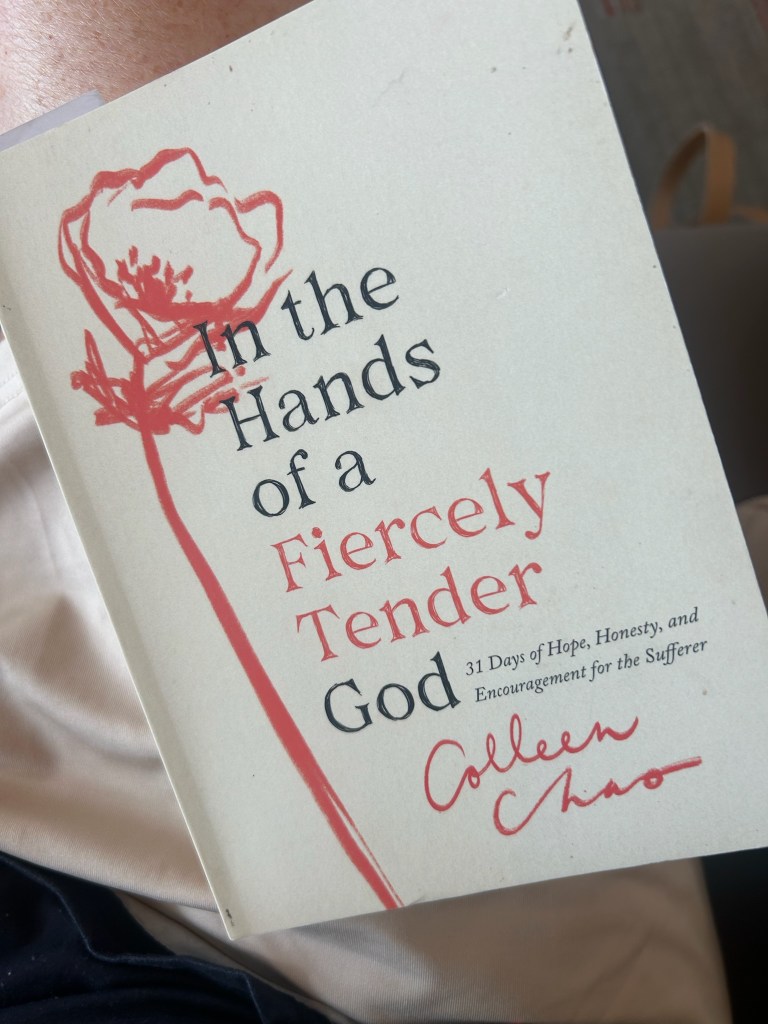
A dear friend gave me a beautiful book by Colleen Chao after the sudden passing of my hubby, In the Hands of a Fiercely Tender God. The focus of the book is how we can find joy and hope, even in the deepest struggles and challenges of this earthly life, if we have eternal hope in Jesus.
Here is the beginning of Chapter 29, towards the end of the book, and it is titled, “Understand”:
“The Kingdom of God works backward. Jesus told us to love our enemies and bless those who persecute us. He said we find our life when we lose it. He promised that the last will be first, and the first last– and the greatest person among us will be the humblest servant.
And so it is with suffering.
What looks like the end of all hope is its very dawning. What feels like the deepest, darkest pit is really a sacred entrance into more of Christ. Our heartaches today are the labor pains before fierce joy is born. This is God’s way–a hard but beautiful way–and we sufferers often struggle to perceive and embrace it” (In the Hands of a Fiercely Tender God, p 159).
I have to be honest, this isn’t the easiest part of grace to accept….but I am truly beginning to understand it. I soaked up the last chapter….Colleen Chao focuses on eternity and heaven. I won’t reveal her story; you might want to read for yourself! She paints a biblical image of heaven and tries to put in perspective the difference between this flash of time we call “life on earth” and the eternity we will dwell in FOREVER. I read it over and over again. The blink of an eye here. Forever there. Forever and ever.
I was talking with another dear friend today who also lost her husband recently. We both agreed that after being in the presence of the Lord, and given the choice, that neither of our husbands would choose to return here….even to their dearest loved ones.
I honestly believe this.
So, how does this idea of loss and suffering tie into “booking time with our kiddoes?” Well, I think we have to teach them how to live “backwards”. We have to model it too. We have to teach them how to be kind to those who are not kind to them. We have to teach them how to serve others- helping at home, reaching out to friends, serving with church missions and youth activities, etc. We have to model what Jesus did, and he literally got on the ground and washed the feet of his disciples! We may also need to live a bit backwards by denying some of the ideas of modern American culture by limiting screen time, apps, and devises, and choosing differently.
We can’t be “of this world” and also be “of Christ” right? I believe it was easier for my generation to shelter and protect our littles; today’s parents have extraordinary challenges in teaching Biblical living. We can and should use books and Bible stories to teach our children the ways of Christ. Hardships will come. Suffering will come to all of us, including our children. It’s crucial for us as parents/grandparents to lay a foundation in what’s eternal and to prepare them to live with confidence in Christ.
These lyrics come to me often; “Rain came, wind blew, but my house was built on You. I’m safe with you, I’m going to make it through” (Cody Carnes, Firm Foundation). It’s only by living backwards, and not by listening to the clamor of this world, that our kiddoes will find peace. Let’s select books to help US help THEM.
Thanks Danette, the book you selected for me really made an impact.
THANKS for reading! Please subscribe and share for a weekly idea on how we can “BOOK TIME WITH OUR KIDS!”
Begin with BOOKS!

Summer is upon us and all kinds of family adventures await. When our kiddoes are young, we have to consider what will be realistically “fun” and what will be, well, just too much work! There are all kinds of manageable and enjoyable family outings and activities to engage in, and I offer the idea that a book can add so much learning for the entire family. Using books to prepare can open up meaningful conversations for the entire family during the event itself and can hold memories later on.
Trips to the zoo can be such a fun family experience. The books that we can select to read before going to the zoo are just endless. One that was given to Leo by his Auntie Haley and is just adorable is “Edward the Emu” by Sheena Knowles and Rod Clement. Honestly, the illustrations are fantastic and the story is clever. Another adorable board book that features zoo animals is I Love You Like No Otter by Rose Rossner. Before a trip to the zoo, you could select many different books to introduce your kids to the animals they are about to see and learn about.
If you’re heading to the beach for the week, there are also so many wonderful stories you could read before hitting the sun and waves: Llama, Llama, Sand, and Sun by Anna Dewdney, Explore the Beach by Alli Brydon, An Ocean Full of Wonder by Anna Smithers are wonderful, or here’s a search link covering all kinds of beach idea books: Beach Books for Kids!
Maybe you’re going to Tweetsie Railroad and the mountains for the weekend. What a creative way to introduce The Little Engine that Could by Watty Piper and talk about how some things are hard….but we can keep trying! A cute book that we bought in Yellowstone is Little Campers ABCs by Mariah Rupp and this would be great to use before a camping trip. This spring, I’ve found some books with fantastic facts and ideas about things to do in North Carolina, and these would be ideal to read before visiting certain landmarks. One I especially like is Goodnight, North Carolina by Adam Gamble and Anne Rosen.
There are some good FINDS for books to use for fun and relaxing days at home as well. These two are about gardening for kids: Up and Down in the Dirt by Kate Messner and Garden Time by Jill McDonald. Backyards Birds, A to Z by J.R. Grady teaches us all about the lovely birds we may find in our own yards.
The point is, we can find books for our littles that encourage reading and learning, and also make the hands-on experiences all the more meaningful. When our kids were little, I would buy a book everywhere we went, as a memento. Memories were revisited when we would ready Tammy Turtle by Suzanne Tate from Holden Beach or Baby Beluga (Raffi) after visiting Hilton Head. We also brought back a rock from each place we visited, which has turned out to be such a cool collection.
BOOKING TIME WITH OUR KIDS can enhance experiences and memories for years to come. I should be “transparent”, as they say now…..we bought a book about getting your first haircut, trying to prepare Leo for his first big haircut experience. Well, the book was precious, but was quickly forgotten as the chaos of clipping and shaving began. As we begin with books from now on, we’ll focus on nature and fun to create family memories!
Thanks for reading! Please share and subscribe for a weekly idea of how we can BOOK TIME WITH OUR KIDS!
The Value of Village

It may be one of the things we long for most in life, companionship. We long to be loved by others and to love; this is the way we are designed. Rarely will be find a good book, for children or for adults, without a thread of friendship or relationship. Even the beloved book ” The Giving Tree” focuses on the relationship between the tree and the boy; a unique friendship.
As young parents trying to positively influence our littles, we can certainly use books to help us teach and guide. We can read sweet stories about how to be a good friend. The positive influences that reading can have on our children are numerous and can last a life-time.
The significance of teaching a love of reading may be matched by the idea of building a village, a community of others, to share life with. I say this not only for our children, but for us a parents and grandparents. Whatever stage of life/parenting/grandparenting we may find ourselves in, seeking counsel from others in similar situations, present or past, can be invaluable. Living through the challenges of parenting alone can be isolating and difficult. Why walk this path alone?
I fear that this isolation may be a greater issue for young parents today than it even was for my generation and generations before me. With the growing dependence on social media, we think of “followers” as friends and threads as conversations. This isolated media interaction cannot be a substitute for real-life, in person, friendships.
Seeking out a “village” takes intentionality. Consider your values, hobbies and interests, and how you enjoy spending your time. Consider the interests and talents of your children as well. Do you/they enjoy reading, hiking, worshipping, sports, being outside in nature, music, singing, dance, volunteering or working with the animals? Consider plugging into a local group of other folks with those same interests.
When our kids were young, we participated in lots of activities with them; scouting, dance, and various sports like swim team, gymnastics and baseball. Little by little, the kids eliminated the activities they didn’t like as much and focused on the ones they enjoyed the most. Friendships for the kids and for us as parents were created through these interactions, and some of those friendships endured through these many years. The most impactful influences on our family came from our involvement in our church.
We choose to go to worship as a family, to serve and learn together, to volunteer and go on mission trips, and to “honor the sabbath”. True friendships, based on faith and love, were created for both the kids and for us as adults. Some of my dearest friends today came from our church family, over 30 years ago. As hardships came, and they certainly will, we had a support system in place- and we were there to help our friends as challenges arrived in their lives too.
Little did I know that I would depend on and cherish those friendships even more as I grew older and unexpected loss came into my life. My village, including my parents, my children and their spouses, my grandchildren, and my dear forever friends have blessed my life in ways that I cannot even express. I’d like to encourage others to seek out friendships, a village that you can celebrate with, create memories with, and even cry with when hardship presents itself. This village can bless and support you and bless others through the hills and valleys of life.
For the parent who loves to use books and also wants to build community, there is the idea of creating a BOOK CLUB with other local parents. Use social media to reach out and form a group that can actually connect in person! This could be a group of parents who share parenting ideas through reading books, or just a group of parents who want to read for pure enjoyment about various topics! These parents could also share book ideas for reading with their children. Booking time with your kids could be the very thing that helps you create a village, something that could provide real friendships for the entire family in the years ahead.
Thanks for reading! Please share and subscribe for ideas of how to BOOK TIME WITH YOUR KIDS!
Give Yourself Grace
Okay, so there are days when we just won’t be able to sit down and read a book with the kids. There are days that just don’t seem to hold enough minutes. I remember. There are days when we’re just thankful that some sort of food item made its way into their mouths and then there was a quick dunk in the tub. It’s okay.
Most of the young moms I know today are juggling work and raising children at the same time. Whether or not you are working outside of the home (full time or part time) or staying home with your littles, you are WORKING full time as a mom or dad. That alone is a full time job, and such a precious one.
Yes, I am plugging the idea that “booking time with our kids” is important. It is important; it’s important now for developmental growth and it’s important later in life, to be able to gather knowledge and discern valid information and make informed decisions. But, as parents/grandparents in this modern world, we need to acknowledge the fact that NONE of us can DO IT ALL. And if we try to “do it all” every day, we are inviting frustration and fatigue.
Let’s give ourselves some grace. Let’s be flexible. We can focus on a healthy dinner tonight, and then we’ll throw in a quick, fun story after bath time. Tomorrow, we’ll eat leftovers and cuddle on the bean bag chair and read a bit more, some favorites. Then, the next night, we may go to the park to get fresh air, come home, and just take a quick bath before prayers and bed.
If we make reading this thing that we HAVE to do, it can become something that we won’t want to do. It’s reasonable to say that we should be flexible enough to make BOOKING TIME WITH OUR KIDS something that our kids (and us) look forward to. Reading can be fun. It can be a time to relax together, cuddle (if we’re lucky), generate some sweet conversation and laughter, and just be together.
I guess reading is something that we have to try to be both intentional with and flexible with at the same time. It’s okay if there wasn’t a story tonight…. it’s okay if you didn’t fit in everything that the perfect social media Moms are suggesting…..it’s okay if our routine is a bit off tonight. Booking time with our kids at the times that work for our family is the right time. We can give ourselves grace and fit in reading when everyone is in the right mood. And preferably, after they’ve had some sort of sustenance and the orange clay is washed off of playful feet and hands. We don’t have to “do it all” every day; we can do some of it each day. We can juggle being flexible and allowing grace, with intentionally fitting in the stories and moments that really count. I also want to add this; enjoy and savor the unexpected crazy, messy moments that you do fit it. They may make the best stories later!
THANKS FOR READING! Please share and subscribe for a weekly idea of how we can BOOK TIME WITH OUR KIDS!
Recognizing Rhymes!
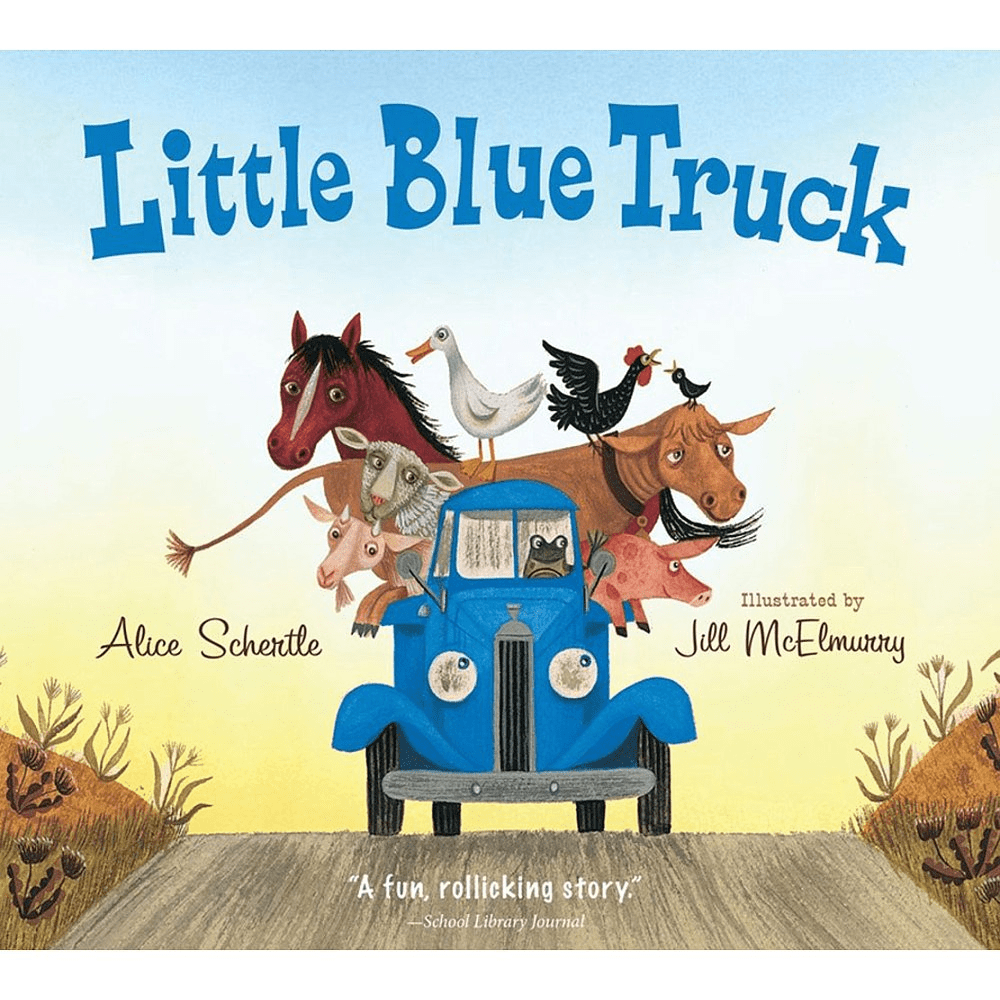
It’s such a simple strategy that we can use early on- and it helps wire the brain for more complex strategies as future readers: leaving out key words as we read to our littles. It works. It work for both recognizing rhymes and for using context clues.
Here are some examples from LITTLE BLUE TRUCK by Alice Schertle:
“Horn went “BEEP”.
Engine purred.
Friendliest sounds
you ever ________________.” (page 1)
“Little Blue Truck
came down the road.
“BEEP” said Blue
to a big green ___________.” (page 2)
For the first blank, as a parent, we recognize rhymes and we also have quite the word bank stored in our brains. We will come up with the missing word (heard) fairly easily. The key here is to read the entire book to our kiddoes a few times first, so that they are familiar with the plot and characters. This is more important the younger the children are. But, after a few times of reading them the story, even toddlers as young as 18 months of age can start to fill in and SAY (yell?) the missing word. Kids as young as four or five may even be able to figure out the missing words on the first read!
Boy, will our kids be excited to belt out the missing words and TELL US how the story goes! They will think this is fun and it will build confidence too, but we know that reading skills are being developed in those formative little minds.
Now, let’s talk about the second group of words on page two. If you are familiar with this book, you’ll know that there is a picture of the TOAD on the page, and the kids will quickly use context clues (the image) to recognize the missing word. This seems so simple to us, but if you keep repeating this pattern throughout the book, any book, you’re both enjoying and participating in the story. And our kids are developing reading skills that will only help in years to come.
This simple strategy can be used with any book that uses rhyme in the story. But, using context clues to leave out missing words can be used with any story, even those without rhymes. Our kids can use logic, prior knowledge, and illustrations to analyze what the “missing word or phrase” might be.
I have to give a plug for this Little Blue Truck series. The stories have such sweet life lessons and the illustrations by Jill McElmurry are FANTASIC. The images are clever and full of humor.
My challenge is to just try this idea of leaving out key words. I think you’ll be impressed and surprised by what our kids can figure out. “Booking Time with Our Kids” should be something we all enjoy, right? And what kids don’t like showing us what they know and how smart they are? We all like that….even us adults. Warning: using this strategy may produce boisterous, loud responses that may lead to confidence and laughter during reading.
Thanks for reading! Please subscribe and share for ideas of how we can BOOK TIME WITH OUR KIDS!
Consider the Season

I appreciate and look forward to the changing seasons of the year. I’ve learned that there are certainly seasons of life as well, but the annual and regular seasons of the year that we call spring, summer, fall, and winter can bring comfort and predictability. Living in NC, I enjoy the mild climate here, just chilly enough to experience fall colors and to sit outside around a simmering fire for many months of the year. Just enough warmth to walk, hike, kayak and swim for many months as well.
I’ve learned to celebrate and embrace these seasons of both climate and life. We can’t control them, so we may as well jump into experiencing them fully. And we can help our kids prepare for and experience them, using BOOKS.
Here are some ideas of how we can “read seasonally” with our littles:
Spring: Select books about trees, flowers, bees, insects, or animals of interest. Books about farming and gardening can provide real life application. We can read about certain plants/flowers/vegetables and then plant some of those same seeds or baby plants. Read about the seasons of the year, and the rain cycle, weather patterns, and how we can interact with our environment in positive ways. New life is all around us; we can use what sparks our children’s minds into selecting books that will foster their interests!
Summer: Read books about farm animals, domestic animals, aquatic animals or the ocean/ocean life. We can read stories about birds, dolphins, whales, and sea turtles, and what we can do as humans to preserve natural wildlife. If we are taking a vacation together as a family, we can read about the area and culture before we visit. Also consider buying a local book as a memory of that trip together as a family! At home, we can read books about cooking and foods and take some of the extra time summer can provide to actually use recipes and cook together!
Fall: Okay, yes, here we are….back to school time! The obvious choice is to read books about going back to school and adventures at school. We can also read stories to our littles about how to be a good friend, how to share, and how to practice good manners. We can read stories about chores and how we will all need to pitch in a bit more, now that our schedule may be busier. We can read books about riding the school bus….that’s a whole topic in itself! I was scrolling on IG and came across this book, The Yellow Bus by Loren Long: “Get ready for back-to-school season and hop on board The Yellow Bus, Loren Long’s #1 New York Times bestselling modern classic about a forgotten school bus that finds happiness and purpose in the most unexpected places–and the journey along the way” (amazon.com). I ordered two copies immediately and cannot wait to start reading it to the grandsons! It’s such a sweet, creative story with life lessons for all ages. I think we’ll read it all year long, but it’s pretty perfect for back to school time.
Winter : Winter reading can be relaxing and include cozy cuddles too! We can read about “first snows”, snow days from school, building a snowman, and winter adventures. We can make hot chocolate together and have a reading afternoon as a family. We can take trips to the library or the local book store on days when it is too cold to enjoy being outside. But the best topic of all is CHRISTMAS. We can read stories about Jesus and faith to our littles, and link the experiences of the season to the actual reason for the season.
There’s something about these seasons that’s both predictable and provides anticipation at the same time. Change can be hard, but it can be good and beautiful too. We can help our littles adjust to the constant change in both life and the seasons by choosing stories and information that can help them prepare…..and can get them excited about what’s to come as well!
Books and Beginnings
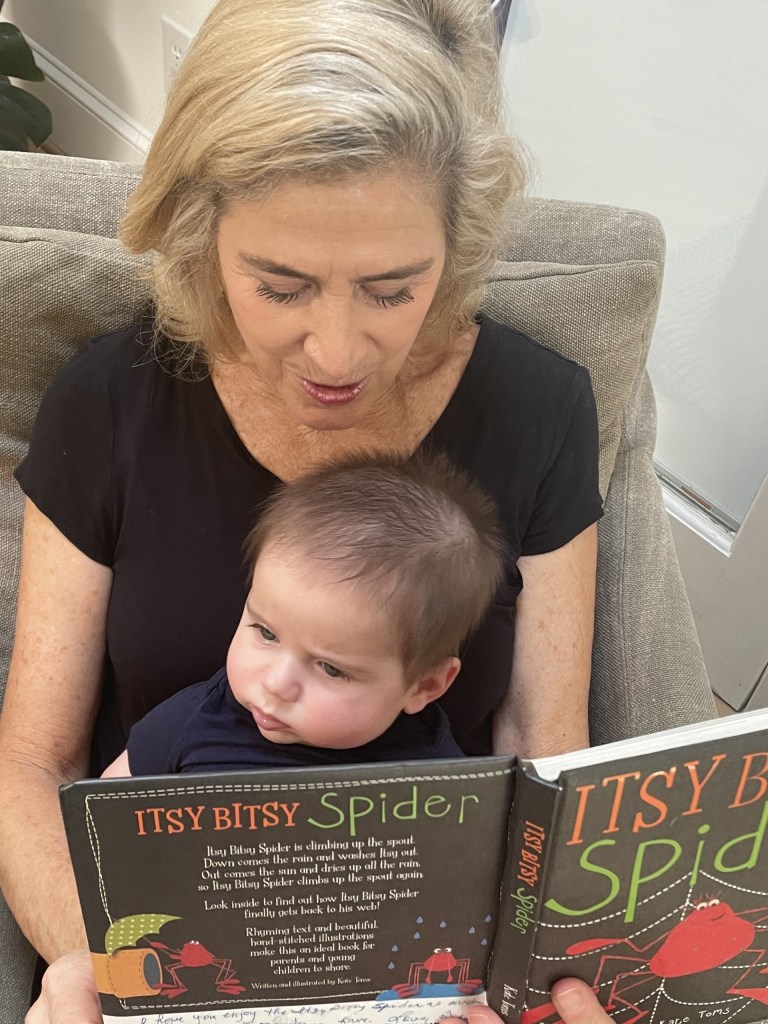
September is around the weekly corner. Even for us Nanas, there is anticipation of new beginnings at this time of year. It’s not the beginning of an actual “new year” but it’s certainly the beginning of much activity if there are children in our lives.
School has started. There are so many dynamics that play into that event alone. As a recently retired public school teacher, this beginning changed everything in my routine, and it honestly affects almost all of us (even if it’s just about traffic!).
With the start of school, comes the start of many activities for our children as well. They may be involved in sports, in dance or chorus, theatre, drama, art lessons, music lessons, riding lessons, martial arts, or gymnastics, you get it; the list goes on and on! And ON. The routine sets in and busyness becomes routine. Homework has to finagle it’s way into the schedule as well, somewhere between school itself and all of the activities we feel compelled to expose our kiddoes to.
Making time for our kids to just “sit and read” can be challenging, and it can be the thing that is slowly shifted out of the daily schedule. How can we creatively and simply fit reading time into the lives of our littles? Let’s look at some possible solutions:
- Turn devices off: Figure out what time of evening or morning this might work for your family and turn off all devices including the TV. The quiet can encourage talking and reading! It’s a good idea to do this at dinner time anyway, so this could be an easy extension to implement. Turning off devices is a simple way to claim back time.
- Plan on just five-ten minutes: If we make this a realistic block of time it’s much more likely to happen. The time can easily be extended if possible, once we dig into a good book. If we imagine that we have to create a 30 minute peaceful, perfect setting, we’re just setting ourselves up to be discouraged.
- Just start: This is something we can easily put this off, just waiting and waiting for this perfect block of time to just magically appear. It’s not going to. It really doesn’t matter when it is or where it is, just as long as we start exposing them to reading and books in some manner.
- Even if they’re little, start: Even as young as five- six months old, we can start with simple picture books, shape books, crinkly books and song books. As their brains are developing, we can provide healthy stimulation and help them make start making connections.
- Be flexible with location: Examine your family routines and be creative with what may work. Maybe the kids can read in the back seat when you pick them up from lacrosse practice and then read until you pull into the garage. The car is a realistic location for many families. Some of our kiddoes may like to unwind before bed, and reading in bed after prayers may be relaxing and the best time for them. Some kids may want to sit at the kitchen table, others in a cozy chair, and others may want to create their own little book nook for reading.
- Consider different formats: Some weeks, audio books and “read alouds” may be the best option. For lots of children, hard copies are most desirable, but for others, the lighting that a kindle provides can be helpful. Be willing to be flexible and change formats, based on situations.
- Let THEM select books of interest: Often the teacher or school will require specific books, but when the opportunity provides itself, let the kids choose the books of interest that they want to read.
- Talk about it and listen: Ask the kids! We can ask the kids for input about where and when they would like to create time for reading. Our littles may come up with creative ideas that have never even crossed our minds!
Yes, our kids are “reading” required information in school, and maybe their teacher even reads to them during the day. But, at some point, we want our children to create the habit of picking up a book instead of a device and learning on their own. Booking Time with Our KIDS is a gift we’re giving them. It’s a big deal and worth figuring out how to make it work in our families. As this school year and all the activities begin, let’s get creative with making reading happen too.
THANKS for reading! Please subscribe for a weekly idea of how we can BOOK TIME WITH OUR KIDS, and share!
Utilize the Senses
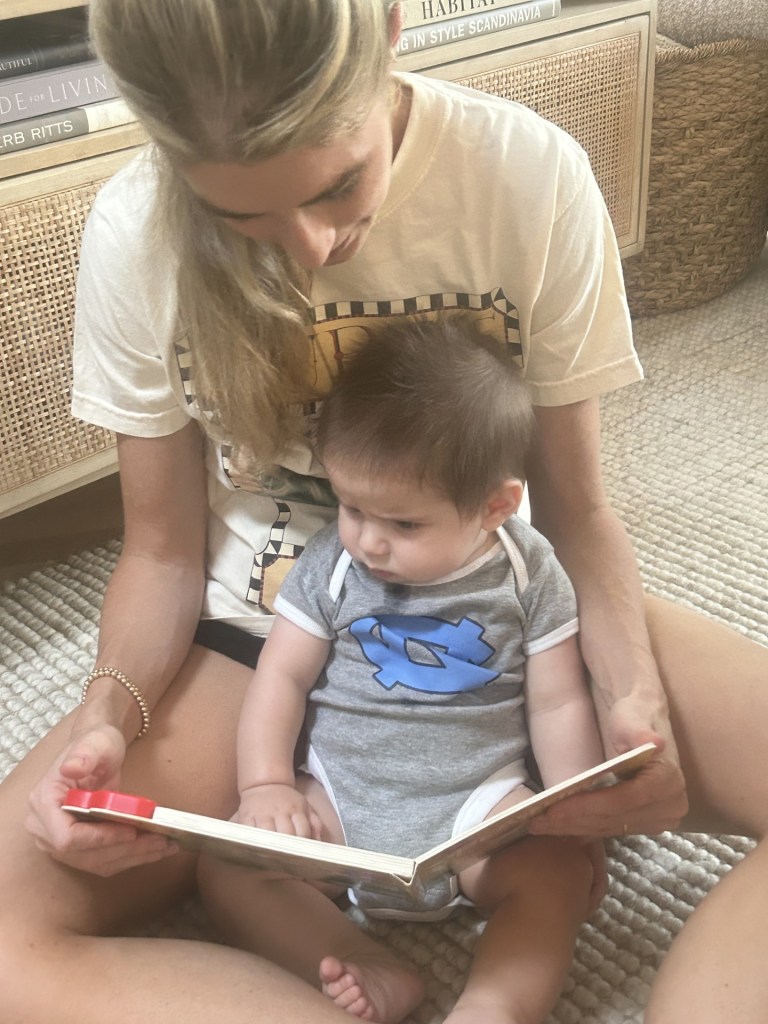
Remember learning about the five senses?- sight, sound, touch, taste and smell? We definitely take them for granted as adults, but if we have little ones in our lives, we are naturally focusing on these senses frequently.
As we plan reading time with our littles, it’s important to incorporate these senses. If this is how our children start to learn and process, we shouldn’t eliminate the use of these senses as we BOOK TIME WITH THEM. If they process using their senses, let’s use them as we teach them to process information through the written word.
“Multi-sensory instruction incorporates the use of visual, auditory, and kinesthetic-tactile modalities in the components of learning to read. This is achieved through the process of motor sequencing and sensory feedback. When we see, hear, and move to learn, the areas of the brain engaged are the Frontal Lobe (speech, grammar, language, and comprehension), the Temporal Lobe (decoding and sound discrimination), and the Angular Gyrus (links the brain together, reading conduction)”, Journal IMSE.com
SIGHT: we can use books that are visually stimulating to engage our children. Babies and toddlers are drawn to bright colors and also to black and white pictures. We can also use topics that are of unique interest to our children. For example, if there is a picture of a tractor, excavator, or truck on the cover, my grandson Leo is instantly interested! I know what he likes right now, and I purposefully select books that show that topic visually. It’s also helpful to select stories with illustrations that are attractive and stimulating, but not too busy. Choosing age-appropriate illustrations and the right amount of text (not too long) can be quite helpful.
SOUND: this sense is also one that we can build into our reading process. We can select books with rhythm and rhyme, which just creates fun for everyone. They will begin to recognize words that sound alike and we can omit words for them to SAY ALOUD. As I mentioned in my previous post Recognizing Rhymes!, “Our kids can be excited and belt out the missing (rhyming) words and TELL US how the story goes! They will think this is fun and it will build confidence too, but we know that reading skills are being developed in those formative little minds.”
My daughter has also invested in many books that have sound within the story; there is a button to push on each page. The boys have books that play music, make truck sounds, and make animal sounds. Yes, they have the Baby Shark books that the boys sing along to as well. My Dad bought them some books that expose them to songs by Mozart and famous musicians. Sometimes, their father will play the music that coincides with the story, as in Baby Beluga or What a Wonderful World. This creates a whole new level of fun interaction!
Leo will also say “Listen, listen!” when he hears an airplane or a loud truck go by. We can apply what we learned earlier in reading, and make connections when we hear the actual sounds LIVE.
TOUCH: this sense presents a unique way to interact with a story. I started tapping to the rhythm as I would read books to the grandsons and this instantly engaged them more fully. Not only does this keep their attention, but they are starting to understand rhythm as well. Now, both of the boys tap along on their own…..well, Zander may bang more than tap :). Using books with texture, books with FLAPS, and books that crinkle are all ways to incorporate the sense of touch within our reading.
TASTE: using taste may be a bit more challenging, but there are activities that can coordinate taste/food with our reading time. As I mentioned in a post titled Reading RECIPES, with Results!, “Cookbooks are books too. An easy, fun, and interactive way to “read” with our kids is to use cookbooks! There are so many benefits to using cookbooks with our kiddoes. We’re asking them to read, think, evaluate, and create all at the same time!” We can use family recipes or recipes that we clip from a local magazine. As the holidays approach, there are special occasions and traditions that may provide the perfect opportunity to read through recipes and cook/create together!
SMELL: using the sense of smell as we read may present the greatest challenge of all of the senses, but we can get creative, right? These connections may occur later, and we can be intentional about pointing them out. For example, if we’ve read a book like The Noisy Woods (or a book about camping), we can talk about it when we are in that specific location. Here’s an example, “Remember that page about the campfire crackling? Listen…and smell the scent of that wood burning”- “Smell that fresh mountain air”- or “Smell those flowers, that’s jasmine.” Books about the outdoors and books about nature or gardening will provide nice connections and applications for real life scents and smells.
It’s important to remember that our kids are seeing, smelling, tasting, feeling and hearing many things for the first time each day and week! Things that seem ordinary to us as adults are brand new experiences for our littles. As we BOOK TIME WITH OUR KIDS, let’s use ideal opportunities to teach and link the written word to the Wonderful World all around us.
THANKS FOR READING! Please subscribe for a weekly idea of how we can BOOK TIME WITH OUR KIDS. Please share too!
About Books and Kingdom Business

This term has had quite the impact on me and I keep hearing it in the Tuesday Teachings I participate in with HopeWriters; we are in the “Kingdom Business” as Christians. It’s a simple phrase but can affect everything about our days and our time….how we spend our time, what we participate in, and even what words come out of our mouths.
How do we make sure that we are having a Christ impact on our children? There are daily rituals we can teach our children such as prayer time before bed and going to worship together on Sundays. We can model what we hope is the care and concern for others that we believe Christ wants us to exhibit, and we can participate in volunteer opportunities at church where we serve together. And, we can use the right books.
We can use books to teach, to model desired behavior and emotions, to share our own faith stories, and to teach the foundations of our faith. There is a definite conflict between what the world is teaching us regarding what is valued and relevant and what Christ teaches us is valuable and relevant. There’s an immediate/surface/me perspective vs an eternal perspective, and we have to be intentional about making our children aware of this.
Yes, we want to read historical books and fun/silly books as we teach and just have fun together. But I also think it’s crucial that we intentionally weave faith-based books into our reading time with our littles. Our children won’t hear about creation and intelligent design in school, so if we don’t expose them to the science behind creation, they won’t be aware of it at all. Our children won’t be exposed to the miracles of the Bible in school, only man-made philosophies and theories. They won’t be exposed to the idea of God first, others second, and ourselves third…..putting others before ourselves, if we don’t teach that perspective. There’s definite conflict here! There is a battle for their minds, to be certain. Only through our decision as parents to expose them to the teachings of Christ, will this happen.
I believe it’s more important than ever for our children to participate in church/fellowship and to learn God’s Word with others that they can create bonds with. It’s important that we as Christian parents/grandparents share our faith stories with them. We can share why we believe what we do, and what this “looks like” on a daily basis. We should prepare for and pray about these conversations. We can ask for guidance about how to share and what to share as our kids grow, develop, and build world-views. As we “Book Time with Our Kids“, let’s keep in mind that our most important job is that of being in the KINGDOM BUSINESS.
Just in Case You Every Wonder, by Max Lucado
The Miracles of Jesus by Busy Kid Press
The Creation Story, by Autumn Ward
THANKS FOR READING! Please subscribe and share for a weekly idea of how we can BOOK TIME WITH OUR KIDS!
Help Them Choose

Christianity.com states the difference between happiness and joy as: “Happiness is merely external, fleeting, and is only achievable on earth. Joy, on the other hand, is internal, selfless, sacrificial, and a spiritual connection with God. We need joy in our lives just as we need the Father and Jesus in our lives.”
I was praying about what to focus on this week. With the political climate currently upon us, choosing JOY over anxiety came to mind. Many of my friends have expressed anxiety over our current political and economic climate. When I feel anxiety creeping in, I have to focus on scripture, focus on faith, and train my mind to “think upon these things“. Our kids are living in this same conflicted climate, and whether we want to admit it or not, they are anxious. It’s our job to equip them with the tools they need to combat anxiety. And part of that “equipping” may include removing things from their lives and their minds.
We may need to evaluate what will bring our children JOY long-term vs what can provide temporary happiness. Cultural norms today may encourage us to be “happy” and find our own truths, no matter what. Truth is found in only one place, and real joy abides within that Truth. As adults, we realize that the things that may make them/us temporarily happy are sometimes the very things that can cause overall anxiety. Does social media come to mind?
I recently heard about this book by Jonathan Haidt, The Anxious Generation: How the Great Rewiring of Childhood Is Causing an Epidemic of Mental Illness . This #1 New York Times best seller is touted as: “A must-read for all parents: the generation-defining investigation into the collapse of youth mental health in the era of smartphones, social media, and big tech—and a plan for a healthier, freer childhood.”
Yep, I want this book and I pray it gets into the hands of thousands of parents. There seems to finally be a movement away from screens (computers and phones) in both schools and at home. I acknowledge that SM can be and is used often in positive ways, but let’s be honest. It’s a tool that is also being misused and creating/feeding mental illness in our youth.
The Anxious Generation by Jonathan Haidt offers recommendations to improve the mental health of our children and teens:
- We can delay access to smartphones and even avoid giving smartphones before high school
- We can limit access to social media until age 16
- We can insist on phone- free school days where students store their phones in the office or in lockers to create a distraction-free environment.
- We can provide more real-world experiences in place of screen time, structured activities (sports, arts, music) and playing with friends to build social skills
- We can allow more unsupervised, free play leading to independence
I’m writing this list and thinking to myself, “THAT WAS MY CHILDHOOD!” Honestly, this best selling book, which don’t get me wrong, needs to be read and implemented, is simply describing childhoods of the past. And I’m going to add this to the list of suggestions:
- We can regularly read stories about faith and God’s love with our kids, providing hope for us all
I typically recommend children’s books or ways to Book Time With Our Kids. I think this adult book about our kiddoes is worthy of our attention. This anxiety epidemic is certainly affecting adults, but the unfortunate reality is that more and more children seem to be experiencing anxiety. Common sense tells us what life-style changes have contributed to this phenomenon. Do we accept defeat or do we make changes in our homes?
Let’s learn scripture together and use God’s Word to combat lies. Let’s get our kids outside to just free-play. Let’s be firm and limit screen time and go against the norm with cell phone permissions. Let’s lead them in prayer and pray over them. Let’s read with them, words of faith and hope and real truth. James 1:2 reads “Today, I choose JOY”. It’s not as easy as it sounds, but we can choose to seek it and help our kids find it too. Let’s shut out the world and invite God’s truth and peace in…..thus choosing true joy.
Thanks for reading…please share and subscribe!
Leave a Comment
Menu
Nina Wheeling, Blog at WordPress.com.
Booking Time in “Spanglish”
(edited from previous post)

Most of us took a foreign language in high school and probably even college. Many of us need practice and reminders in that foreign language now. My father is from New Jersey and my mother is Cuban, as is her entire side of the family. They met here in the states when my mother was sent here for school. I grew up speaking both Spanish and English around my family, but when we moved away from family due to job transfers, we spoke less and less Spanish at home. I took four years in high school, and continued into college. You’d think I’d be fluent, right?
Well, I have forgotten so much. At family reunions, it comes rushing back into my mind, but those are few and far between now, as we are spread out all over the country. I am ashamed to say that I need a serious refresher in the Spanish language. I can put together very few sentences now.
I also have too many books. I have books for toddlers and young children, elementary school aged children, and middle schoolers, as well as many adult classics. Having taught English-Language Arts and Ancient World History, I have collected a variety of books on writing and history as well. Add two grandsons to that equation, and thus an entirely new shelf was needed for new baby and toddler books.
But still, when I’m in (a LONG) line at Marshalls, I find myself picking up MORE BOOKS. When I’m shopping on Amazon, I peek at the children’s books and my finger just clicks “add to cart”. Es un problema.
Then I had an idea. Maybe I can use my “problem” to teach the grandsons and reteach myself! There are so many of our favorite little stories in other languages. I started looking on Amazon, and there they were! I found Are You My Mother (?Eres mi Mama?), Head, Shoulders, Knees and Toes (Cabeza, Hombros, Rodillas y Deditas de los Pies), Love You Forever (Siempre Te Querre) and many others!
If we start reading these stories to the boys from the start, they may start to think and process in both languages. This can open up all kinds of conversations and opportunities to learn, for all of us.
Maybe some of yours or your children’s favorite stories are already translated and printed in Spanish or French or whatever language you’d like to expose your kids to. What a fun way to refresh your own memory and to help develop young minds; reading but reading the same story in two different languages. Connections will be made and new cultures will come to life.
And thus my book addiction has a new purpose!
Thanks for reading- please subscribe and share!
Teach Them to Pray
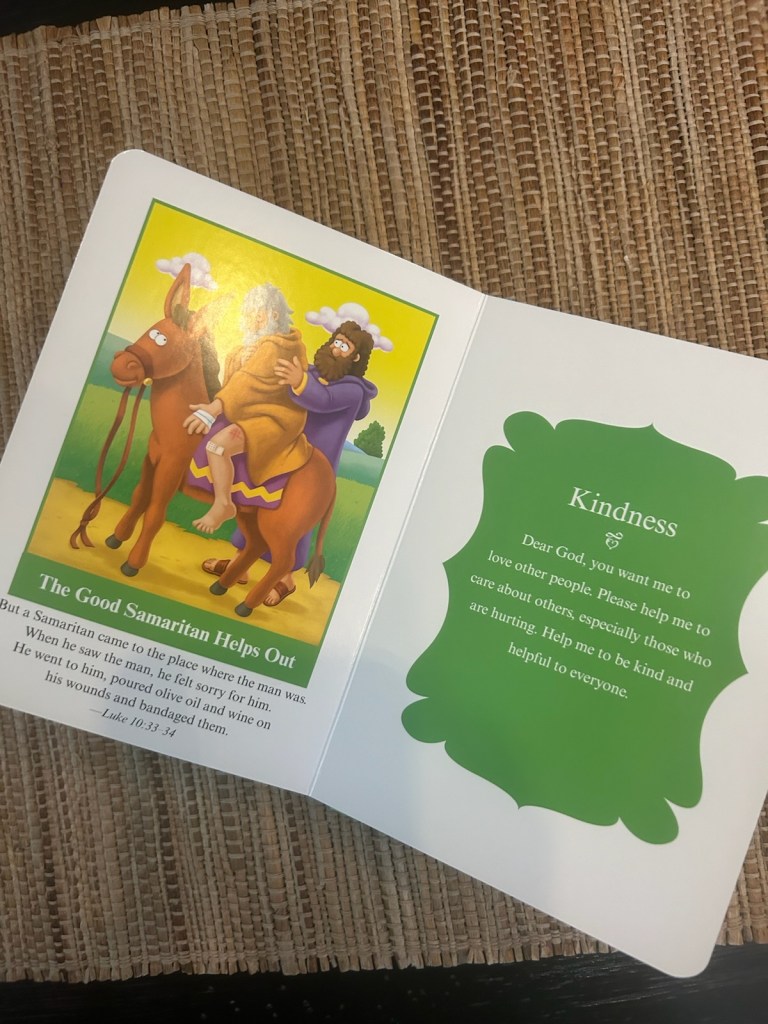
Was there ever a more urgent time? I’ve been a believer for almost 50 years, but my prayer life has never been more active than this past year. I’m not bragging; I’ve needed God like never before- this is actually more of a confession. Prayer can and should take on many forms. However we choose to do so, it’s important that we teach our littles that their Creator loves them and wants to know their hearts.
When the kids were young and I was teaching Sunday School, we used to use ACTS for teaching them how to pray. ACTS is an acronym idea, easy to remember, for structured prayer that stands for adoration, confession, thanksgiving, and supplication:
- Adoration: praising God for who he is and what He’s has done
- Confession: confession of sins- thoughts, words, and deeds, and for putting other things before Him
- Thanksgiving: thanking God for all He has done
- Supplication: asking God to bless, heal, and answer needs
I liked this method. It reminded me to praise, to confess, and to give thanks BEFORE. Before asking and pleading. Before. Let’s face it…..we usually go to prayer in supplication, in asking. We are designed to be in fellowship with Him, and we crave His presence and direction in our lives. We can use tools like this, yes, and we can also model how to just speak to the Lord from our hearts.
We don’t to have to make prayer complicated; the Lord just wants us to seek Him and teach our littles to do the same. And if you think kids won’t understand, just give it a try. There’s something inside of them that just seems to recognize this is good. Maybe they were created that way :).
My two year old grandson has a simple beginner’s prayer book, My First Book of Prayers by ZonderKidz. He loves it. When we read stories before bed, he is drawn to it and listens carefully. There’s an illustration on each page from a Bible story, and then there’s a simple prayer regarding that topic. There are simple teachings and prayers for: gratitude, hard work, forgiveness, wisdom, courage, friendship, purpose, peace, sharing, kindness, honestly, love, happiness, generosity, patience, and it ends with The Lord’s Prayer.
We may read two or three prayers a night, hands folded (if Nana can act the juggler), and then we pray a simple prayer for the family. Then Leo says AMEN, and it might just be the sweetest sound I’ve ever heard. He already recognizes it as something special. The older he grows and the more he learns, the more he’ll understand the beauty of prayer and the need for it in his life. I’m grateful that my daughter and son-in-law are leading their boys in faith.
As we BOOK TIME WITH OUR KIDS, we can use a simple prayer book to lead them in talking to the Lord. We can model from the start that He is omnipresent and available. Teaching them to pray in place of letting worry and anxiety take over is such a gift we can give our children. There are so many folks that need our prayers right now. I think we are teaching both compassion and prayer when we lead our littles this way. And that sweet little sound may add a bit of peace to your heart too.
Thanks for reading! Please subscribe and share.
Numbering Our Days
“Teach us to number our days aright, that we may gain a heart of wisdom” Psalm 90:12.

A constant challenge in most of our lives is how to spend our time….wisely. WISELY is the challenge. We all have the same amount of it….and we are each divinely given a specific numbers of minutes, days, months and years in which to dwell on this earth.
Just like the climate changes/seasons of the year, there are seasons of life. Young moms and dads find themselves in such a busy season of nuturing and constant caregiving. My kids are now young parents and their lives are busy. I have gently mentioned that this really doesn’t change for many years! With all that young parents juggle on a daily basis, “reading” with our littles can easily be one of the things that slips by. Even for older parents and grandparents, reading can be the thing that we put on the side burner. My challenge to us is that spending time in a healthy book, a faith-filled, inspirational book, and even the Bible itself, is the one thing that can ultimatlely make the most difference in the other hours of our days.
We tend to make time for the things that are most important to us. Yet, we can find ourselves wasting time on things that really don’t matter, right? We can creatively discipline ourselves … .and choose to intentionally use our time well. There are errands we can consolidate, there are events that can wait, there are TV shows we can easily live without, and there are scrolling sessions we can omit. There’s something that each of us can do.
Right now, many of us are trying to figure out how to use our time to help those who are suffering from the recent hurricanes; our hearts are heavy. We are praying, we are collecting goods, we are sending funds, and we are READING about and investigating how we can help. We are motivated to help because people need us.
Our kids need us too. Our kids need one-on-one, undivided time with parents, grandparents or caregivers. They need time away from devices, and their developing minds need to be filled with faith, hope and love. With what the world is throwing at our children, we should be equally as motived to help them …because they need us.
“Booking Time With Our Kids” means so much more than teaching them to read. It involves creating pathways, instilling decision making, making connections, solving problems, and developing a world perspective….a perspective that we can be intentional about exposing them to.
“Numbering our days aright” is a challenge and an opportunity at the same time. We have choices each day to make about how we use the time we’ve been given. The older I get, the cognizant I am of how precious each day is. I’m very particular and intentional about how I spend my time and also more sentimental too. I’ve become more outspoken about telling the people that I love that I love them. I want to spend more time with family and friends, more time outside in creation, and more time reading things that heal my heart and mind. I believe our kids need those same quiet spaces.
I want to help those in need, and I also want to love more deeply, those right in front of me. I believe we can show that LOVE through our TIME. Often, a certain book or story can be just the lead we need to start that needed conversation and time with our children Let’s model for our children by talking, praying, reading and just being available …. how to number our days in wise ways.
THANKS FOR READING! Please share and subscribe for a weekly idea of how to BOOK TIME WITH OUR KIDS!
Reading to Serve
“Each one should use whatever gift he has received to serve others, faithfully administering God’s grace in its various forms” (I Peter 4:10).
LESS LIKE ME

A Little More Like Jesus, by Zach Williams and illustrated by Lisa Molloy
“Therefore, since we are surrounded by so great a cloud of witnesses, let us also lay aside every weight, and sin which clings so closely, and let us run with endurance the race that is set before us…” Hebrews 12:1 (English Standard Version)
The right way is usually not the easy way, and we KNOW this as adults. Doing and saying the right thing in the midst of conflict or a certain politcal climate can be challenging. And responding as believers can be even more challenging…..for adults as well as for our children.
As Christians, our responses to challenges that involve people should look different from what the world proposes. We are told in God’s Word to live differently, radically, and to love our enemies, to pray for those who persecute us, and to be a light in the darkness. We are taught to allow Jesus to be our role model.
As we parent, this is something to keep in mind as we coach our children through making choices and solving problems. The mindset of being a humble servant, a kind friend who puts others first is not one that our children are going to learn unless we teach it intentionally.
Zach Williams’s song, A Little Less Like Me speaks of this idea…of being more like Jesus and being less like “me”. Here are some of the lyrics:
… Oh, I have days I lose the fight
Try my best but just don’t get it right
Where I talk a talk that I don’t walk
And miss the moments right before my eyes
… Somebody with a hurt that I could have helped
Somebody with a hand that I could have held
When I just can’t see past myself
Lord, help me be
… A little more like mercy, a little more like grace
A little more like kindness, goodness, love, and faith
A little more like patience, a little more like peace
A little more like Jesus, a little less like me
… Yeah, there’s no denying I have changed
‘Cause I’ve been saved from who I used to be
But even at my best, I must confess
I still need help to see the way You see
I was looking up children’s books that may teach this idea of living like Jesus- and I honestly had no idea that Zach Williams had written a book based on his song! How precious that this beautiful song has given birth to a book that we can use to lead our littles in living like Jesus, in making wise decisions. As Christians, we are called to do things God’s way, not the easy way. We are called to run a race, a race towards truth and purity. We’re called to run with endurance, indicating that strength and perseverance will be needed. This is not the simplest way…. but it’s the right way.
As we BOOK TIME WITH OUR KIDS, let’s give them strategies to solve problems the way Jesus would want us to. It’s an eternal perspective that may require more effort and self-control. It’s not easy to teach because it’s not easy to live out. I know I personally need help with both living it out and modeling it….so yes, I ordered the book 😊.
A Little More Like Jesus, Zach Williams
Thanks for readiing- please subscribe and share!
Teaching “THANKFUL”
Is an attitude of thankfulness something that comes naturally to us? Do we need to be taught to live with an attitude of gratitude? Does it depend on circumstances? Does it depend on our belief system?
What I do know is that scripture teaches us to give thanks in all circumstances… and that this can provide peace beyond our understanding, Philippians 4:7. And, Thessalonians 5:18 challenges us: “Give thanks is all circumstances; for this is God’s will for you in Christ Jesus.”
One of the beautiful books I was given in this past year of grieving (thank you, Gigi!) was Ann Voskamp’s The Broken Way. Honestly, half of the book is underlined with words that spoke life and hope into my heart. One of my favorite ah-hah moments came from her words on p 24: “…maybe you can live a full and beautiful life in spite of the great and terrible moments that will happen right inside of you. Actually, maybe you get to become more abundant because of the moments….broken open…..broken free. Maybe the deepest wounds birth deepest wisdom…. God does great things through the greatly wounded…..” – Then, words from her husband to Ann herself on the next page, “Never be afraid of being a broken thing.”
Ann Voskamp LEARNED and CHOOSE to be thankful and to express gratitude, and then this led her to find God in the ordinary but beautiful moments of life, no matter what the circumstances. I spent a lot of time on the road last year and decided that as I drove, I would listen to praise music and praise God, instead of focusing on my many changing emotions. We can consider this a dare to look beyond ourselves….and to trust in His provision, no matter.
Our kiddoes experience all kinds of emotions too; toddlers navigate how to respond appropriately, preschoolers learn now to cooperate and share, and then kids in school have to figure out how to respond to new information and various personalities! This learning “how to LIVE” never really changes, right? So, this is my thought: we may need to lead our littles in living with an attitude of gratitude, despite their circumstances.
Of course, we can read books about thankfulness and about the first Thanksgiving, we can give thanks in our prayers, and we can model this in our own attitudes. I just ordered a children’s book for preschoolers, The First Thanksgiving of 1621 by Matthew Cullen. I thought this could be a history lesson for the boys, a reminder for me about how the first settlers gave thanks amidst such difficult circumstances, and also be a segway into THANKFULNESS itself.
Our kids are going to have natural (and big) reactions to difficult circumstances, to change, and to challenging personalities….and as parents/grandparents we may need to present a different reaction, a different perspective, one that leads to understanding and empathy. My initial thought is that this does need to be tenderly taught and intentionally modeled. And honestly, I could use the reminder myself. As the Thanksgiving holiday approaches and we BOOK TIME WITH OUR KIDS, let’s consider modeling and teaching this attitude of gratitude to our littles. Who among us couldn’t use a bit of this “peace beyond our understanding”?
(I listened to this a couple hundred times 😊)
In the Beginning
In the beginning, God created.
In the beginning, God created the heavens and the earth.
In the beginning of their lives, a faith foundation can be laid for our children.
Beginnings are powerful. As our children “begin to understand”, we as parents, have a responsibility to teach them a Biblical worldview, a godly world view. And, the earlier we start teaching them Biblical truths, the firmer their faith foundation will be later.
A worldview is the framework from which we view reality and make sense of life and the world. “[It’s] any ideology, philosophy, theology, movement or religion that provides an overarching approach to understanding God, the world and man’s relations to God and the world,” (David Noebe, Focus on the Family).
A Biblical Worldview is based on the infallible Word of God. When you believe the Bible is entirely true, then you allow it to be the foundation of everything you say and do (Focus on the Family). People with a biblical worldview or a Christian worldview believe their primary reason for existence is to love and serve God. God’s Word and Jesus’ teachings determine actions and life decisions.
A Secular Worldview is a perspective in which “man is the measure” — mankind is the ultimate norm by which truth and values are to be determined (allaboutWorldView.org). This perspective encourages people to put their hope in personal happiness, and encourages people to “find” or determine their own truths. We hear terms like “live your truth” or “all that matters is being happy” promoted by those with a secular worldview. Personal opinions determine actions and life decisions.
Our worldview as parents greatly influences the worldview that our children will develop. Other factors have great influence as well: what they hear in school, what they watch on television, what they read, what they listen to such as music or social media posts, video games they play, the friends they spend time with, as well as what they learn at home and at church.
If your family ever has the opportunity to visit the Creation Museum and The Ark Encounter in northern Kentucky, ministries supported by Answers in Genesis, this can help form a Biblical worldview. When we studied this material 25 years ago at our church, my eyes and mind (and those of many others) were opened to the idea that the Bible and science are not in conflict. I understood what I had somehow always believed in faith….that God is a Master Scientist and Creator of all. On the website for the Creation Museum, the words “Prepare to Believe” are bold. They provide clear, scientific evidence to support the science behind creation, design, and purpose.
This is what drove me many years ago to find and create content in this area: pointing our littles to the fact that the Bible and “science” are not in conflict, but that one provides evidence of the other.
There are practical steps we can take as parents/grandparents to establish a Biblical worldview in our children and grandchildren, equip to live confidently in Truth:
- Seek and read creation picture books from the start. When God Made the World by Matthew Paul Turner, Creation (Big Theology for Little Hearts) Board book by Deven Provencher and If The Stars Could Speak: A Christian Picture Book About Space, Creation, and God’s Love by Emma Bell are examples of books we can use to point to the Creator.
- Use reputable recourses to educate yourself and then your children. Answers in Genesis is an incredible online resource and there are many others. Then there’s the museum and life-size ARK in northern Kentucky for an amazing field trip!
- Consistently point out God’s Hand and design in nature. Creation itself speaks of God’s amazing design within each animal, each insect, each sunset and star-filled night. There are endless opportunities for us to point to the Creator.
We have a great responsibility, an honor, to help our children find Truth. Stories of God’s design, grace, and love can be taught and revealed at early ages, the earlier the better. The best time to actually start is “in the beginning”
Booking and Cooking!
Booking and Cooking!
A fun and interactive way to “read” with our kids is to use cookbooks. As we BOOK TIME WITH OUR KIDS, we can turn “booking” into cooking!
There are many benefits to using cookbooks with our kiddoes. We’re asking them to read, think, evaluate, and create all at the same time! As a retired teacher, I like that we’re covering a lot of higher thinking skills (Bloom’s Taxonomy) with this family activity.
My daughter-in-law gave me a cookbook titled The Family Dinner by Laurie David, with recipes by Kirstin Uhrenholdt. The focus of the book is beautifully described in the forward by Harvey Karp, MD: “It’s so important for us to start seeing mealtime as more than just a pit stop to pack in protein. It’s a hugely beneficial time for us to serve our kids generous doses of vitamin S- satisfying social interaction….(and later)….scientific studies only confirm what most of us already know to be true in our hearts: eating dinner as a family enriches our lives and our children’s lives on many different levels.” And I’m going to add this: preparing the meal together only adds to all of the other benefits.
Throughout The Family Dinner there are contributions from all sorts of writers and chefs. One that struck my heartstrings was “Dinnertime Musings” by Mark Bittman, a cook at home and a writer for the New York Times. In “Dinnertime Musings” (p 105) he writes, “I think The Joy of Cooking is one of the best cook book titles of all time. It really sums it up. Cooking with your kids is a short-term joy with long-term benefits. You have to spend time educating your kids about the kitchen, about food, about eating right, about shopping and the responsibilities of cleaning up. I used to say to my kids, “Cleaning up is part of dinner.” You don’t eat dinner and disappear. You eat dinner, and part of the eating of dinner is making the house look good again. Otherwise, the cook is going to be very unhappy, and that cook is me!” Okay, I like this…. “Cleaning up is part of dinner”!
The benefits of reading through cookbooks together and then making decisions and cooking together are endless. I would also like to offer the idea of setting the table together beforehand. This lost art can be fun, and this can also be helpful in teaching manners at the table. Why is this important? Setting the table properly sets the tone that this time is special, it’s meaningful, it’s non-negotiable, and it matters to our family.
Simple steps that we incorporate into our family routines can provide opportunities to read and create together and to help each other:
- Select recipes together and spend time talking about the ingredients and healthy food options. Even more special, pull out some coveted family recipes and share memories. Start cooking!
- Set the table together as a family and slowly release this activity to the kids. They will feel like they are contributing and may come up with some creative ideas on their own!
- Clean up together or assign jobs. Teach them the value of serving and helping, starting with simple acts at home. Reflect on the blessings before them as they clean up ample amounts of food and nourishment.
With these dinnertime activities, we are teaching manners, teaching responsibility, READING with, CREATING with, and having interaction with our littles. The cherry on top is the fact that (hopefully, right?), we’ll have something delicious to eat together too.
Cooking with our littles can also lead to conversations about the importance of healthy eating. We can teach about how proper nutrition provides healing in our perfectly designed bodies. Ephesians 2:10 says, “For we are His workmanship, created in Christ Jesus for good works, which God prepared beforehand, that we should walk in them.“ I know, the nutrition piece may be a “stretch” if we’re baking cakes, cobblers and cookies…..but the FUN element of booking and cooking still stands!
Number Our Days
NUMBER OUR DAYS
Teach us to number our days aright, that we may gain a heart of wisdom” Psalm 90:12.
A constant challenge in most of our lives is how to spend our time….wisely. WISELY is the challenge. We all have the same amount of it, and we are each divinely given a specific number of minutes, days, months and years in which to dwell on this earth.
Just like the climate changes/seasons of the year, there are seasons of life. Young moms and dads find themselves in such a busy season of nurturing and constant caregiving. My kids are now young parents and their lives are busy. I have gently mentioned to them that this really doesn’t change for many years! With all that young parents juggle on a daily basis, “reading” with our littles can easily be one of the things that slips by. But, what if spending time in a healthy book, a faith-filled, inspirational book, and even the Bible itself, is one of the things that ultimately makes the most difference in the other hours of our days?
We tend to make time for the things that are most important to us. Yet, we can find ourselves wasting time on things that really don’t matter, right? We can creatively discipline ourselves and choose to use our time well. There are errands we can consolidate, there are events that can wait, there are TV shows we can easily live without, and there are scrolling sessions we can omit. There’s something that each of us can do.
Our kids need us to be present. Our children need one-on-one, undivided time with parents, grandparents or caregivers. They need time away from devices, and their developing minds need to be filled with faith, hope and love. They need us.
Intentionally building in time to read with our kids is so much more than just teaching them to read. It involves creating brain pathways, instilling decision making, making connections, solving problems, and developing a world perspective, a perspective that we can be intentional about exposing them to.
“Numbering our days aright” is a challenge and an opportunity at the same time. We have choices each day to make about how we use the time we’ve been given. As I’ve aged and become a Nana, I am more particular and intentional about how I spend my time, and more sentimental too! I want to spend more time with family and friends, more time outside in creation, and more time reading things that heal my heart and mind. I believe our kids need those same quiet spaces.
- Create a simple quiet space to read with your child each day. This can be some cozy cushions on the floor, a cozy chair by lamplight, or just a comfy bed under the blankets. Have books nearby on a shelf or in a basket, for easy access.
- Make reading together a daily routine. There will be exceptions, of course, but try to make undisturbed reading time a regular part of the daily routine. Put devices aside and give your child your full attention and be fully present. Be purposeful with what you read and be ready to listen when story time leads to meaningful conversation. What a beautiful use of our time that is.
We can show our children how much we love them through spending undivided time with them.Often, a certain book or story can be just the lead we need to start that needed conversation and time with our children. Let’s model “numbering our days” for our children by praying with them, reading and talking with them, and by just being available. Let’s demonstrate how to number our days aright, gaining a heart of wisdom.
 Nina Wheeling
Leave a comment