We know it’s important to read to our children and we know that it is also good for us as adults. “Good” may be an understatement though. Taking time to read can literally change brain function. Yes, it is one of the most important things we can do as parents: teach our kids to read and learn. But, let’s not underestimate the value that reading can have on our own, more mature minds.
I came upon an article titled How Does Reading Improve Brain Function? written by Allison Watkins. She referenced a (2012) study by a neuroscientist named Stanislas Dehaene. He performed his study with Brazilian adults who read from an early age, other adults who learned to read as adults, and another group of adults who never learned how to read at all.
The study was performed by using functional magnetic resonance imaging to measure the brain function of these adults while they responded to oral language, written language, and visual tasks.
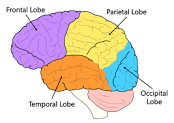
Reading is considered a form of visual exercise, and Dr. Dehaene stated that the visual stimulation of reading “exercises the occipital lobe”. This occipital lobe is the part of the brain that processes visual information. With the literate readers, this area of the brain was enhanced, which means that they could process visual information more accurately. This can affect creativity and can even have an effect on decision making skills. This area was the least enhanced in the group of adults who never learned how to read.
The parietal lobe is the part of the brain that turns letters into words, and words into thoughts. When we read, the parietal lobe becomes active and works with the temporal lobe to store information. Among the group of long-time readers, this lobe was the most enhanced and stimulated. This lobe is recognized for its ability to increase writing skills and reading comprehension.
From this study, we understand that people who don’t read can struggle with processing verbal information. Slow readers may then struggle in all academics due to this. As adults, slow readers can even experience everyday life challenges due to poor communication skills. We can conclude that reading can affect every aspect of communication, which in turn can affect job performance and even relationships.
According to this study, mental stimulation (through reading) can even create new neurons in the brain, no matter how old the individual is! There was improvement in the brain activity for the group that learned how to read as adults. This is encouraging news for adults who have not spent many years reading.
Another (2016) article from Harvard Medical School (Scott Edwards), Reading and the Brain, explains how the regions of the lobe interact and create pathways through reading:
“A number of brain regions are involved in reading and comprehension. Among them are the temporal lobe, which is responsible for phonological awareness and for decoding and discriminating sounds; Broca’s area in the frontal lobe, which governs speech production and language comprehension….
…There are several important white-matter pathways involved in reading, says Dr. Nadine Gaab, PhD. White matter is a collection of nerve fibers in the brain….the fatty substance that insulates the fibers—that help the brain learn and function.
Dr. Gaab likens these tracts to a highway system that connects the back of the brain’s reading network to the front. In order to read and comprehend, this highway system must be wide enough for multiple pieces of information to travel simultaneously. The highway must also be smooth, so that information can flow at a high rate of speed. And, she says, “You don’t want the information to stop. You don’t want a lot of stop lights.”
In 2012, in the Proceedings of the National Academy of Sciences, neuroscientists at Stanford University reported that reading ability in young children is related to the growth of the brain’s white matter tracts……Strong readers, they discovered, start out with strong signals in both tracts that get stronger over a period of years. The opposite pattern occurs in weaker readers.”
These clear pathways in our brains affect the way we think, the way we communicate with others, the way we make decisions, and therefore, the quality of our lives. So, I guess the greater question is this: what quality of life do we desire for our children?
Do we want them to clearly be able to understand choices and moral decisions? Do we want them to clearly be able to discern what is right from what is wrong and to be able to recognize manipulation and to seek accurate information? Do we want them to be able to clearly communicate their own needs and expectations?
Yes.
Solutions may come from us “booking time with our kids” and helping create strong, clear pathways within their beautiful minds. While we are simply cuddling up and reading with them, so much more is happening inside of those precious brains. And we may enhance our older, mature minds (pathways) at the same time!
THANKS FOR JOINING ME! Please subscribe for a WEEKLY IDEA about how we can “BOOK TIME WITH OUR KIDS!” PLEASE SHARE TOO!


 Nina Wheeling
Leave a comment